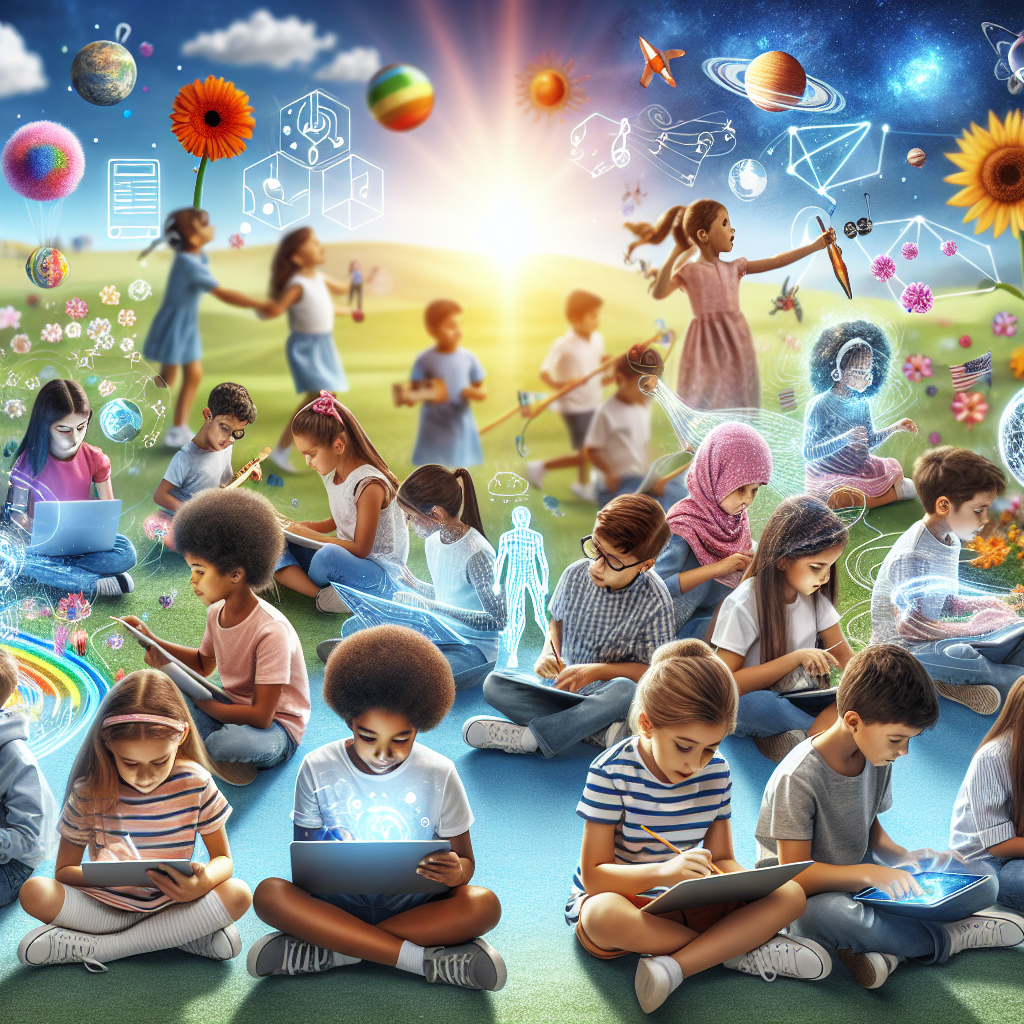
As parents seek innovative avenues to keep their children both entertained and intellectually stimulated during the summer months, the spotlight has turned to a burgeoning sector in the tech industry: generative artificial intelligence (AI). According to a recent overview provided by VC Cafe, a website dedicated to innovation and startup culture, there are now several generative AI tools specifically designed to catalyze creative thinking and learning among young users.
Generative AI, with its capacity to produce content ranging from text to images and music, is pivoting from a tool used primarily in professional domains to one that promises significant educational benefits. The article titled “5 Generative AI Tools to Spark Creativity in Kids this Summer” outlines a selection of these AI tools, each distinctively engineered to engage children’s creativity while embedding valuable skills like problem-solving, design, and computational thinking.
Among highlighted tools is a program which allows kids to design and animate virtual characters. This application not only entertains by letting children bring imaginative characters to life but also subtly introduces them to the basics of animation and graphic design. Meanwhile, another tool focuses on music creation, enabling children to compose music using AI-assisted software. This can be particularly captivating, offering a mix of technical skills and artistic expression.
The educational potential of these tools is considerable. For instance, a storytelling AI app assists children in writing their own stories, providing suggestions for plot development and character building based on the input provided by the users. This could enhance literacy skills, as well as encourage a deeper understanding of narrative structures and creative writing.
Critical thinking and decision-making are also nurtured through an AI-powered game that presents users with ethical dilemmas and puzzles to solve. This sort of application not only entertains but also encourages youngsters to think deeply about consequences and diverse perspectives.
Despite the palpable enthusiasm surrounding these tools, their integration into children’s daily activities raises inevitable questions about screen time management and the qualitative aspects of AI interactions. Educational professionals and parents alike are cognizant of the need to balance digital educational content with traditional learning and physical play. Moreover, reliance on AI-driven content generation highlights an essential discourse on the authenticity and ownership of generated outputs, which is particularly crucial as children’s understanding of intellectual property and creative rights are still forming.
Experts recommend a moderated approach to using these AI tools, advocating for them as a supplement to a balanced learning regime that includes ample non-screen interactions. This balanced approach not only alleviates concerns over excessive screen time but also ensures a varied learning environment conducive to overall development.
The growing popularity of generative AI tools in educational contexts underscores an increasing recognition of their potential as both educational aids and sources of inspiration. However, it is imperative that their use is carefully managed to maximize benefits while mitigating potential drawbacks. As with any technological adoption in childhood learning, the key lies in moderation, thoughtful integration, and ongoing dialogue among educators, parents, and the children themselves.