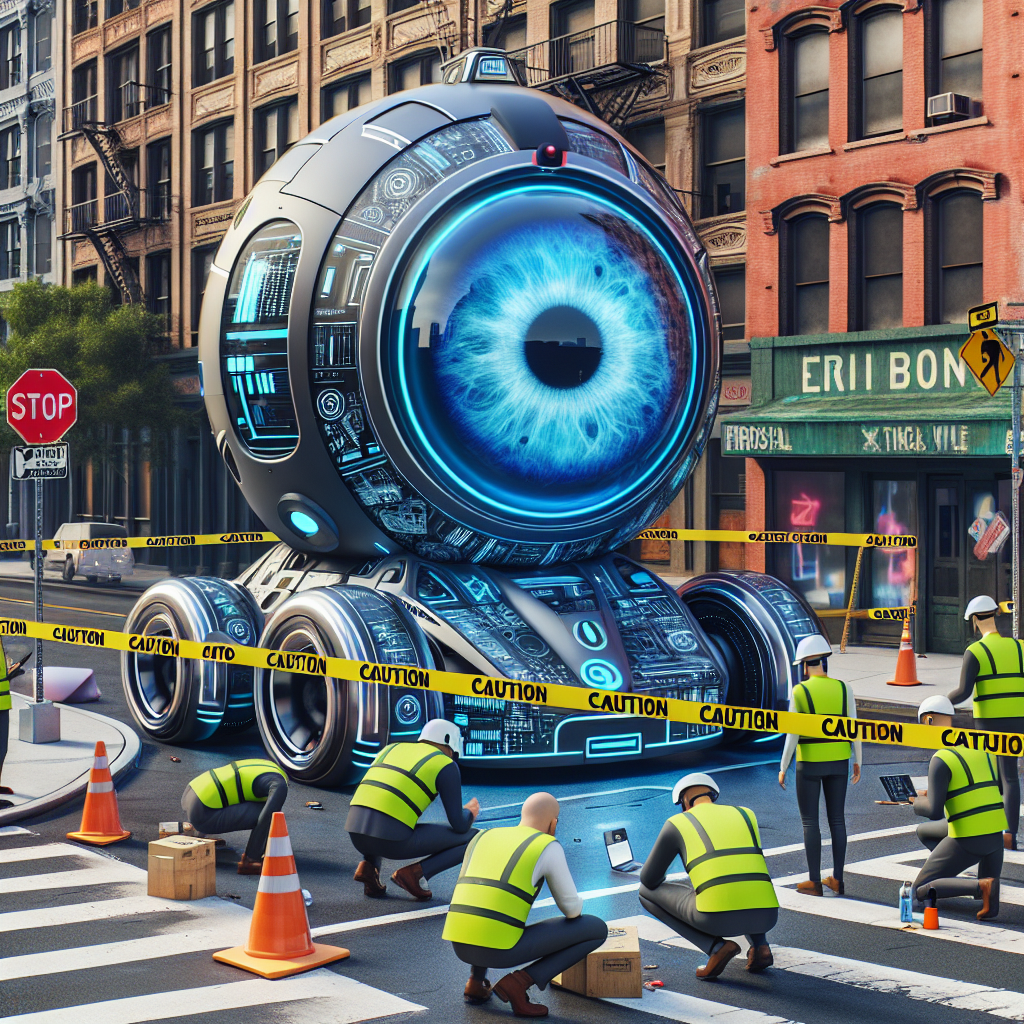
Amid mounting concerns over safety and regulatory compliance, Israeli tech giant Mobileye recently withdrew its latest autonomous vehicle for testing from New York City streets. This decision, while setting back the company’s ambitious timeline to lead various global markets in self-driving technology, underscored a broader industry-wide vigilance against potential hazards associated with autonomous vehicular technology.
The move—reported originally by Calcalist—was pre-emptive as it came in response to a software glitch that could prevent the vehicle from effectively recognizing certain U.S. traffic lights. Instead of risking regulatory backlash or potential accidents, Mobileye chose to recalibrate its approach, highlighting a commitment to safety that many in the industry have long advocated for.
Managed by Intel Corp., Mobileye has gained considerable traction within the autonomous driving sector, frequently seen as a contender against other key players like Google’s Waymo and Uber’s autonomous vehicle branch. These companies all vie within a high-stakes race to commercially deploy self-driving vehicles, a technology once relegated to the realms of science fiction.
The peculiar challenges faced by Mobileye in New York—a city known for its complex traffic signals and congested roadways—emphasize significant practical hurdles in the implementation of autonomous technology worldwide. Traffic lights in the U.S., unlike many countries, vary not only from state to state but also between municipalities. This variability presents a substantial obstacle to creating a universally compatible autonomous driving system. In Mobileye’s case, detecting these multifarious signals proved problematic enough to necessitate a withdrawal for additional tweaking and testing.
This scenario serves as a stark reminder of the nascent status of autonomous driving technology and the intricate dance between advancement and safety. While the industry promises a future of decreased traffic accidents, increased efficiency, and greater mobility, the journey there is fraught with technological pitfalls and regulatory scrutiny.
Moreover, this case illuminates the often under-discussed aspect of autonomous vehicle deployment: the readiness of a city’s infrastructure to adapt to such advanced technologies. As cities around the world differ in layout, traffic patterns, and regulatory environments, tech companies like Mobileye must navigate a labyrinth of specific regional challenges.
Mobileye’s approach to halt its testing program in order to address these software issues—a move towards compliance and safety—might serve as a model for similar companies aiming to enter or expand within various global markets. It reflects a broader industry trend that often sees sales and projections adjusted in response to emerging technological challenges and safety concerns.
Despite these hurdles, the promise of autonomous vehicles continues to drive substantial investment and research in the field, shaping what may eventually become the new norm in transportation. A more cautious approach to testing, underscored by Mobileye’s recent actions, might indeed slow progress, but it also likely ensures a safer path forward.
Such incidents also prompt a significant dialogue among policymakers, technologists, and the public about how to best integrate these advanced systems into everyday life. It’s a conversation that hinges not just on technological capability, but equally on ethical frameworks, safety protocols, and an overarching societal consensus—factors that will ultimately determine the trajectory of the autonomous vehicle space.