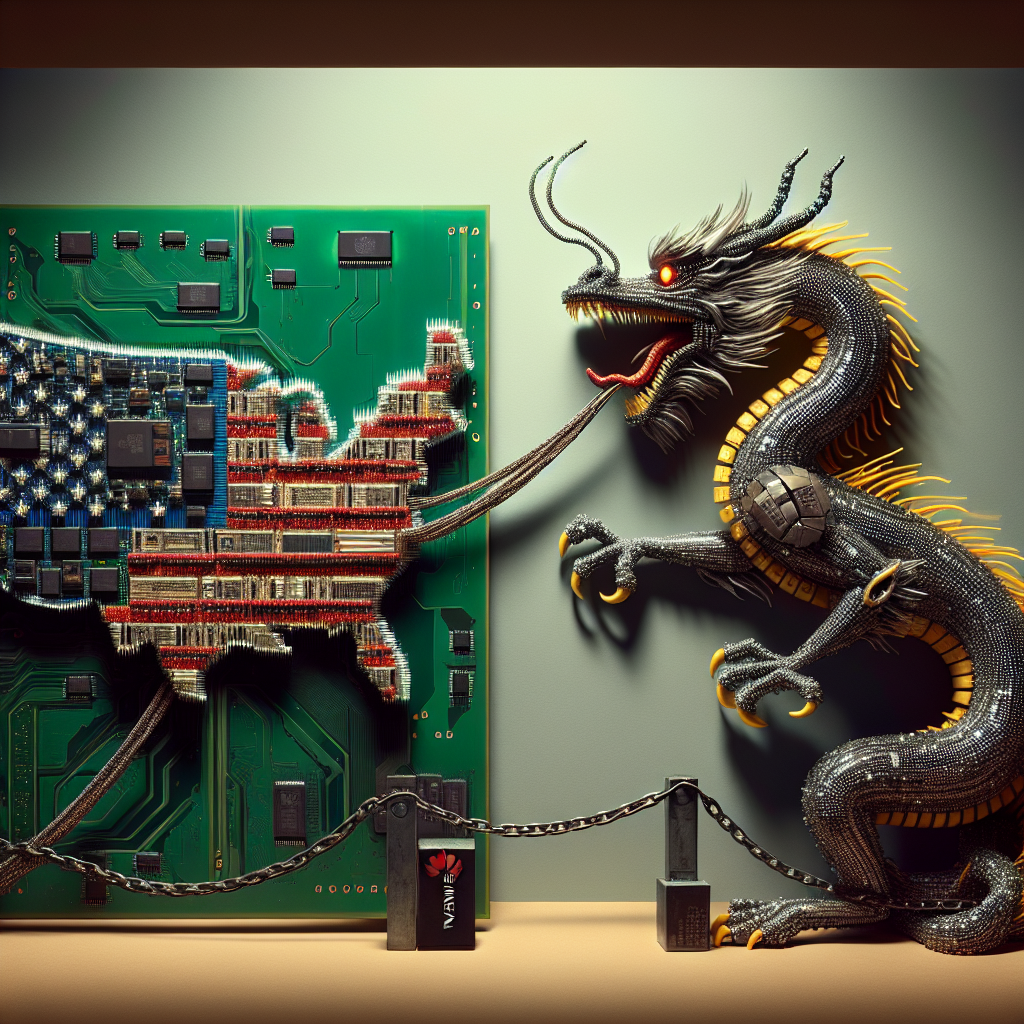
In a recent development that casts a spotlight on the intersection of technology and geopolitics, the United States has imposed restrictions on the export of AI chips to Chinese tech giant Huawei. This move marks a significant escalation in the tech war between the U.S. and China, a battlefront that extends beyond mere trade disagreements into the realms of national security, technological supremacy, and geopolitical dominance.
The restrictions, as reported by Calcalistech under the headline “U.S. restricts export of AI chips to Huawei as tech war heats up,” were aimed specifically at cutting off the supply of advanced AI chips to Huawei. This decision is particularly impactful, considering Huawei’s prominence in global telecommunications and the increasing importance of AI technology in various sectors including national security, economic competitiveness, and consumer technology.
The U.S. government’s decision reflects ongoing concerns about the security implications of allowing Chinese companies, which are perceived to be under significant influence from the Chinese government, access to advanced U.S.-manufactured technology. The issue at hand is not merely economic but deeply strategic. The U.S. fears that the advanced AI capabilities enabled by such chips could be harnessed by the Chinese government for surveillance, military purposes, or other activities that might threaten U.S. national security and its geopolitical interests.
Huawei, for its part, has consistently denied allegations that it acts as a conduit for Chinese governmental espionage or other malign activities. The company has often highlighted its role as a key player in global telecommunications, contributing significantly to the infrastructure necessary for next-generation 5G networks around the world. Huawei argues that the U.S. actions are more about stifling competition than addressing actual security risks.
From an economic perspective, the export restrictions are poised to have significant repercussions. They will not only affect Huawei’s supply chain but could also impel China to accelerate its drive toward technological self-sufficiency. China has already been investing heavily in the development of its domestic chip industry, seeking to reduce its reliance on foreign technology—a goal that has become even more pressing in light of current and potential future restrictions.
Moreover, this escalation could impact global supply chains and technological development trajectories internationally. Other countries and global tech companies are likely to find themselves caught in the crossfire of U.S.-China tech rivalry, forced to navigate a landscape where geopolitical considerations are deeply enmeshed with market and technological dynamics.
Analysts and industry observers suggest that the implications of such moves will reverberate well beyond the immediate stakeholders. The global tech landscape is possibly at a turning point, where nations and companies might need to pick sides or find new ways to safeguard their interests amidst a burgeoning tech cold war.
The U.S. administration has justified its stringent stance as necessary for national security. However, this approach is emblematic of a broader strategy aimed at curbing China’s technological ascent and its implications for the global power structure. As technologies like AI become central to military and economic power, control over its development and distribution becomes a proxy for broader strategic dominance.
The Huawei case is thus a microcosm of larger shifts and conflicts emerging in the realm of global tech governance, symbiotically tied with the dynamics of global power. It raises pivotal questions about the future of global technological progress, the role of national security in market dynamics, and the ethical dimensions of international trade and technological warfare. As such, it is a development that all stakeholders in the global tech ecosystem—be they nations, corporations, or consumers—will need to watch closely and navigate with both caution and foresight.