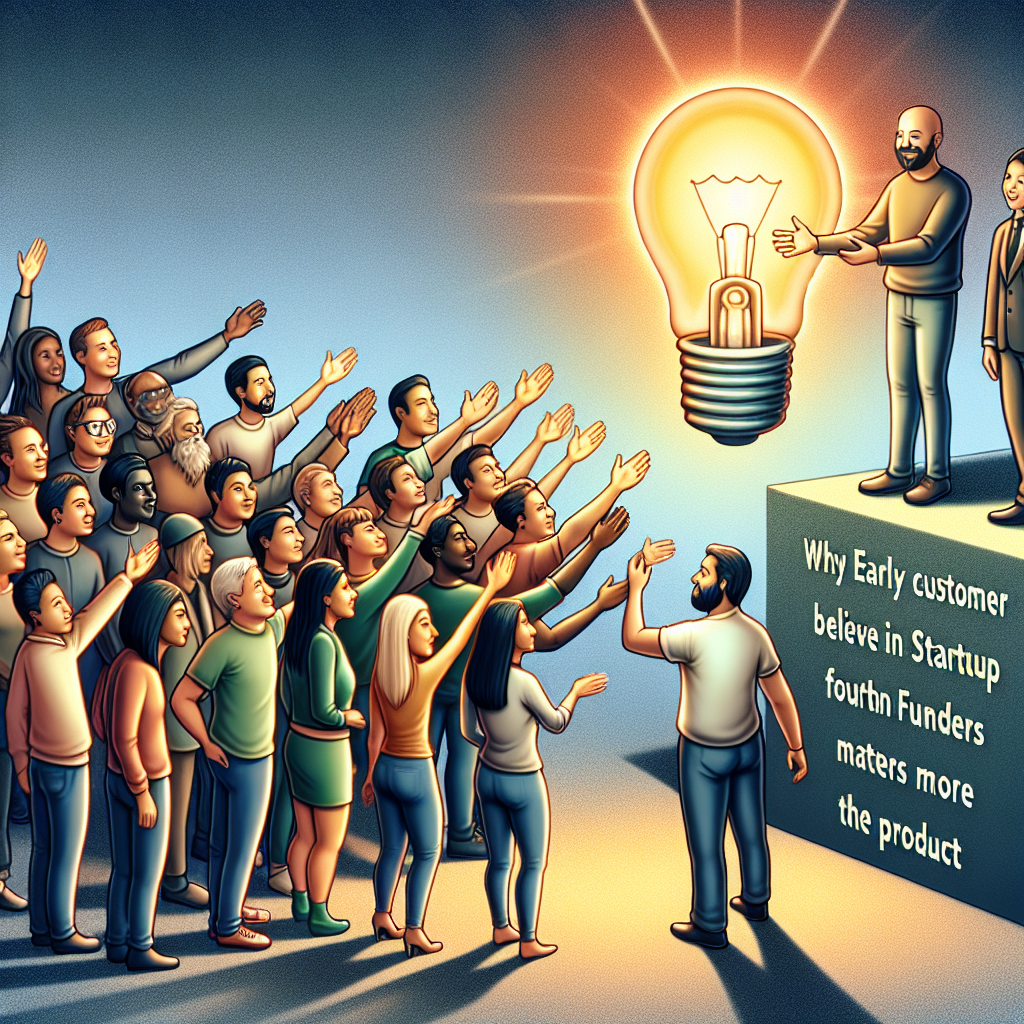
In the ever-evolving landscape of startup entrepreneurship, one pivotal question looms large for founders as they commence their journey into the commercial market: “Do they believe in me?” This inquiry, as explored in a recent analysis by VC Cafe under the title “The Crucial Question Startup Founders Must Ask When They Start Selling,” highlights an often-overlooked dimension of founder-customer dynamics that transcends conventional sales metrics or product features.
Startups, particularly in their nascent stages, often embody the vision and ambition of their founders. As these entrepreneurs introduce their offerings to potential customers, the initial focus tends to converge on product functionality and market fit. However, underlying these surface interactions is a more profound exchange — the transfer of trust and belief from customers to founders.
The discourse presented in VC Cafe emphasizes that while tangible product attributes and a compelling business model are quintessential, the personal credibility and reliability of the founders often play a decisive role in fostering early customer adoption and loyalty. This is particularly true in sectors where the products or services entail significant customer investment or adoption risks.
This psychological and emotional dimension of early sales activities is critical because when customers buy into a startup, they are essentially endorsing not just a product but a vision and, more importantly, the people behind that vision. They are placing faith in the founders’ ability to deliver on promises and grow the enterprise amidst uncertainty and competition.
Real-life examples of this phenomenon are plentiful. Successful startups that have managed to scale rapidly often have at their helm charismatic leaders who not only envisioned a compelling product but also demonstrated an inherent capability to make customers believe in their vision. This belief is not grounded merely in the charisma of the leader but reinforced by their authenticity, transparency, and continuous engagement with their customer base.
Moreover, the element of customer belief is crucial for startups seeking investments. Investors are drawn not only to the innovative aspects of the product but also to the confidence that customers exhibit towards the founders. A startup laden with customer trust and belief often indicates a viable market presence and a potentially sustainable business model, thereby attracting further financial backing.
The analysis asserts that for startups, the sales strategy should incorporate mechanisms through which founders can effectively communicate their credibility and engender trust. This might involve direct engagements through platforms that allow for live demonstrations and interactions, detailed case studies, or transparent sharing of the development process and milestones. Such tactics help in scaffolding the initial fragile trust into a more robust commitment from customers, thereby supporting not just early sales but also long-term loyalty and advocacy.
In conclusion, as startups continue to burgeon and saturate various industry verticals, the ability of founders to make customers believe in them can significantly distinguish successful ventures from those that falter. This kinship between customers and startups, rooted in belief and trust, forms an integral part of the entrepreneurial ecosystem, underscoring the complex interplay of emotions and economics in the modern marketplace. As VC Cafe’s thoughtful exploration suggests, it’s not solely about what you sell, but also about who believes you can succeed in selling it.