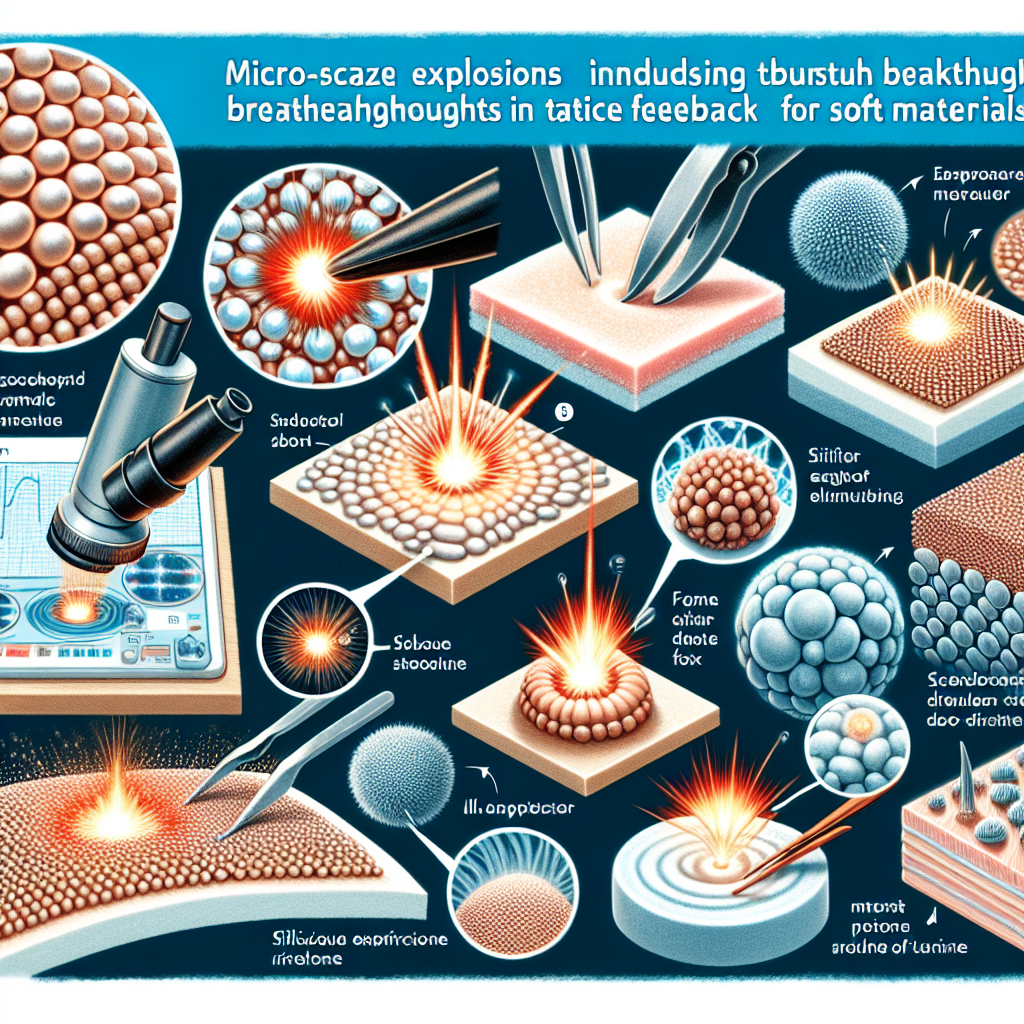
In an intriguing development in the field of material science and haptic technology, researchers have designed a method that employs miniature explosions to create tactile feedback in soft materials. This innovation could potentially transform the way users interact with digital interfaces by introducing a more immersive and textured touch experience.
The study, centered around the control of micro-scale explosions within a substrate, was recently reported in-depth by the website TechXplore under the article titled “Tiny explosions inspire soft materials to put onscreen touches in users’ hands.” The technology hinges on a series of controlled, small-scale blasts that deform soft materials. These deformations can be finely tuned to simulate different textures, giving users the sensation of touching various surfaces through a screen.
Central to the technology is a layer of silicon-based material embedded with microchannels containing a combustible mixture. When ignited, this mixture causes a rapid expansion, altering the topography of the material’s surface temporarily. This change, in turn, can mimic the feel of varied textures like rough, grainy, or smooth to the touch. The researchers envision their work could lead to advancements in virtual reality (VR) and augmented reality (AR), fields which are increasingly demanding more immersive and realistic user experiences.
From an application perspective, such innovations could be groundbreaking for industries reliant on digital touch interfaces, such as medical training and remote robotic operations, where tactile feedback is essential. The ability to feel different textures and surfaces could vastly improve the training of surgeons or enhance the capabilities of telesurgery robots, making procedures safer and more precise.
Moreover, this approach could also benefit the visually impaired, offering new ways to interact with touchscreens and digital devices via tactile cues. For people who rely on touch rather than sight to interpret their environments, enhanced tactile interfaces could provide a richer, more accessible digital experience.
Despite the excitement surrounding the potential applications, there are challenges and limitations to address. The principal concern is the safety and durability of integrating explosive substances into everyday devices. Ensuring that these micro-explosions can occur safely over repeated use without degrading the material or device integrity is crucial.
Furthermore, the energy requirements and cost efficiency of manufacturing such materials on a larger scale are significant considerations for commercial viability. Researchers are optimistic, however, about refining the technology to meet these challenges, with ongoing experimentation focused on balancing the intensity and duration of the tactile feedback with the practicality of the device design.
As the research progresses, the prospect of bringing such dynamic tactile experiences to consumer devices seems increasingly feasible, promising to redefine our interaction with the digital world. A symbiotic blend of chemistry and technology is paving the way for what could be the next big leap in haptic feedback, potentially leading to more engaging and functional interfaces that blur the line between digital and physical realms.