In a significant advancement for clean energy technology, researchers at Princeton University have developed a groundbreaking artificial intelligence (AI) system that promises to transform the reliability and output of nuclear fusion, as reported by Innovation News Network in its article titled “Princeton AI Breakthrough Transforms Fusion Systems into Reliable Power Sources”.
Nuclear fusion, long considered the ‘holy grail’ of clean energy, mimics the sun’s energy-producing processes and has the potential to provide an almost unlimited supply of clean power without the radioactive waste associated with conventional nuclear fission. However, stabilizing the plasma – a superheated form of matter essential for the fusion process – inside a reactor has been a major technological challenge, as maintaining the necessary temperature and pressure conditions requires incredibly precise control.
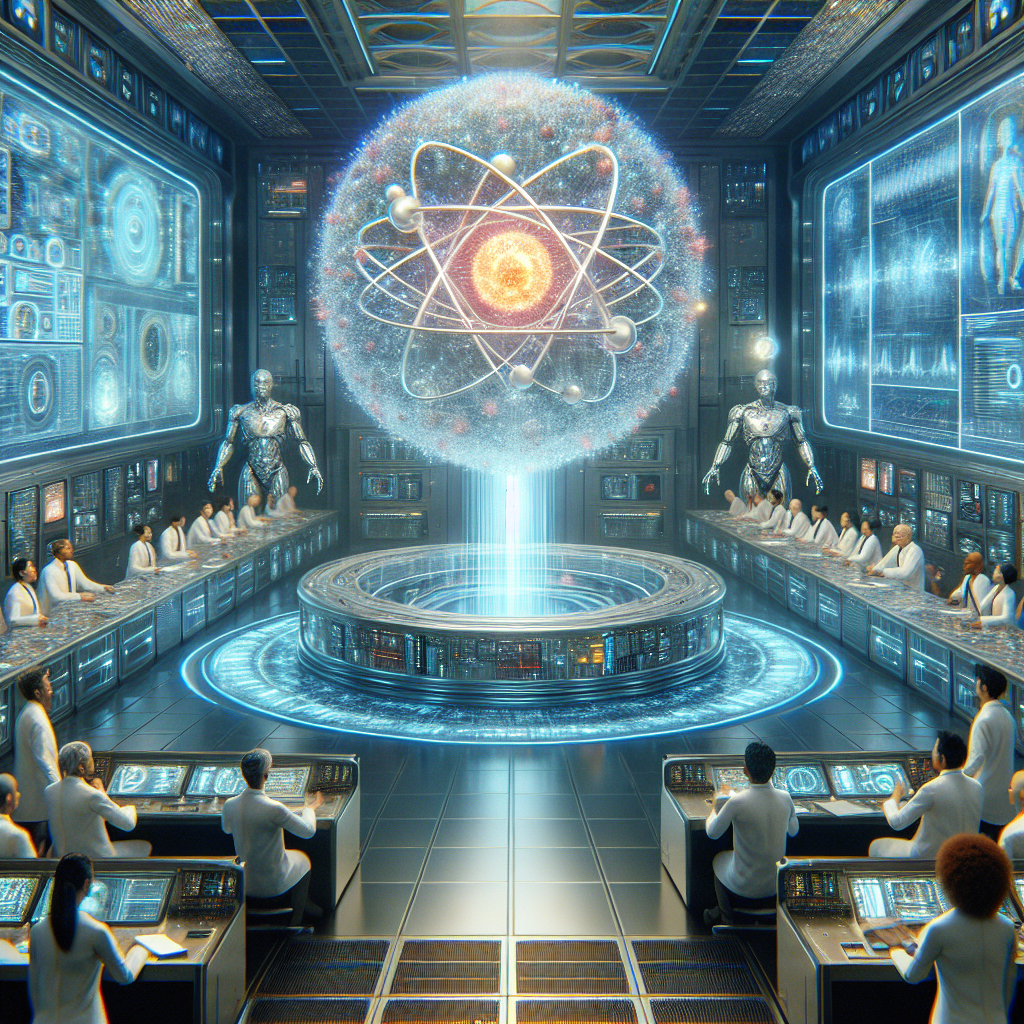
The Princeton team, working out of the university’s Plasma Physics Laboratory, has introduced an AI technology that improves the predictability and control of these plasma reactions. Fundamentally, the AI helps in managing the plasma’s behavior, which is notoriously difficult due to its volatile nature. This is achieved by ‘teaching’ the system through machine learning algorithms to anticipate disruptions or instabilities before they occur, allowing for preemptive adjustments.
According to the scientists, this AI-assisted approach not only enhances the efficiency of fusion reactors but also significantly boosts their safety by reducing the risk of uncontrolled plasma discharges, which can lead to damages in the reactor infrastructure. Moreover, the ability to maintain optimal conditions more consistently maximizes energy output and brings fusion a step closer to becoming a feasible commercial energy source.
The commercial implications of this technology are extensive. By making fusion power more reliable and efficient, it could expedite the shift away from fossil fuels and drastically reduce global carbon emissions. This is critical in the context of escalating climate change concerns and the international community’s increasing commitment to sustainable energy solutions.
Further research and development are needed to scale up the findings for practical, large-scale applications. Nevertheless, this breakthrough indicates a promising direction for the future of energy technology, spearheading a move toward a safer, greener power generation paradigm that could support global energy demands without the environmental impact associated with current methods.
Princeton’s contribution underscores the transformative potential of integrating advanced computational technologies in traditional science fields, heralding a new era of high-tech solutions to age-old human challenges. As further study and refinement of this AI system continue, the world watches eagerly, anticipating a new dawn in energy production that hinges not only on raw power generation capabilities but also on smart, precision-based technology domains.