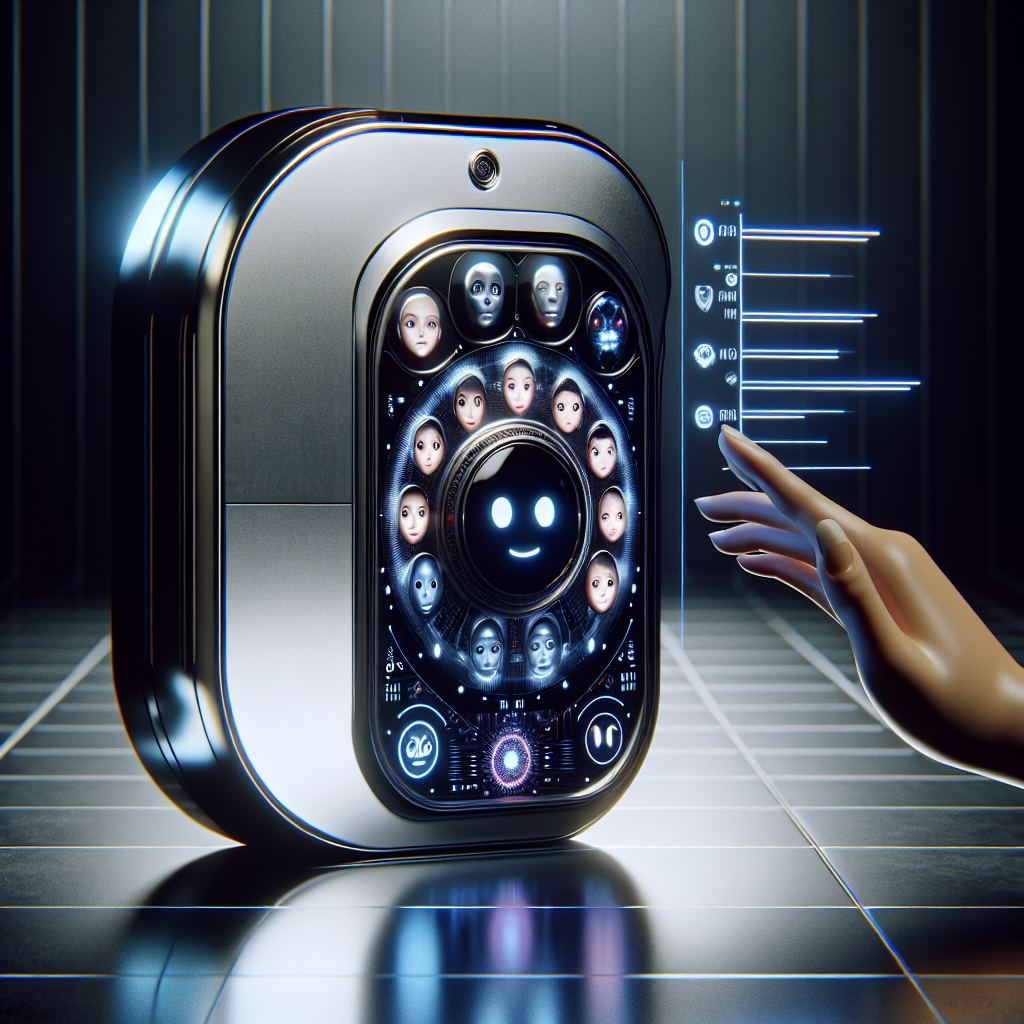
In a bold stride towards redefining mobile technology, Honor has launched its latest innovation, the “Robot Phone,” a device designed not only to function with high-tech efficiency but to interact with its users using emotive capabilities, most notably through laughter. As reported by Startup News in their article “Honor Robot Phone: The Giggling Smartphone Redefining Mobile Innovation,” this new smartphone model could be seen as a pivotal evolution in the synthesis of artificial intelligence and everyday consumer electronics.
The Robot Phone, infused with AI that enables it to express laughter, responds to user interactions with giggles that vary in intensity and character based on the context of the interaction. This feature aims to make technology more relatable and friendly, enhancing user experience by adding a layer of emotional engagement. The developers at Honor believe that this could lead to users feeling a deeper connection to their devices, seeing them less as tools and more as companions.
Such innovations raise important questions about the future of human-technology interactions. Behavioral scientists have long debated the impact of anthropomorphizing technology, with a range of perspectives concerning both psychological benefits and potential dependency issues. By providing a smartphone the ability to laugh, Honor is testing uncharted waters in consumer tech, where emotional and social interactions with devices could become as important as their functional utility.
Market analysts are keenly observing the Robot Phone’s reception. Previous ventures into emotionally intelligent technology have yielded mixed results. Some consumers appreciate a more personalized and interactive experience, while others may view these features as gimmicky or intrusive. The balance between innovative engagement and respect for user boundaries is delicate, and Honor’s approach to gently integrate these features could be critical for its success.
The introduction of the Robot Phone also sets a stage for discussions on privacy and data security. As devices become more integrated into personal spaces and adapted to recognize emotional cues, the scope for data sensitivity increases. Honor has assured that privacy norms and protections are integrated into the Robot Phone design, yet the practical ramifications of these promises remain a focal point of consumer advocacy groups.
Moreover, the Robot Phone could influence the broader smartphone market. If successful, it could prompt other companies to explore similar enhancements, possibly leading to a significant transformation in how users interact with their mobile devices. The industry is watching and might follow suit, integrating more AI-driven emotive features that could redefine user engagement across various technologies.
In sum, Honor’s Robot Phone is not just a technological advancement but a social experiment that challenges existing paradigms of human-device interaction. As more companies might emulate this emotive approach, the lines could further blur between technology as a mere tool and as a participatory agent in daily life. The evolution of mobile technology is thus not just in processing power and functionality but increasingly in the realm of social and emotional intelligence, marking a new chapter in the digitization of personal experience.