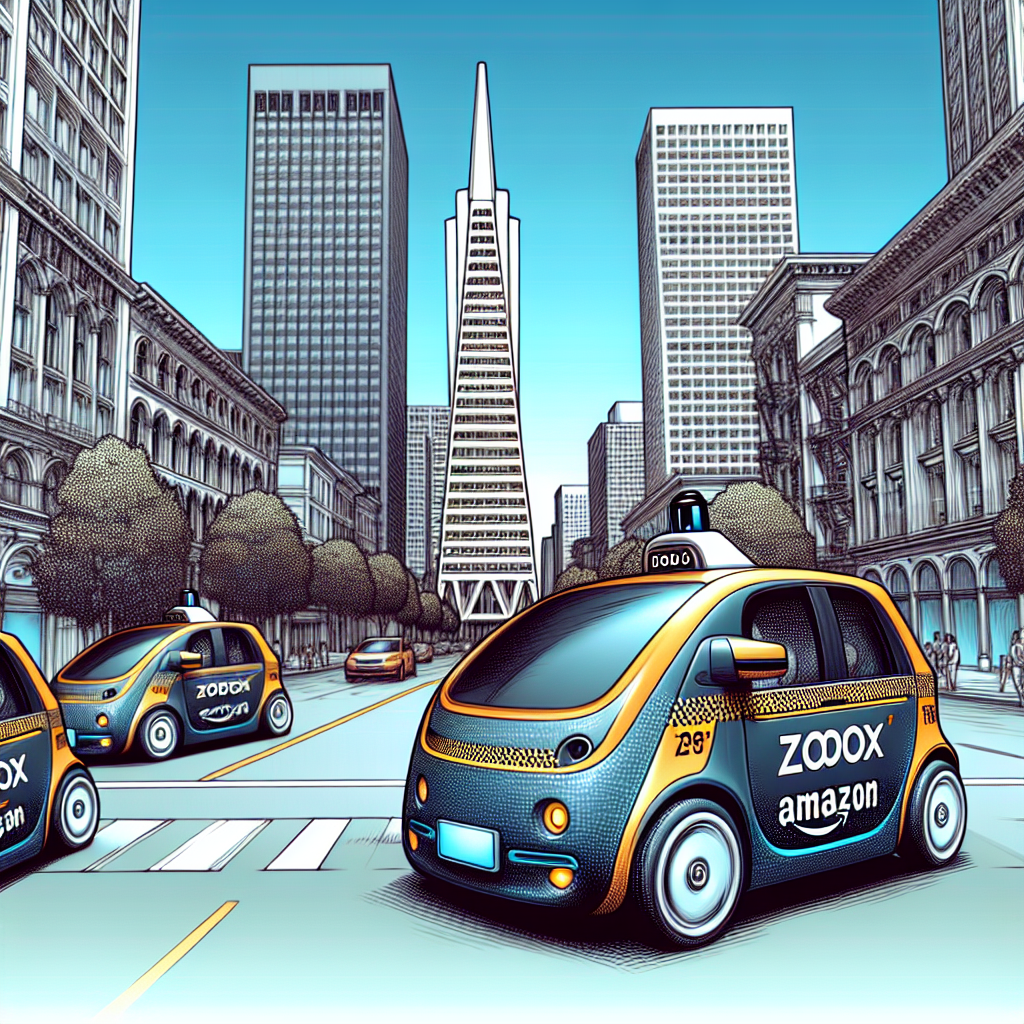
Amazon’s autonomous vehicle unit, Zoox, has begun offering robotaxi rides in San Francisco, marking a significant milestone in the company’s bid to bring self-driving transportation to urban environments. As reported in “Amazon’s Zoox launches robotaxi rides in San Francisco” by The Economic Times, this move signals Zoox’s steady progression from development to deployment in one of the most challenging urban settings for autonomous vehicles in the United States.
The service, which has just commenced in a limited capacity, is currently available only to Zoox employees and operates along a one-mile route between two company buildings in the city’s Mission Bay neighborhood. While small in geographic scope, the launch represents a crucial step for the company as it looks to validate its technology in real-world, high-density traffic conditions.
Unlike many competitors that retrofit existing vehicles with autonomous capabilities, Zoox has designed its robotaxi from the ground up. The vehicle is fully electric and bidirectional, with no steering wheel, pedals, or driver’s seat. This design approach underscores Zoox’s ambition to redefine urban mobility, prioritizing passenger experience and safety in a purpose-built platform.
According to the original report, the current test phase mirrors Zoox’s earlier pilot program in Foster City, California, where the company has been trialing its vehicles since early 2023. The expansion into San Francisco demonstrates growing confidence in the system’s performance and its ability to handle more complex urban scenarios.
Though Zoox has not yet opened the service to the general public, the move places it alongside a small group of tech firms actively testing autonomous passenger services in San Francisco, including Alphabet’s Waymo and GM’s Cruise. These companies have faced both regulatory scrutiny and public skepticism as they attempt to scale up self-driving operations. Zoox is currently seeking necessary regulatory approvals from the California Public Utilities Commission (CPUC) to offer rides commercially.
Despite the cautious rollout, Amazon’s investment in Zoox reflects broader ambitions to innovate across logistics, mobility, and artificial intelligence. The company acquired Zoox in 2020 for over $1 billion, marking one of its most high-profile bets on next-generation transportation solutions.
The growing presence of robotaxis in major metropolitan areas raises complex questions about safety, labor displacement, urban planning, and public trust. While proponents point to the potential benefits of reduced traffic fatalities and improved accessibility, critics warn of unpredictable behavior by autonomous systems and a lack of clear accountability in case of accidents.
Still, Zoox’s deliberate, internally focused deployment strategy suggests that it is approaching these challenges with caution. By limiting early access to employees and using a short, controlled route, the company aims to gather operational data and refine the technology before expanding its footprint.
As the self-driving industry navigates an increasingly competitive and skeptical landscape, Zoox’s measured entry into San Francisco may serve as both a technical proving ground and a test of public readiness for autonomous transport. Whether this effort becomes a template for broader adoption remains to be seen, but for now, it represents a notable development in the emerging era of driverless mobility.