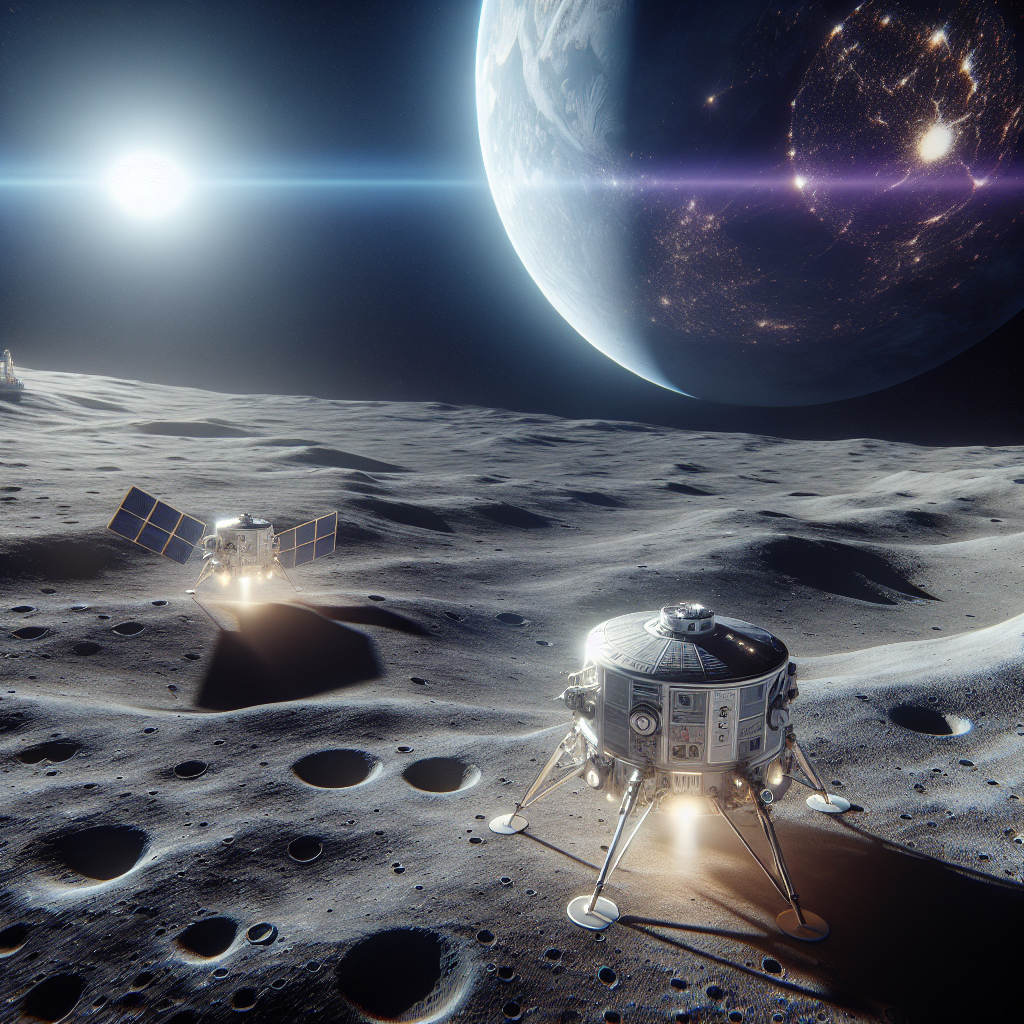
In an ambitious move to accelerate its space exploration capabilities, Israel’s Science and Technology Ministry has disclosed plans to execute a second lunar mission, termed “Beresheet 2.” This mission, as reported by Calcalist, aims not only to land one, but two spacecraft on the moon by 2024, building on the foundational efforts of the original Beresheet endeavor, which, despite its eventual crash landing, marked Israel as the seventh country to orbit the moon and positioned it as a significant player in the global space exploration field.
Led by SpaceIL and Israel Aerospace Industries (IAI), Beresheet 2 is more than a reiteration of its predecessor. This new venture seeks to push technological and research boundaries further. According to the project leaders, the forthcoming mission has been designed to ensure enhanced reliability and scientific capabilities. Noteworthy in this context is the twin lander strategy, poised not only to double the chances of a successful landing but also to expand the scope of scientific inquiry possible on the lunar surface. Such a methodology could pave the way for new insights into lunar geology and potentially, the broader solar system’s mysteries.
With a budget markedly higher than the first mission’s $100 million, which was largely sourced from private donors, Beresheet 2 signifies a profound commitment on the part of the Israeli government and its private sector partners to pursue a more pronounced presence in space exploration. The government itself has earmarked significant funding towards this project, highlighting a strategic pivot towards leveraging space innovation as a driver of technological advancement and economic growth.
The backdrop of this lunar mission is not just about national pride or scientific curiosity but is intertwined with global technological competitiveness and geopolitical dynamics. Israel’s reinforced focus on space reflects a broader understanding of the critical role of technological advancements in ensuring national security and international partnerships.
Moreover, Beresheet 2 encapsulates the essence of international collaboration in space exploration. In an era where space missions no longer remain the sole purview of superpowers, collaborative ventures represent strategic avenues for smaller nations to amplify their technological footprint and diplomatic influence. Given Israel’s sophisticated tech landscape, collaborations on missions such as Beresheet 2 could foster new international partnerships, enhancing its diplomatic stature and its standing in global tech innovation networks.
Furthermore, the mission could serve as an inspirational platform for STEM education within Israel, encouraging the next generation of engineers, scientists, and innovators. In educational terms, missions like Beresheet are more than mere technological feats; they are potential catalysts for societal shifts in perceiving science and technology careers, crucial for national development in increasingly knowledge-driven economies.
As Israel prepares for this monumental next step in its space journey, Beresheet 2 exemplifies a microcosm of larger shifts in global space exploration, where collaboration, technological innovation, and multifaceted benefits converge. It stands as a beacon of the potentials within grasp when nations dare to reach beyond the terrestrial confines towards the enigmatic expanse of space. With meticulous preparations underway, the international community and space enthusiasts worldwide keenly watch, eager to witness the historic touchdown of not one, but two lunar explorers on the celestial surface.