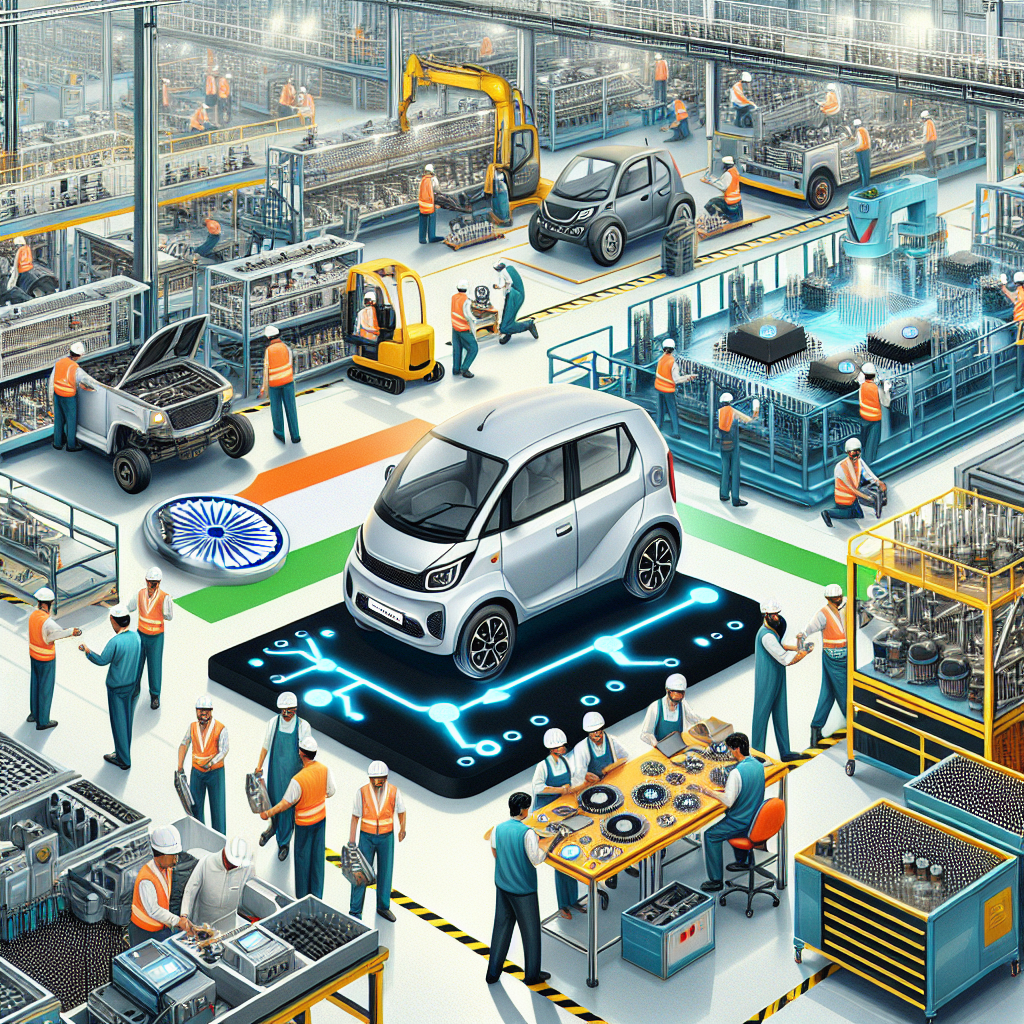
India is preparing to implement targeted incentives to scale up domestic production of rare earth magnets, a critical component in electric vehicles and semiconductor manufacturing, according to a recent report titled “Rare earth magnet SOPs to lift India’s EV, chip plans: Industry,” published by The Economic Times. The move forms part of a broader strategy to bolster the country’s self-reliance in advanced technologies and minimize dependence on imports from countries like China.
Rare earth magnets, particularly neodymium-iron-boron (NdFeB) types, are integral to a wide array of high-tech applications, from traction motors in electric vehicles to components in wind turbines and defense systems. India possesses abundant reserves of rare earth elements, but until now, it has lacked adequate refining and manufacturing infrastructure to process them into value-added products. Scaling up domestic capabilities, industry experts suggest, could serve as a crucial enabler for the nation’s electric mobility and chip fabrication ambitions.
The government is reportedly considering a production-linked incentive (PLI) scheme tailored specifically to spur local manufacturing of these magnets. Industry executives cited in the Economic Times report emphasized that such support would be instrumental in building a competitive ecosystem, particularly given the capital-intensive and technologically complex nature of rare earth magnet production.
At present, India imports most of its powerful magnets, with China dominating over 90% of the global supply. This heavy import dependence not only exposes Indian industries to pricing volatility and supply disruptions but also raises strategic concerns, especially for sectors considered essential to national security.
Integrating rare earth magnet production into India’s broader manufacturing and clean energy initiatives—such as the Faster Adoption and Manufacturing of Electric Vehicles (FAME) scheme, and ongoing investments in semiconductor fabrication—could help catalyze entire technology value chains. Stakeholders have urged policymakers to design incentives that cover the full continuum, from ore extraction and purification to magnet manufacturing and integration into end-use products.
The Economic Times article noted that several Indian companies have expressed interest in expanding into this space, provided there is sufficient policy clarity and support. Furthermore, public sector enterprises holding mining rights for rare earth ores may play a foundational role in anchoring supply chains, especially if public-private partnerships are encouraged.
If implemented effectively, the proposed incentive scheme could mark a turning point in India’s technological self-reliance agenda, bridging critical gaps in its material inputs for future-focused industries. As nations across the globe scramble to secure their supply chains for strategic minerals, India’s push into rare earth magnet production could also position it as a reliable alternative in an increasingly turbulent geopolitical landscape.