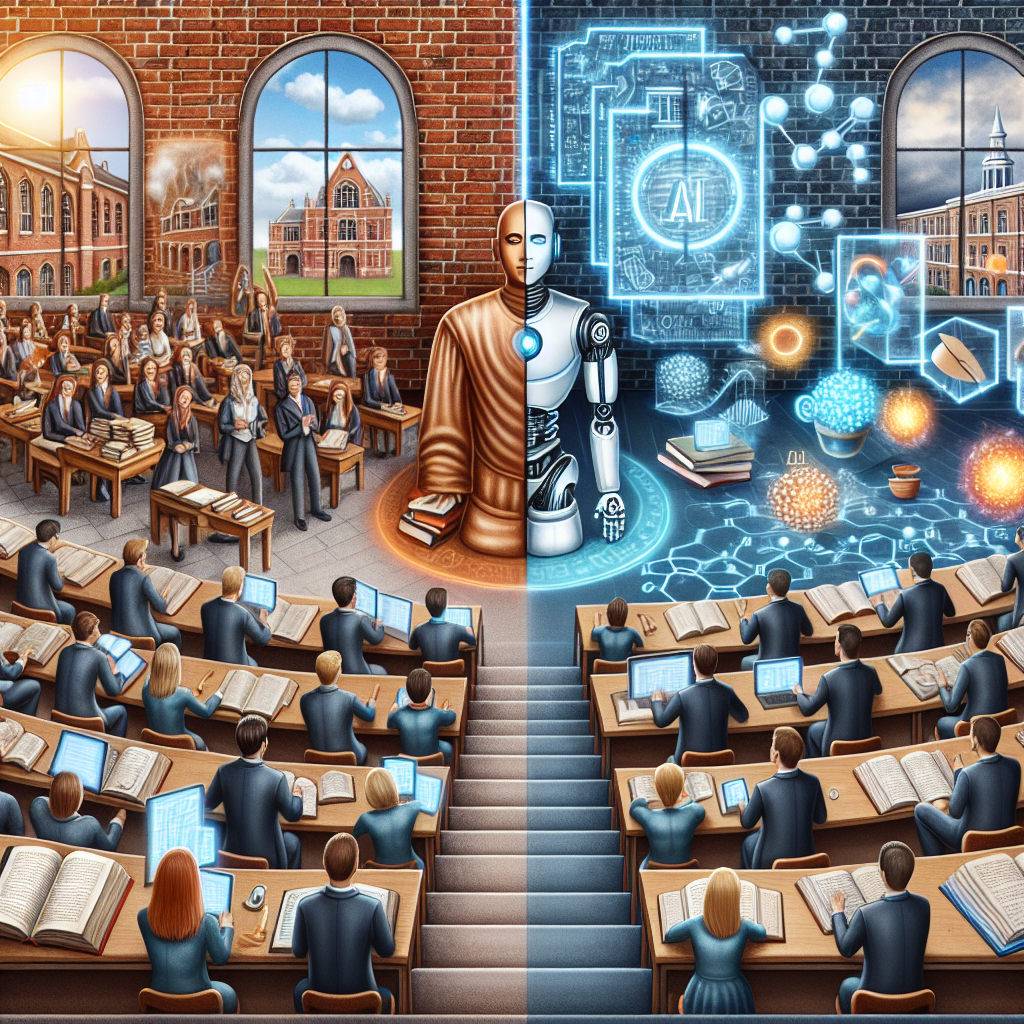
In a provocative article titled “Colleges Are Preparing to Self-Lobotomize,” published by Startup News FYI on December 1, 2025, writer David Klein offers a stark warning about the future of higher education in the age of artificial intelligence. According to Klein, many academic institutions are on the verge of curtailing their own intellectual autonomy by aggressively integrating generative AI across curricula, assessment, and administrative functions—often without fully considering the long-term consequences for critical thinking and knowledge production.
The article draws attention to a widespread trend among universities to outsource not just student writing and tutoring to AI platforms, but also faculty responsibilities such as grading, curriculum development, and even parts of academic research. Klein suggests that this shift is not being driven solely by pedagogical innovation, but by financial pressures and administrative efficiencies. In so doing, he argues, colleges are embracing a path that could diminish the human element at the core of scholarly inquiry.
Higher education systems around the world are grappling with the rapid adoption of AI technologies. From AI-powered learning assistants to automated grading tools, institutions have increasingly turned to digital platforms to manage growing demands—with fewer resources. But Klein’s critique centers on what he sees as a troubling abdication of purpose. Rather than enhancing the role of human educators, these tools are beginning to replace them in critical ways.
“Colleges are preparing to self-lobotomize,” the article asserts, describing how some institutions appear willing to sever their connection to the foundational practice of independent, human-driven thought. In doing so, Klein contends, they may unintentionally erode the very capacities that universities are supposed to cultivate: curiosity, skepticism, rigorous debate, and the development of original ideas.
His argument resonates in the context of ongoing debates about academic integrity, automation, and institutional mission. The implementation of AI has led to questions about what constitutes authentic learning, who owns the intellectual outputs of AI-enhanced research, and whether standard measures of academic achievement still apply in an era where machines can generate passing essays in seconds.
Although the integration of AI in education promises gains in access, personalization, and efficiency, critics warn that such benefits must be balanced against a reexamination of purpose. What distinguishes a college education from algorithmic training? Can the liberal arts survive in a culture increasingly entranced by optimization?
In highlighting these questions, the Startup News FYI piece echoes concerns expressed by faculty and educational theorists in recent years. While some advocates argue that AI can democratize learning and expand opportunity, others caution that blind enthusiasm risks turning universities into production lines for metrics rather than forums for intellectual exploration.
As academic institutions chart their course through uncertain technological terrain, Klein’s article stands as a compelling—if critical—call for reflection. If colleges are truly preparing to “self-lobotomize,” the challenge, now more than ever, is to ensure that they recover not just their cognitive function but their moral and intellectual purpose.