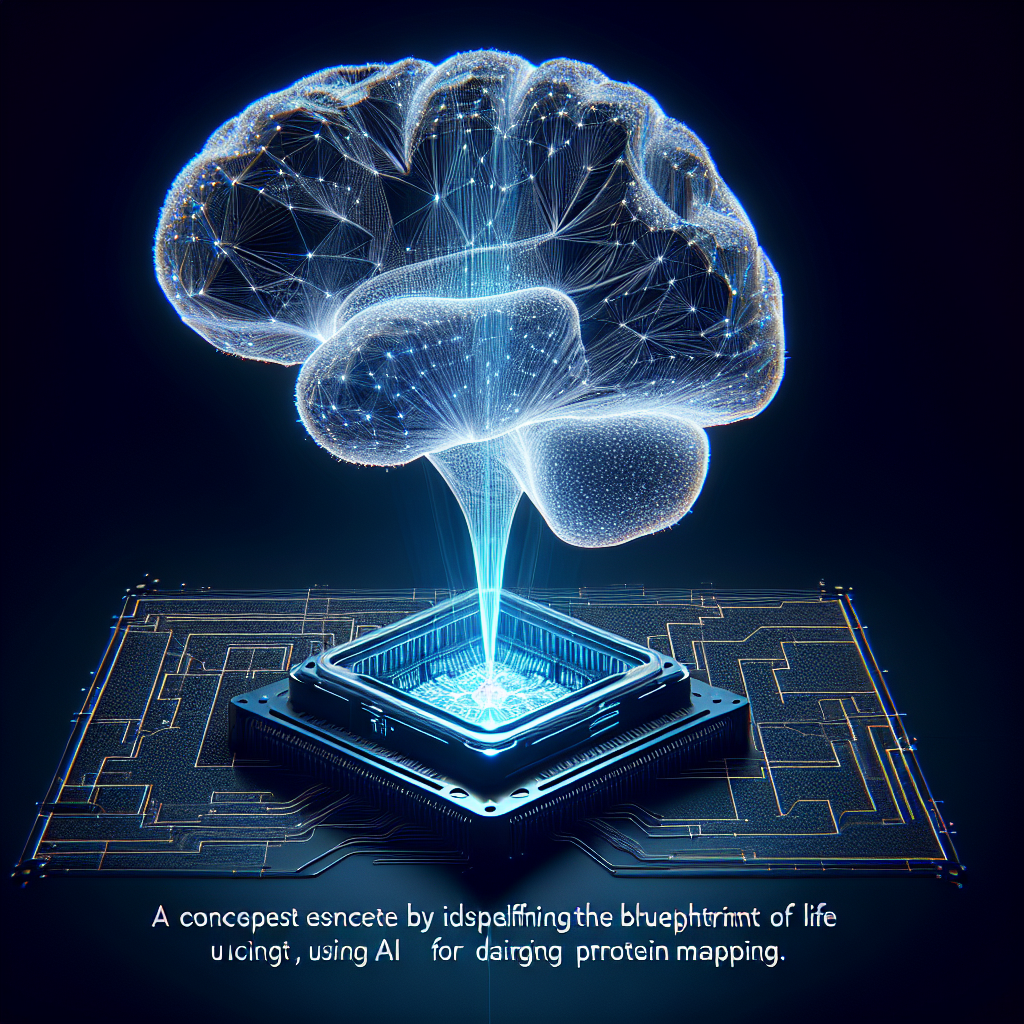
In a significant development that underscores the escalating applications and interest in artificial intelligence, DeepMind, the AI research arm of Alphabet, Google’s parent company, has successfully solved a pivotal biological puzzle, according to a recent report published by Calcalist Tech. The achievement centers on the culmination of a seven-year pursuit to decode the structures of every protein known to science, a project that not only cements AI’s transformative role in biological sciences but also opens a myriad of possibilities for medical and environmental breakthroughs.
The original pursuit, fittingly titled “The Protein Folding Problem,” had baffled the scientific community for over 50 years. Proteins, which are vital to virtually all biological processes, assume their function based on the three-dimensional shapes they fold into. Predicting these shapes from their amino acid sequences has, until now, been a complex and costly quest. DeepMind’s project, named AlphaFold, has put AI at the forefront of this exploration, successfully predicting the structures of nearly 200 million proteins found across the living world.
The implications of this achievement are profound. With the structures of these proteins decoded, scientists can accelerate drug discovery, tailor medical treatments, and tackle diseases more effectively. It could also enhance our understanding of diseases that result from misfolded proteins, such as Alzheimer’s and Parkinson’s. Moreover, the ability to predict how proteins fold, and thus function, allows for innovative applications in bioengineering, including the development of crops that can withstand harsh climates or the design of enzymes that can break down otherwise non-degradable pollutants.
In environmental spheres, this breakthrough paves the way for designing microorganisms that can capture and store carbon more efficiently, providing a potentially pivotal tool in the battle against climate change. Additionally, understanding protein structures could lead to the creation of new materials or the improvement of industrial processes, which could transform sectors from manufacturing to waste management.
While the completion of AlphaFold’s protein structure predictions marks a milestone, it also heralds a new beginning. The data set, which DeepMind has made freely available to the scientific community, promises to democratize the benefits of this discovery. This open approach has been met with global acclaim as it provides an unprecedented resource that could catalyze further investigations and innovations across various scientific disciplines.
Nevertheless, the integration of such a vast trove of biological data into practical applications presents unique challenges. Questions about data privacy, the potential for biotechnological misuse, and the ethical considerations of bioengineering life forms might stir robust debates across societies and regulatory bodies.
DeepMind’s leading-edge application of AI in solving the protein folding problem is not just a testament to the capabilities of machine learning but also highlights an emerging synergy between technology and biology. As research continues, this synergy could not only reshape our existing scientific frameworks but also redefine the possibilities for future technological advances. The original article from Calcalist Tech, titled “DeepMind Solves Biological Puzzle”, captures a chapter in science where the once-elusive structures of life are now a folded map, charted and navigated by the power of artificial intelligence.