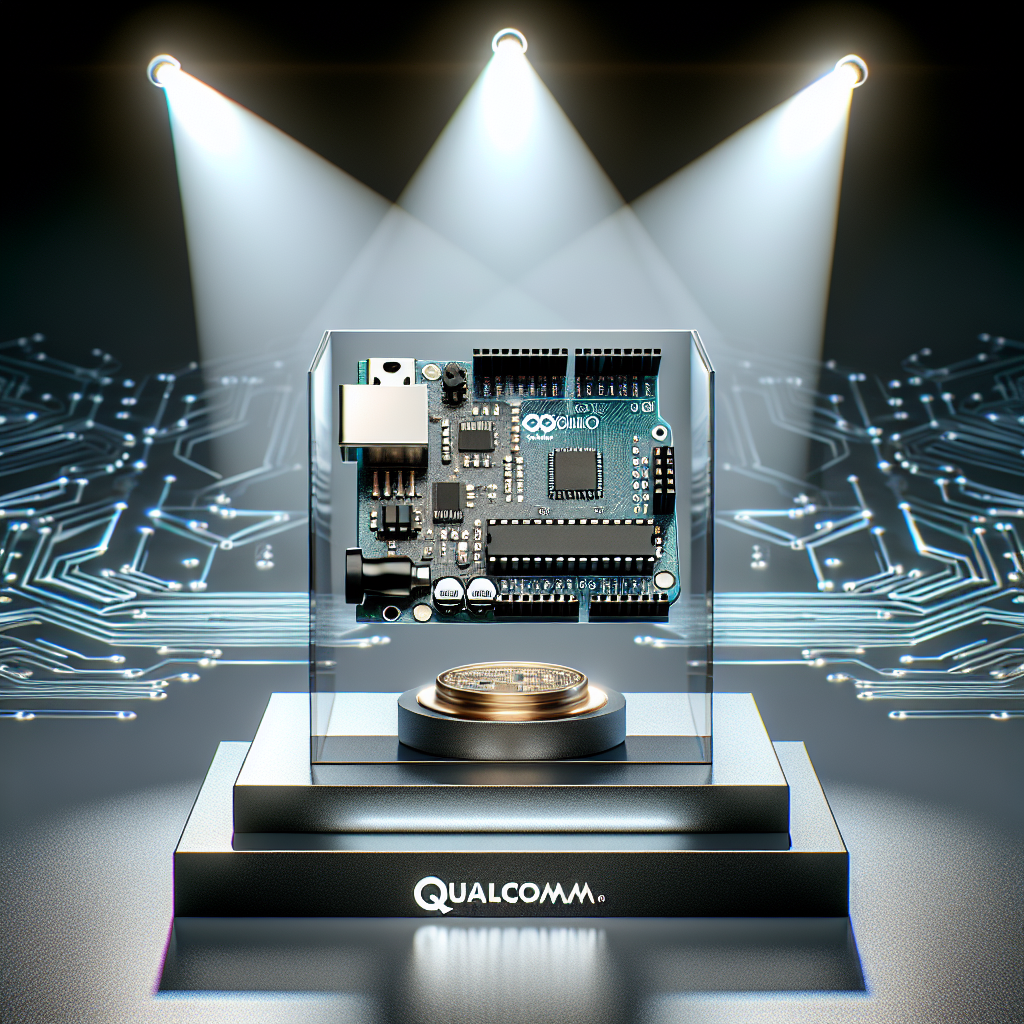
In a strategic move that signals a shift in direction for one of the most influential names in open-source hardware, Arduino has officially joined the portfolio of tech giant Qualcomm. As reported by Startup News FYI in its recent article, “Up Next for Arduino After Qualcomm Acquisition: High-Performance Computing,” the acquisition marks a new chapter for Arduino, traditionally known for its user-friendly microcontrollers that fueled the rise of the global maker movement.
According to sources close to both companies, Qualcomm’s acquisition—finalized in December 2025—positions Arduino to transition from a primarily educational and prototyping platform into a more robust player in the high-performance computing sector. While financial terms of the deal were not publicly disclosed, analysts view the acquisition as a natural evolution in a technology landscape increasingly driven by edge computing, AI, and IoT integration.
Founded in 2005, Arduino has long held a unique position at the intersection of academia, hobbyist engineering, and prototyping for commercial IoT applications. The company’s boards have enabled countless projects across the globe, from simple student experiments to complex robotics initiatives. However, Arduino’s open-source ethos and focus on accessibility have, until now, largely kept it separate from the high horsepower ecosystems driven by firms like Qualcomm.
This acquisition suggests a shift in philosophy, or at least in capability. With Qualcomm’s deep expertise in mobile processors, 5G, and AI acceleration, Arduino could be integrated into a broader push to supply developers and industry professionals with a hybrid platform—one that retains Arduino’s ease of use while delivering the performance required in industrial automation, predictive analytics, and decentralized AI applications.
In its December 29 coverage, Startup News FYI emphasized Arduino’s new priorities post-acquisition, including efforts to develop more powerful hardware platforms suitable for edge AI and distributed computing. Company insiders suggest Arduino will also work on strengthening its software toolchain, making it more compatible with advanced systems required in sectors like automotive, healthcare, and smart infrastructure.
While some in the maker and open-source communities have expressed apprehension about how the acquisition could affect Arduino’s foundational principles, both companies have issued assurances that Arduino’s core mission—democratizing technology—will remain intact. Still, integration with a major semiconductor player like Qualcomm inevitably raises questions about platform openness and cost structures, particularly for education-focused users and grassroots innovators.
For Qualcomm, the acquisition fits within a larger trend of broadening its hardware and developer ecosystem. As demand grows for localized computing power in connected devices, the ability to offer accessible yet powerful development tools becomes increasingly central to maintaining technological leadership.
As the newly merged entity works to map out its roadmap in 2026 and beyond, all eyes will be on how successfully Arduino adapts to its new role without alienating the community that built its legacy. Ultimately, the partnership represents a convergence of worlds—one founded on accessibility and community, the other on cutting-edge performance and global scale. The real test will be whether they can coexist.