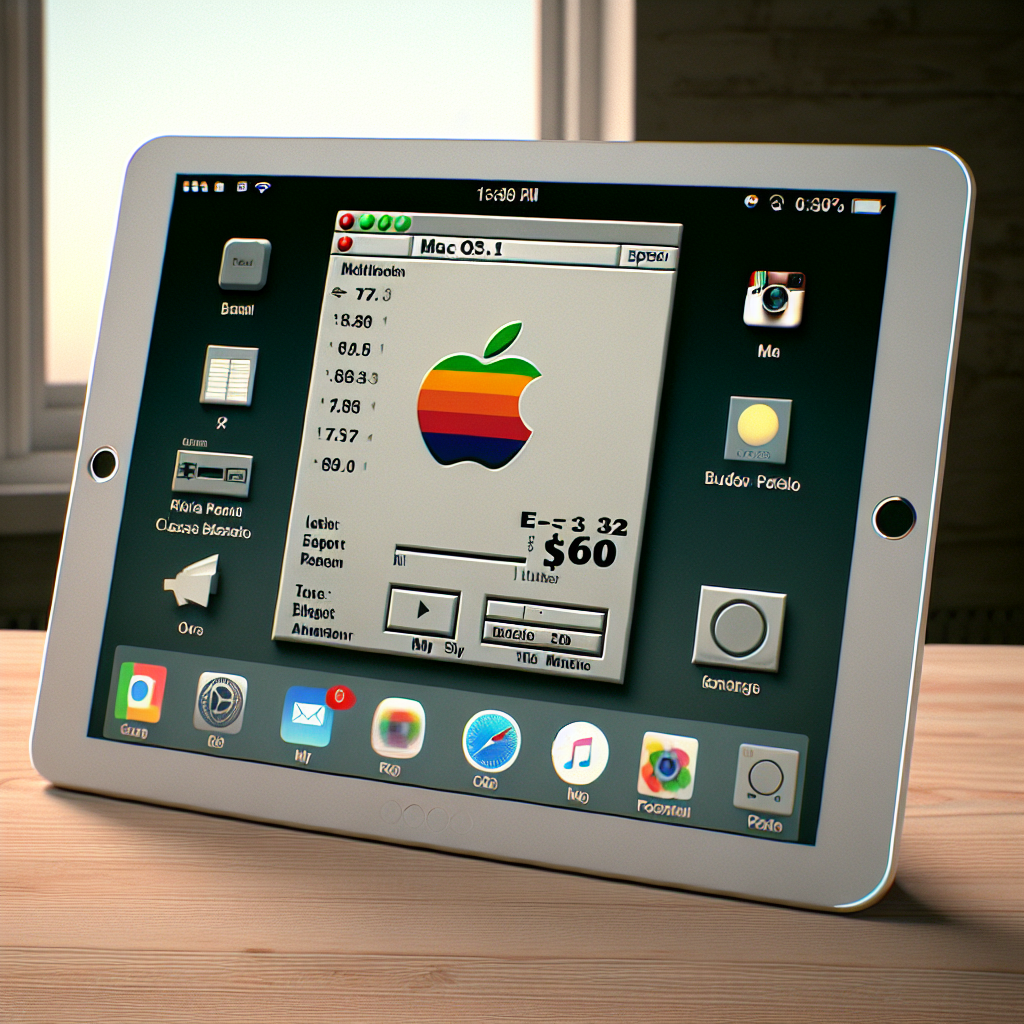
In a remarkable convergence of retro computing and modern microhardware, developers have successfully ported a classic Apple Macintosh emulator onto a modest $60 tablet powered by an ESP32 microcontroller. As first reported by StartupNews.fyi in its article, “Retro Apple Emulator Ported to $60 ESP32 Microcontroller-Powered Touchscreen Tablet, Supports Mac OS 8.1 and a Virtual MC68040 CPU in Major Emulation Leap,” the achievement underscores a significant milestone in both enthusiast computing and the capabilities of embedded systems.
The emulator in question runs a virtual Motorola 68040 processor—Apple’s once-premium CPU of the early 1990s—and is capable of booting and navigating Mac OS 8.1, a pinnacle release from the pre-OS X Macintosh era. This emulation breakthrough occurs on hardware generally marketed for basic IoT and consumer applications: the ESP32 microcontroller, known for its low-cost, low-power wireless computing features.
Typically considered inadequate for complex system emulation due to its limited memory and processing resources, the ESP32’s successful deployment for running a full Macintosh operating system via touchscreen is a result of detailed optimization work by engineers and hobbyists. By tailoring the emulator software specifically for the constraints of the ESP32-based device, the development team has effectively turned a budget tablet into a functional homage to mid-1990s desktop computing.
Crucially, the emulator simulates a full 68040 CPU environment, allowing the system to run original Macintosh applications, including productivity software and legacy games. Although performance is not comparable to modern tablets or even original Mac hardware from the era, the fluidity observed in the demoed applications marks a significant advance in the field of low-power emulation.
Industry observers point to this as more than a nostalgic novelty. The ability to emulate a widely respected legacy computing environment on minimal hardware opens opportunities in education, software preservation, and affordable computing. As the global right-to-repair and retro tech movements gain momentum, this type of development signals a strong cultural and practical interest in making historic digital environments accessible and operable on modern, cheap platforms.
The use of Mac OS 8.1, remembered for its relative stability and user-friendly interface in the years before Apple’s transition to OS X, adds symbolic resonance to the project. While Apple itself has moved far from its classic OS roots, interest in preserving and interacting with its early software ecosystems remains vibrant among both archivists and enthusiasts.
Despite the technical limitations of the ESP32, the emulator’s robust functionality suggests continuing potential for underpowered or repurposed devices to host experiences once reserved for high-end desktop computers. Though not intended for mainstream deployment, developments such as this emphasize the continuing adaptability and relevance of legacy software—and the ingenuity of the communities working to keep it alive.