In a significant step forward for energy storage technology, researchers have unveiled a new battery design that dramatically boosts performance metrics by reimagining electrode architecture. According to the article “Thick-electrode battery design could boost both power and capacity” published by Tech Xplore, scientists have demonstrated a method for building thick electrodes that could break the conventional trade-off between energy density and power output—two properties traditionally at odds in battery engineering.
The breakthrough comes from the Drexel University College of Engineering, where materials scientists developed a breakthrough cathode design based on a novel structure of MXene, a family of two-dimensional transition metal carbides known for their high electrical conductivity. Typically, increasing electrode thickness to improve energy capacity results in sluggish charge and discharge rates, due to slower ion and electron transport. However, the team’s experimental MXene electrode counters this limitation by combining high conductivity with a porous architecture that facilitates rapid ion diffusion.
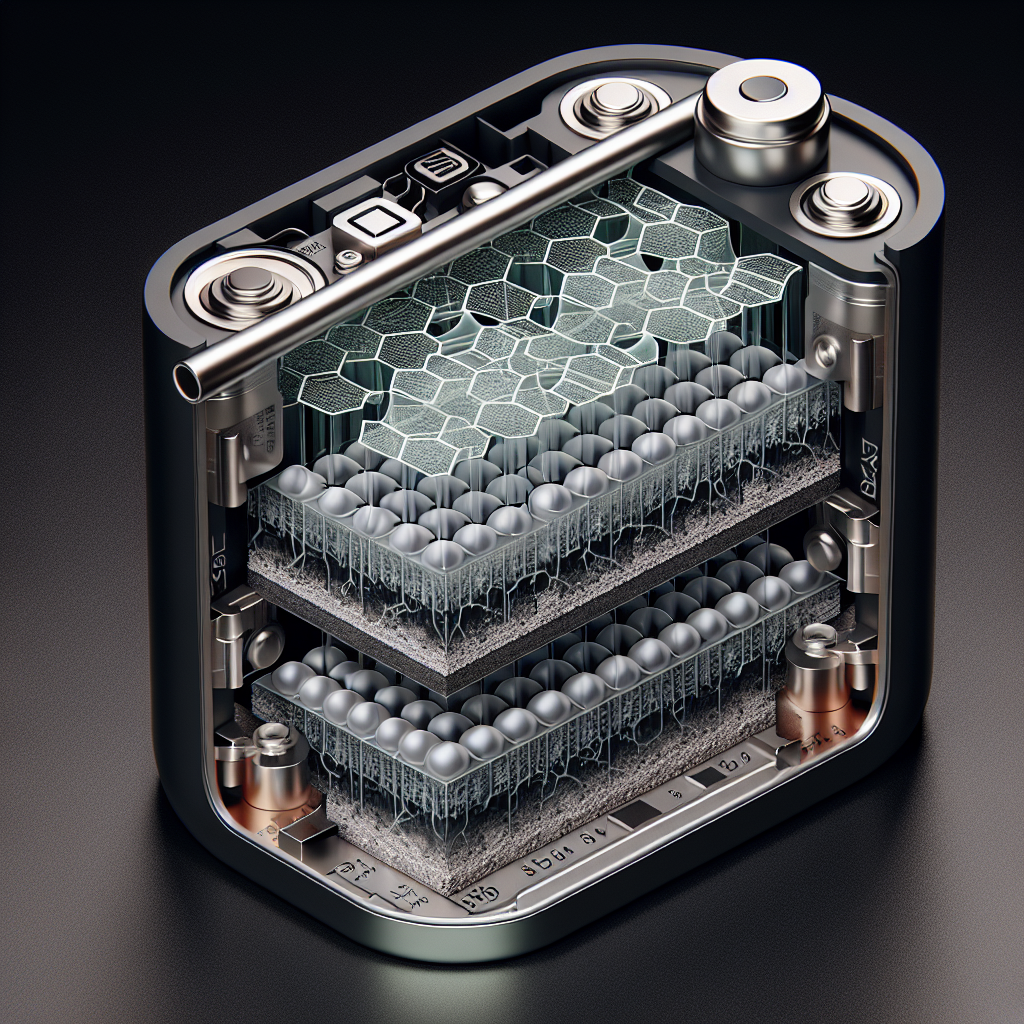
Using freeze-drying and a subsequent lamination process, the researchers fabricated a centimeter-thick electrode with a vertically aligned, channel-like internal structure. This anisotropic architecture allows for faster directional transport of ions and electrons—essentially creating express lanes for charge flow, which compensates for the otherwise limiting thickness.
According to lead researcher Yury Gogotsi, the development addresses one of the most persistent issues in battery design: the so-called “thickness problem.” Batteries with thick electrodes usually suffer from low power output, making them unsuitable for applications requiring fast charging or discharging. But by aligning the internal pathways of the electrode material, the new design achieves both high energy and high power densities—an uncommon combination in the current realm of battery technologies.
In lab tests, the MXene-based supercapacitor demonstrated ten times the energy density of conventional carbon-based devices while maintaining rapid charging capabilities. While still in experimental stages, the implications of this technology are wide-ranging. Potential applications could include electric vehicles, portable electronics, and grid-level energy storage—all sectors that demand not only high capacity but also quick energy turnover.
The researchers have noted that while MXene materials are relatively expensive and complex to manufacture at present, the principles of this vertically oriented electrode architecture could be applied to a broader range of materials. This could pave the way for scalable production methods that bring enhanced battery performance to commercial viability.
As global demand for cleaner energy converges with an increasing reliance on mobile and grid technologies, innovations that simultaneously optimize power density and energy capacity are likely to form the backbone of next-generation storage systems. The findings from Drexel University represent a promising direction in meeting such challenges.