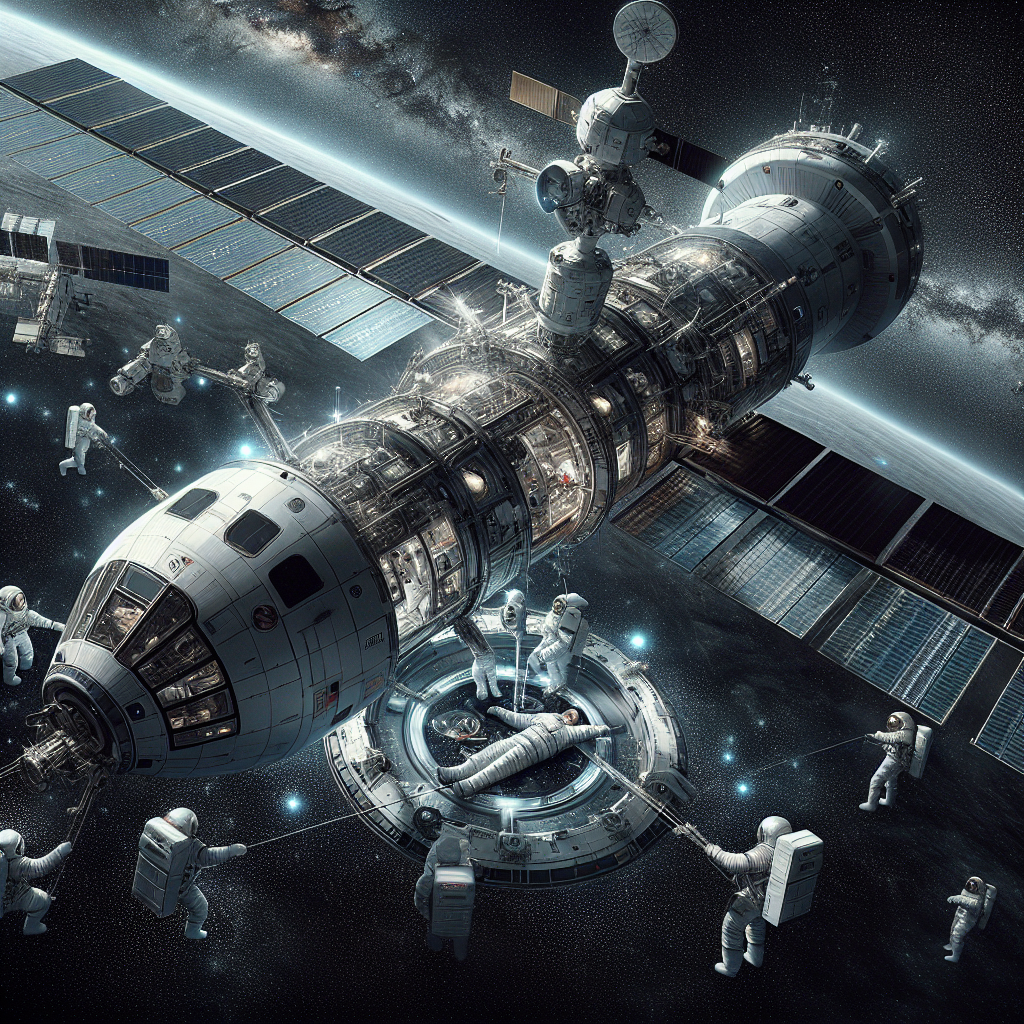
In a milestone moment for spaceflight and orbital medical response, NASA has successfully completed its first-ever medical evacuation from space, marking a new chapter in astronaut safety protocols. As reported by StartupNews.fyi in the article titled “NASA’s First Medical Evacuation From Space Ends with On-Target Splashdown,” the unprecedented operation culminated in a precise splashdown in the Pacific Ocean, where recovery teams swiftly retrieved the affected crew member for immediate treatment.
The mission involved a coordinated effort between NASA, commercial spaceflight partners, and medical specialists both on Earth and aboard the International Space Station. The astronaut, whose identity and condition have not been officially disclosed, exhibited symptoms that mission doctors determined required urgent terrestrial assessment—a rare determination given space agencies’ traditionally high thresholds for evacuation.
The evacuation was executed via a pre-positioned commercial spacecraft, modified to accommodate both crew return and medical stabilization equipment. After securing clearance from NASA flight directors and verifying Earth reentry conditions, the spacecraft undocked from the ISS and began its descent. The capsule landed within targeted coordinates in the Pacific Ocean, approximately 12 hours after undocking. Naval and aerospace recovery teams met the capsule within minutes, ensuring expedited transfer to a medical facility.
NASA has continually emphasized astronaut health and safety as a cornerstone of human spaceflight. With increasing durations for missions aboard the International Space Station and future plans involving lunar and Martian expeditions, the success of this operation is being seen as a crucial proof-of-concept for contingency medical responses beyond low Earth orbit.
While the astronaut reportedly remains in stable condition and is under observation, NASA has yet to release further medical details, citing privacy standards. However, mission officials are already reviewing and analyzing the operation to refine protocols for future uses.
Experts note that while spacecraft have always had the technical capacity to return crew in an emergency, the deliberate use of that capacity for medical reasons represents a substantial step forward. With private partners now playing an integral role in human spaceflight, the operation also underscores the evolving dynamics of collaboration in crisis scenarios.
NASA Administrator Bill Nelson commended the teams involved, stating that the success of the mission “demonstrates the maturity of our capabilities in keeping astronauts safe, regardless of the complexity or distance of their missions.”
As space exploration ventures further into deep space, this medical evacuation sets a precedent that future missions—and their crews—will likely depend on.