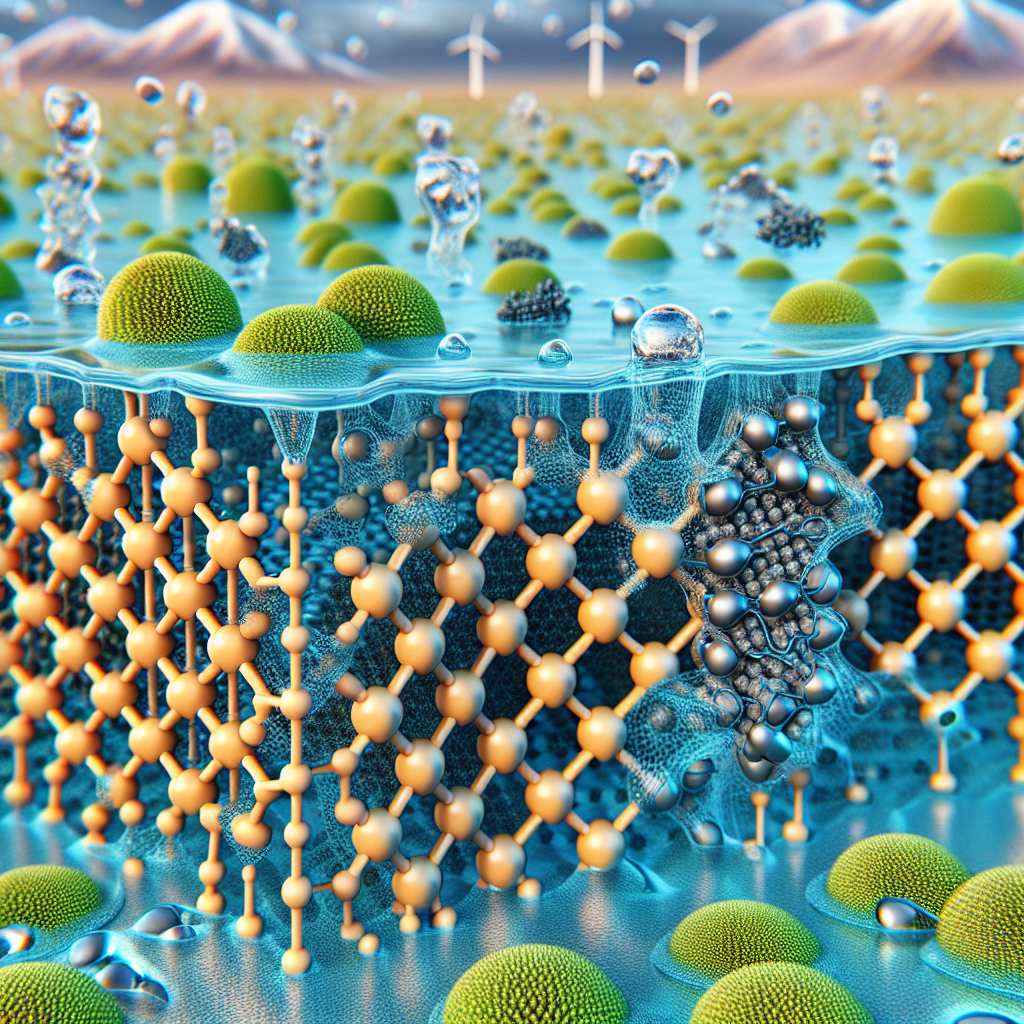
In a significant advancement in water purification technology, researchers have enhanced the performance of graphene-based membranes by precisely adjusting levels of oxygen within them. According to a recent report published by Tech Xplore titled “Oxygen-tuned graphene filters boost natural water filtration,” the development represents a promising stride toward more efficient and sustainable water treatment solutions.
The research focuses on porous graphene oxide membranes, a class of materials lauded for their strength, flexibility, and filtration capabilities. Engineers have long recognized graphene oxide’s potential in removing contaminants from water due to its thin structure and high permeability. However, controlling the selectivity and flow of water through these membranes has remained a challenge—until now.
A team of scientists at the University of Manchester, working in collaboration with international partners, discovered that by precisely regulating oxygen content at the atomic level, they could fine-tune the spacing and hydrophilic properties of the membranes. This tuning permits the selective passage of water molecules while blocking unwanted solutes, improving both efficiency and water recovery rates.
Importantly, the process mirrors mechanisms found in natural filtration systems, such as those in plant roots and cell membranes. By mimicking these biological processes, the researchers have created a synthetic material that not only performs at a high level but also requires relatively low energy input, making it suitable for broad deployment in resource-constrained settings.
One of the study’s lead investigators, Professor Rahul Nair, explained that the method enables the tailoring of membrane behavior on demand, advancing the design of next-generation filtration systems. “This allows the development of flexible membranes that can be adapted for various water purification applications,” he said. The performance improvements include higher water flux and enhanced pollutant rejection without compromising membrane durability.
The team employed advanced imaging and modeling techniques to understand how different oxygen functional groups interact within the membrane matrix. These findings also have implications beyond water purification, potentially impacting sectors such as gas separation, biomedical technologies, and environmental sensing.
The breakthrough is seen as an important step toward achieving global water security. With increasing water scarcity affecting populations worldwide, low-cost and effective filtration technologies are in critical demand. Innovations like the oxygen-tuned graphene filters offer a scalable approach to meet these needs.
The study underscores the value of interdisciplinary collaboration, merging insights from materials science, chemistry, and environmental engineering. As the researchers move forward, they plan to explore further industrial applications and work with partners to transition the technology from laboratory-scale demonstrations to real-world deployment.
This research, as reported by Tech Xplore, exemplifies how atomic-level manipulation in advanced materials can lay the foundation for transformative technologies in environmental stewardship.