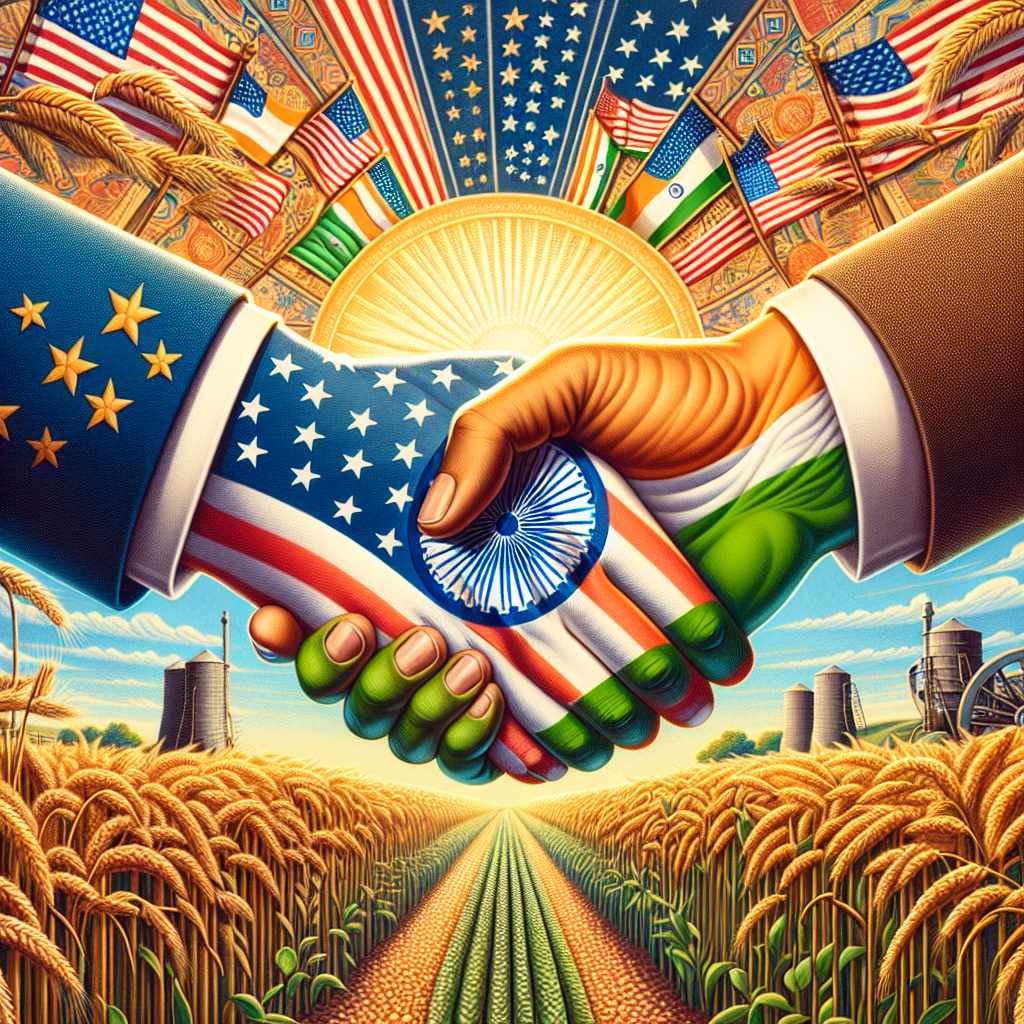
India’s recent trade agreement with the United States has drawn attention amid ongoing efforts to strengthen bilateral commercial ties while balancing domestic economic considerations. Union Minister for Commerce and Industry Piyush Goyal confirmed that an interim trade understanding between the two countries will not compromise India’s agricultural interests and has, in fact, preserved them through a carefully negotiated framework.
As reported in “Piyush Goyal Explains India-US Interim Trade Deal; Farmers’ Interests Protected, 18 Tariffs Rescinded” by The Economic Times, the minister emphasized that the deal involves revocation of 18 retaliatory tariffs previously imposed by India on select U.S. goods. These measures were originally enacted in response to American tariffs on Indian steel and aluminum during the previous U.S. administration, actions which were rolled back as relations improved under the Biden administration.
According to Goyal, the interim trade resolution was structured after careful internal consultations, particularly keeping in mind the sensitivities of India’s farming community. “India has not compromised on any issue which impacts our agricultural domain or the interest of Indian farmers,” he reiterated during his remarks, underscoring the government’s intention to protect vital domestic constituencies amid global economic engagements.
The rollback of tariffs affects a diverse set of imports, including key American agricultural commodities such as almonds, apples, walnuts, and lentils. However, government officials have sought to reassure domestic stakeholders that these changes will not disrupt India’s agrarian markets but rather aid in reducing import costs and enhancing consumer choice.
This development is the latest in a series of positive trade overtures between the two nations following Prime Minister Narendra Modi’s official state visit to Washington in 2023. During the visit, both sides committed to resolving long-standing trade disputes and to improving market access in a manner that supports fair competition and mutual growth. In that context, the interim deal appears to be a preliminary yet promising step toward a more comprehensive trade agreement.
Minister Goyal termed the negotiations as “balanced and mutually beneficial,” projecting that the formalization of the agreement lays the groundwork for increased bilateral trade volume and improved diplomatic confidence. However, analysts caution that longer-term arrangements will need to address more complex issues, including digital trade norms, agriculture subsidies, and regulatory standards — all of which feature prominently in U.S.-India economic discussions.
The announcement has been received cautiously by different sectors within India. Agricultural groups have called for transparent disclosures on each product category impacted, while trade bodies have broadly welcomed the relaxation of tariffs as a boost to competitiveness.
As India continues to recalibrate its role in global supply chains and seeks to position itself as a reliable trade partner, its balancing act between protecting domestic interests and embracing global market integration is likely to remain a defining feature of its commercial diplomacy. The interim deal with the U.S., as described by Goyal, is emblematic of that approach.