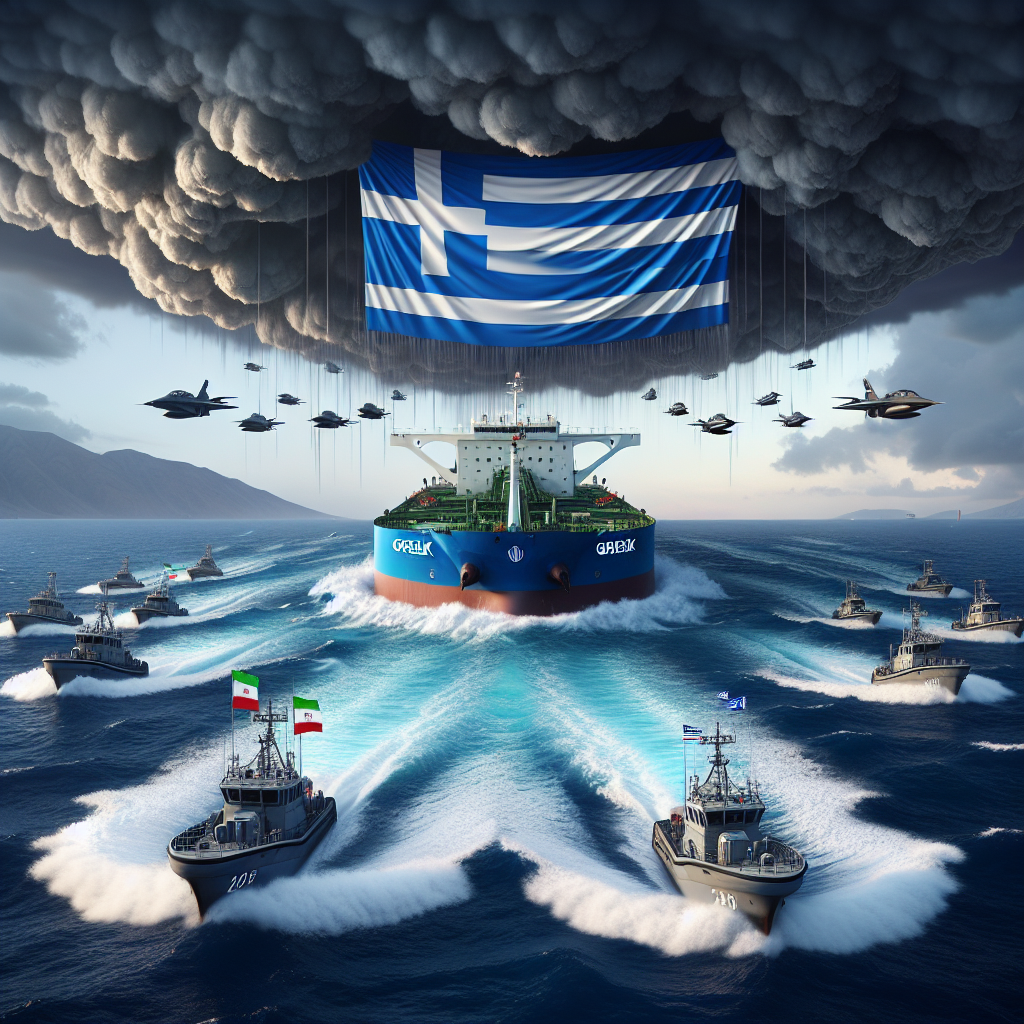
Escalating tensions in the Persian Gulf culminated in a significant naval standoff on Saturday, as Iran seized two Greek oil tankers in response to Greece’s earlier involvement in the confiscation of Iranian oil. These actions underscore the ongoing volatility in the region, which is critical to global energy supplies. The situation has the potential to exacerbate existing geopolitical strains and further impact the global oil markets, which have already been under pressure due to various international disputes and sanctions regimes.
The confrontation began when Iran’s Islamic Revolutionary Guard Corps (IRGC) surrounded and subsequently seized the Greek tankers in the international waters of the Persian Gulf. The official IRGC statement justified the action as a direct response to Greece’s role in the seizure of oil from an Iranian tanker, which was being held on behalf of the United States due to sanctions. The tanker, believed to be carrying oil bound for the U.S., was initially docked at a port in Texas.
The Iranian Foreign Ministry has expressed its objections through diplomatic channels, accusing Greece of aiding in the “theft” of its national assets. In a subsequent move, Iran summoned Greece’s chargé d’affaires to formally protest and convey the nation’s condemnation of what is viewed by Tehran as an unlawful interception by Greek authorities.
This maritime impasse highlights the broader geopolitical chess game involving oil-rich West Asian nations and their global North counterparts who are bound by various international agreements and sanctions. Notably, U.S. sanctions on Iran’s oil industry have been a cornerstone of American policy aimed at curtailing Iran’s nuclear program. These sanctions have significantly strained Iran’s economy, reducing its ability to export oil, thus impacting its major revenue stream.
The Greek Ministry of Foreign Affairs has decried the seizure, labeling it as “piracy” and highlighting the shortcomings in international protocol regarding such high-seas confrontations. In an announcement, the Greek Ministry called for the immediate release of the vessels and their crew, emphasizing the importance of adhering to maritime laws and conventions.
This incident casts a light on the fragile nature of international relations in the energy sector, particularly in strategically vital regions such as the Persian Gulf. It underscores the potential for conflict escalation that can stem from enforcing international sanctions and the delicate balance nations must navigate between adhering to these sanctions and protecting their own economic interests.
The seizure of the Greek tankers not only poses immediate concerns regarding the safety and legal rights of the ships’ crews but also raises important questions about the security of international shipping routes. The Persian Gulf is a critical artery for the transport of oil, hosting approximately a third of the world’s shipped oil daily. Any threat to the security of navigation in this region can have disproportionate effects on global energy prices and supply chains.
Further complicating matters, the international community remains divided on the approach to Iran’s nuclear ambitions and how best to handle Tehran’s role in regional politics. While some countries advocate for stringent sanctions and isolation, others call for a more conciliatory approach that might foster dialogue and ease tensions.
In retrospect, this incident is not just a bilateral issue between Greece and Iran but a reflection of the broader challenges facing international diplomacy, security, and the global economy. How this situation unfolds could set precedents for future interactions in international waters and influence global diplomatic strategies around sanctions, sovereignty, and the universally acknowledged rights of passage.
As reported by Calcalist, an Israeli publication that first highlighted the incident under the title “Iran seizes two Greek tankers in the Persian Gulf,” the outcomes of this event could ripple across multiple dimensions, from diplomatic relations to economic impacts in oil-dependent economies around the world.