In a groundbreaking development within the field of robotics, a collaborative team of engineers has unveiled a robot capable of achieving an unprecedented level of tactile sensitivity, enough to gently handle a potato chip without causing damage. This remarkable achievement was reported in the article “Robot with delicate enough touch to pick up a potato chip” published by Tech Xplore.
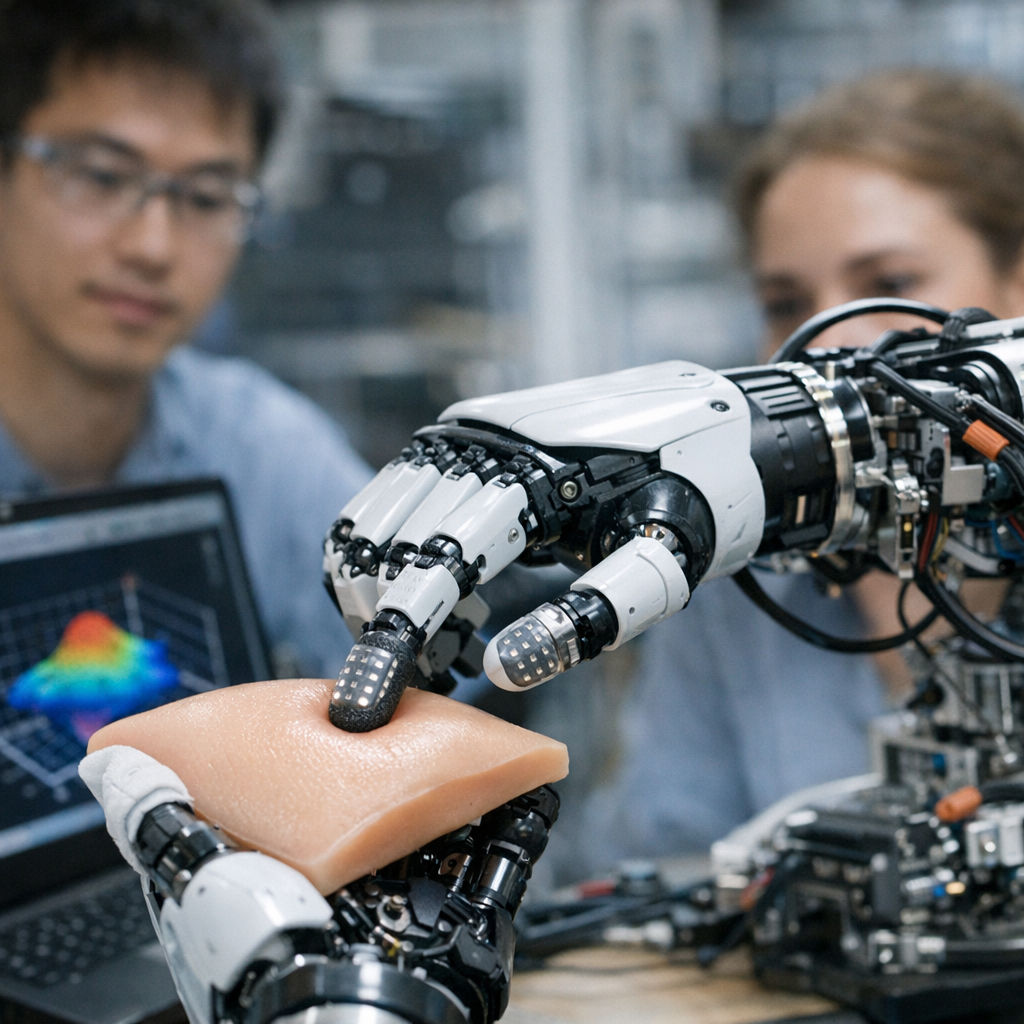
The advent of this robotic advancement marks a significant leap forward in robotics, a domain already undergoing rapid evolution due to constant technological innovation. The newly developed robot, credited to the ingenuity of engineers from the California Institute of Technology, signals a promising future for applications where precision and delicacy are paramount. Equipped with advanced soft robotics technology, the robot’s ability to handle extremely fragile objects is facilitated by sophisticated sensors and algorithms that emulate the nuanced dexterity of a human hand.
The underlying technology is built on the premise of soft robotics, a field that diverges from traditional rigid construction in favor of more flexible, adaptable materials. This approach not only allows for the subtlety required to handle delicate items but also enhances the safety and versatility of robots interacting within human-centric environments. The capability to pick up and manipulate an object as delicate as a potato chip is a testament to the level of control and sensitivity that can be achieved with this technology.
Implications of this technological leap are vast, encompassing sectors such as medicine, manufacturing, and potentially food handling. In healthcare, robots capable of delicate touch could prove transformative in surgical procedures or patient care, where precision and a gentle touch are crucial. Similarly, in industrial settings, such advanced robotics could revolutionize manufacturing processes that require handling sensitive materials with care.
The engineers behind the invention attribute the success of this robot to an innovative integration of machine learning algorithms and pliable materials that mimic the fine motor skills typical of a human limb. These algorithms process vast amounts of data to predict and adjust to the physical properties of materials they interact with, thereby increasing the degree of control over the object’s handling.
While this development showcases significant progress, the path to practical deployment still demands addressing challenges such as cost-efficiency and durability of materials. Nonetheless, the demonstration of this robot’s capabilities offers a glimpse into a future where robots can execute tasks requiring dexterity and sensitivity, with possible widespread applications that were previously thought to be the exclusive province of humans.
In conclusion, the successful demonstration of a robot with the capability to delicately pick up a potato chip underscores a promising evolution in robotic technology, highlighting how collaborative innovation continues to blur the lines between human-like dexterity and machine efficiency. As the field of robotics continues to advance, its growing integration into various aspects of daily life seems not just inevitable, but profoundly transformative.