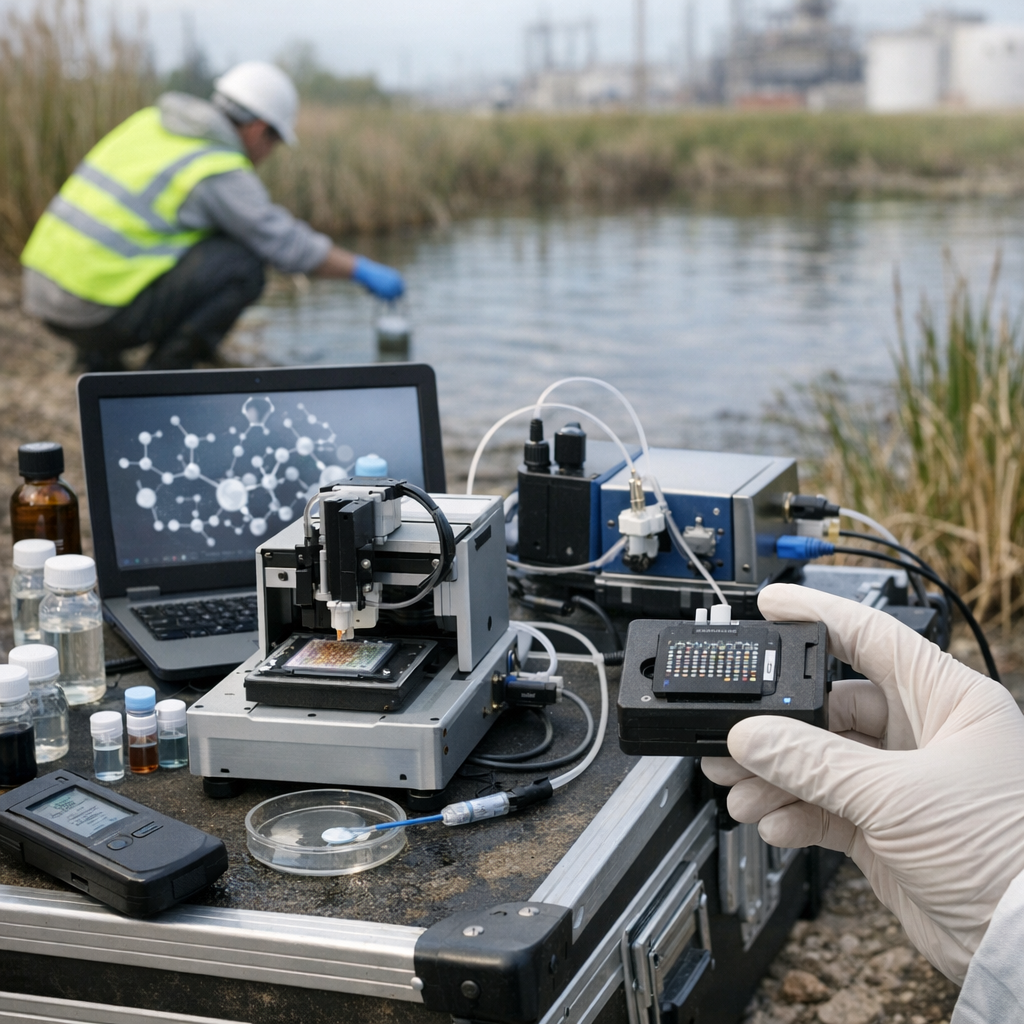
Growing global concern about per- and polyfluoroalkyl substances (PFAS) contamination has intensified the search for faster and more practical testing methods. A recent report by Innovation News Network, in an article titled “BAMS molecular printing platform transforms on-site PFAS analysis,” highlights a technological development aimed at significantly improving how these persistent pollutants are detected in the environment.
PFAS chemicals, often referred to as “forever chemicals,” are widely used in industrial processes and consumer products because of their resistance to heat, water, and oil. Their stability, however, also makes them difficult to break down in nature. As a result, PFAS have been found in water supplies, soils, and living organisms around the world, creating growing public health and regulatory concerns. Detecting them typically requires laboratory-based testing using sophisticated instruments such as liquid chromatography and mass spectrometry, methods that are highly accurate but expensive and time-consuming.
According to the article published by Innovation News Network, researchers have developed a platform known as BAMS molecular printing that aims to bring PFAS detection directly into the field. The system relies on a process described as “molecular printing,” which creates highly selective recognition sites capable of binding to specific PFAS compounds. These binding sites function somewhat like synthetic receptors, designed to capture particular molecules with a high degree of specificity.
The technology is intended to be incorporated into portable analytical systems, allowing environmental investigators to test water samples on site. By eliminating the need to transport samples to centralized laboratories, the approach could reduce the delay between sampling and results from days or weeks to a much shorter timeframe. Faster detection could enable regulators, environmental engineers, and water utilities to assess contamination more quickly and respond with mitigation measures sooner.
Another key feature of the system described in the Innovation News Network report is its adaptability. The molecular printing strategy can be engineered to recognize different PFAS compounds, a critical capability given the scale and diversity of the PFAS chemical family. Thousands of related substances exist, and many remain poorly monitored because traditional analytical testing is resource-intensive.
Researchers involved in developing the platform emphasize that improving accessibility to PFAS testing is essential as regulatory scrutiny increases worldwide. Governments in North America, Europe, and elsewhere are tightening drinking water standards and expanding environmental monitoring programmes, placing new demands on testing infrastructure. Technologies that simplify and reduce the cost of field analysis may therefore play an increasingly important role in environmental oversight.
While further validation and commercial development are expected, the approach highlighted in Innovation News Network’s article suggests a shift toward more decentralized monitoring systems. As PFAS contamination continues to draw attention from policymakers and communities, tools capable of delivering rapid, reliable data in the field could help accelerate both scientific understanding and regulatory response.