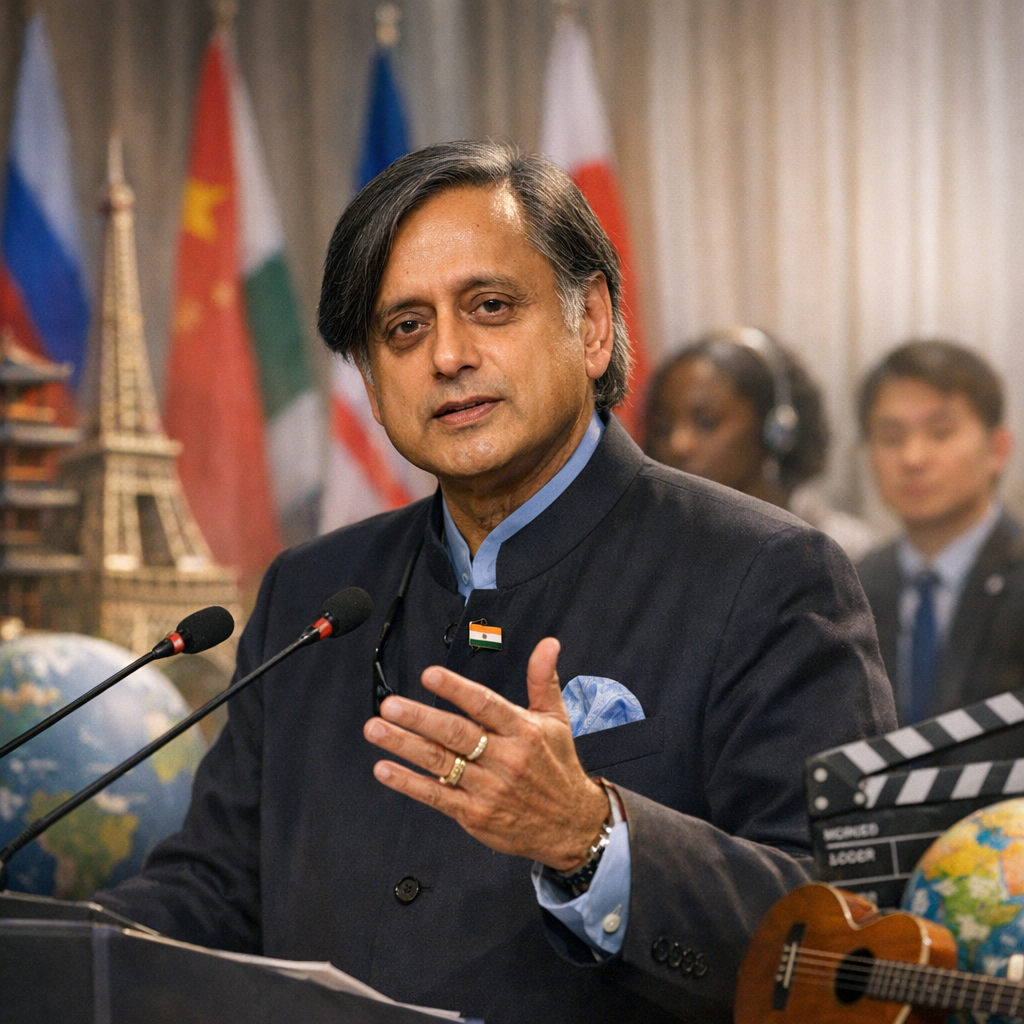
Indian parliamentarian and author Shashi Tharoor has signaled what he sees as a shifting global dynamic in which traditional measures of power are increasingly supplemented, and in some cases challenged, by less tangible forms of influence. In a recent interview highlighted in the Economic Times video report titled “This is the currency of global influence: Shashi Tharoor flags new power shift,” Tharoor argued that the ability to shape narratives, perceptions, and cultural appeal is becoming a defining element of geopolitical strength.
Tharoor’s comments reflect a broader reassessment underway among policymakers and analysts about how power is exercised in an interconnected world. While economic output and military capability remain critical, he suggested that countries are now competing in what might be described as the marketplace of ideas and influence. This “currency” of global influence, as he framed it, includes soft power assets such as culture, democratic values, diplomacy, and the credibility of institutions.
The remarks come at a time when geopolitical competition is intensifying across multiple fronts, from trade and technology to information ecosystems. Tharoor emphasized that influence today is often less about coercion and more about persuasion—about shaping global conversations, building trust, and projecting legitimacy. Nations that can effectively communicate their values and foster international goodwill, he implied, are better positioned to navigate complex global challenges.
India, he suggested, has an opportunity to leverage its own unique strengths in this evolving landscape. With its democratic framework, diaspora, cultural reach, and growing economic footprint, the country has the potential to expand its influence beyond conventional metrics of power. However, doing so consistently requires coherence in messaging, sustained diplomatic engagement, and the strengthening of domestic institutions that enhance credibility abroad.
The Economic Times report underscores that Tharoor’s perspective aligns with a wider shift in global discourse, where influence is increasingly diffuse and contested. As traditional hierarchies are questioned and new actors emerge, the ability to command attention and respect on the world stage may hinge less on dominance and more on resonance.
In this context, the notion of a “currency of global influence” captures a subtle but significant transition: from power defined primarily by hard assets to one shaped by narrative authority and the capacity to connect across borders.