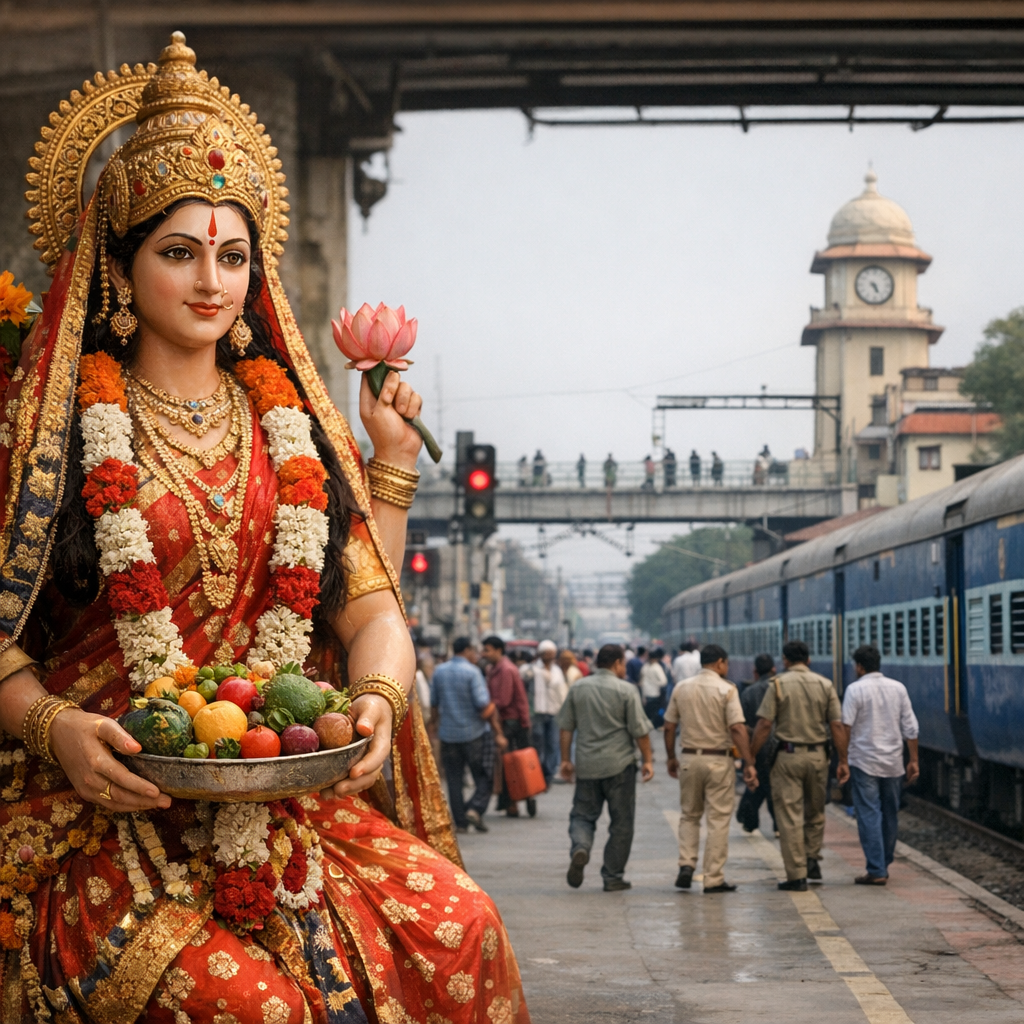
A Congress Member of Parliament has renewed a political and cultural debate in Uttar Pradesh by calling for Saharanpur railway station to be renamed after the revered deity Maa Shakambhari Devi, according to a report by The Economic Times titled “Rename Saharanpur railway station after Maa Shakambhari Devi: Congress MP Imran Masood.”
Imran Masood, who represents the Saharanpur constituency, argued that the proposed renaming would reflect the region’s deep-rooted religious and cultural identity. Maa Shakambhari Devi, whose temple is located in the Saharanpur district, holds significant importance among devotees across western Uttar Pradesh and neighboring states. Masood has framed the proposal as a recognition of local heritage rather than a political gesture, emphasizing the temple’s historical and spiritual significance.
The call comes amid a broader pattern in India where railway stations, cities, and public institutions have been renamed to align with cultural, historical, or religious narratives. While such moves have often been spearheaded by the ruling Bharatiya Janata Party, Masood’s proposal signals that the practice has found resonance across party lines, albeit with varying motivations and interpretations.
Masood’s suggestion is also likely to invite scrutiny, given the sensitivities surrounding name changes and their potential to spark political and social debate. Critics of renaming exercises have frequently questioned their necessity, arguing that governance priorities should focus on infrastructure, development, and public services rather than symbolic changes. Supporters, however, contend that such measures restore cultural pride and correct historical omissions.
The Economic Times report notes that Masood has sought official consideration for the proposal, though no formal government response has been confirmed. Any decision to rename a major railway station would require approval from multiple administrative bodies, including the Ministry of Railways and, in some cases, the Union Home Ministry.
The issue underscores the continuing interplay between identity, politics, and public infrastructure in India. As the debate unfolds, it is likely to test how political actors balance cultural recognition with administrative priorities in a diverse and symbolically complex landscape.