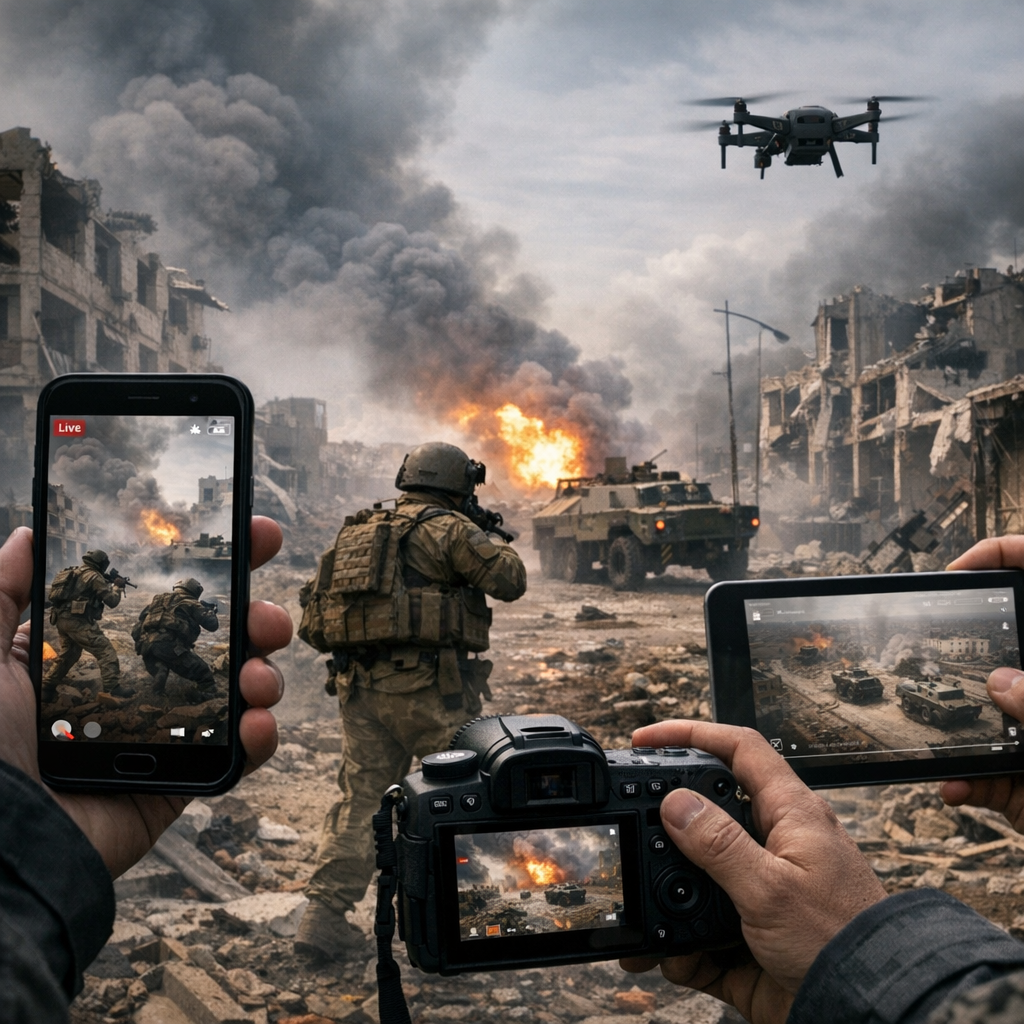
A recent Wired article, “Livestream the War Machine,” examines a rapidly evolving feature of modern conflict: the use of livestreaming platforms to document, shape, and at times distort the realities of war. As frontline fighters, military units, and civilians increasingly broadcast events in real time, the boundaries between information, propaganda, and entertainment are becoming harder to distinguish.
The piece highlights how affordable smartphones, widespread connectivity, and platforms designed for immediacy have transformed the battlefield into a digital theater. Combat footage that once passed through layers of military review can now appear instantly on public feeds, often viewed by global audiences within seconds. This shift has reduced governments’ control over wartime narratives while simultaneously creating new opportunities for strategic messaging.
According to Wired’s reporting, some military actors have begun to embrace livestreaming as a psychological tool. By broadcasting operations live, they can project strength, intimidate adversaries, and rally domestic or international support. At the same time, these streams can expose tactical details, raising concerns among analysts about operational security and the unintended consequences of public visibility.
The article also points to the growing role of individual combatants and civilians as content creators. Fighters sometimes cultivate online followings, blending personal storytelling with footage from active conflict zones. While this can humanize participants and provide unfiltered insights into the lived experience of war, it can also blur ethical lines, turning violence into shareable content and incentivizing sensationalism.
Wired further notes the challenge this environment poses for verification. Livestreams are often perceived as inherently authentic due to their immediacy, yet they can still be selectively framed, misleading, or manipulated. Analysts and journalists must now contend with an overwhelming volume of real-time material, complicating efforts to establish accurate accounts of events on the ground.
The broader implication, as “Livestream the War Machine” suggests, is that warfare is not only being fought physically but also continuously mediated through digital platforms. Public perception, shaped in real time by fragmented and emotionally charged footage, has become an integral component of modern conflict. As technology continues to evolve, so too will the strategies used by those seeking to control how war is seen, understood, and remembered.