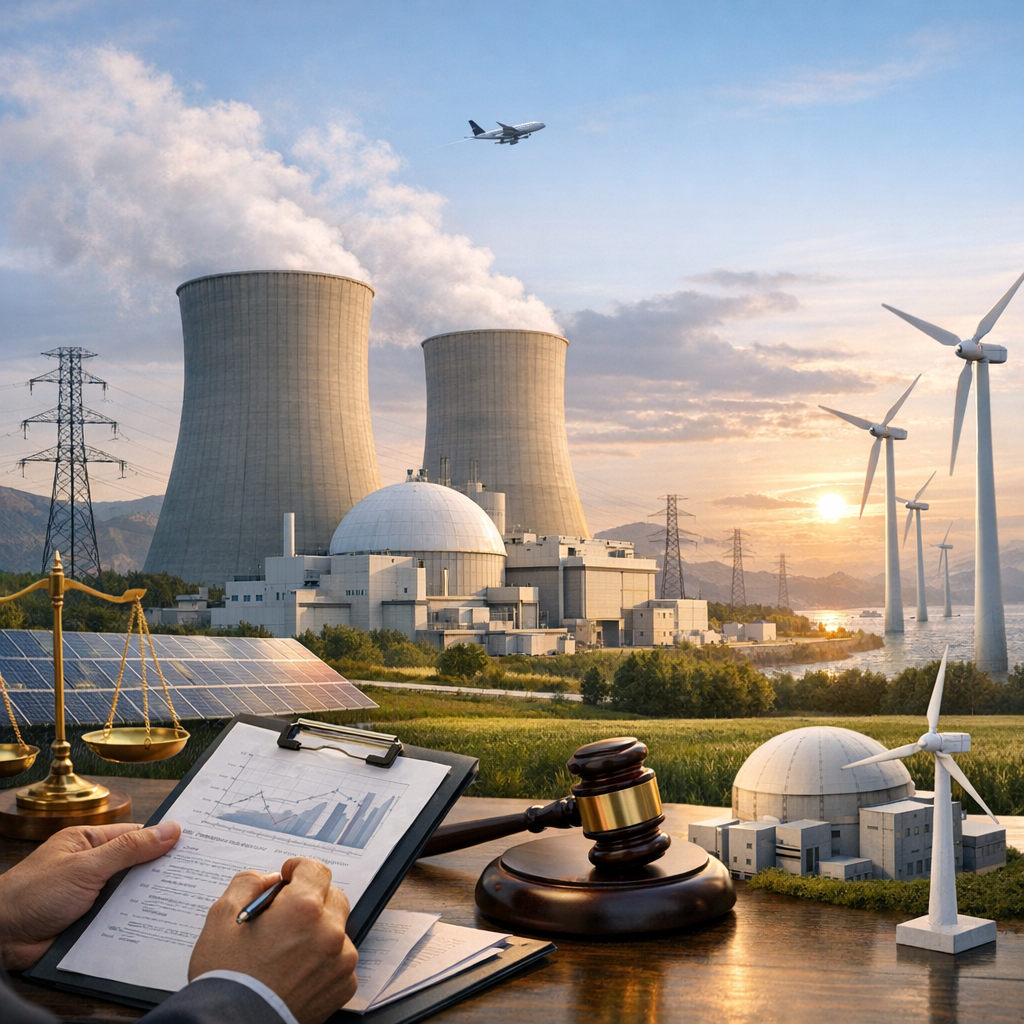
A durable policy framework that supports nuclear energy as part of the transition to net zero emissions is essential if governments are to meet long-term climate goals, according to a recent article titled “Establishing a long-term policy vision in favour of net zero nuclear,” published by Innovation News Network. The piece argues that while renewable energy sources will play a central role in decarbonisation, nuclear power provides a stable, low-carbon complement that can help ensure energy security and grid reliability.
The article highlights that achieving net zero requires not only scaling up existing technologies but also committing to consistent, long-term policymaking. Nuclear energy, with its high upfront costs and extended project timelines, is particularly sensitive to political and regulatory uncertainty. Without clear, sustained support from governments, investment in new nuclear capacity is likely to remain constrained, limiting its potential contribution to emissions reduction.
A central theme is the need for policy coherence. Short-term or fragmented policy measures, the article suggests, undermine investor confidence and delay infrastructure development. Instead, governments are urged to adopt long-range strategies that integrate nuclear energy into broader climate and energy plans. This includes stable financing mechanisms, streamlined regulatory processes, and alignment with industrial and environmental objectives.
The Innovation News Network article also points to the evolving role of advanced nuclear technologies, including small modular reactors (SMRs). These systems promise lower upfront costs, greater flexibility, and potentially faster deployment compared to traditional large-scale plants. However, their commercial viability will depend heavily on supportive regulatory frameworks and sustained public and private investment.
Public perception remains another critical factor. The article notes that concerns around safety, waste management, and cost continue to shape the debate around nuclear energy. Addressing these concerns through transparency, technological innovation, and rigorous oversight is presented as essential to securing broader societal acceptance.
International collaboration is also emphasised as a means of accelerating progress. Shared standards, joint research initiatives, and coordinated financing approaches could help reduce costs and spread risk, particularly for emerging technologies. In this context, nuclear energy is framed not as a standalone solution but as part of a diversified, global approach to decarbonisation.
While renewable energy sources such as wind and solar are rapidly expanding, the article argues that their intermittency creates challenges for grid stability. Nuclear power, with its ability to provide continuous baseload electricity, is positioned as a stabilising force within a low-carbon energy system. This role becomes increasingly important as electrification expands across sectors such as transport and industry.
Ultimately, the article in Innovation News Network presents nuclear energy as a pragmatic component of the net zero transition, contingent on deliberate and sustained policy support. It concludes that without a clear and consistent long-term vision, the opportunity to leverage nuclear power in meeting climate targets may be significantly diminished.