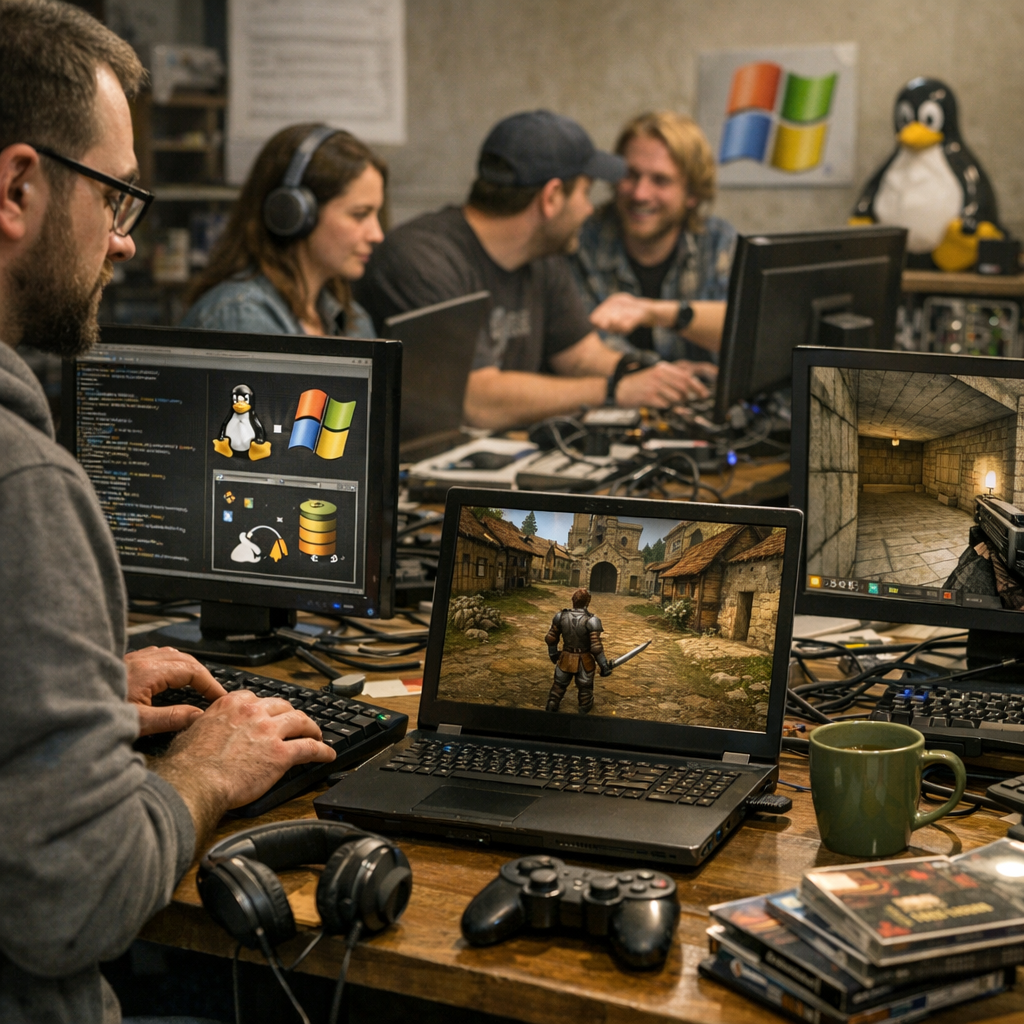
A new community-driven effort is expanding the reach of Linux gaming by improving compatibility for a wide range of classic Windows titles, reflecting the continued maturation of alternative gaming ecosystems. The development, highlighted in the article “New Project Brings Strong Linux Compatibility to More Classic Windows Games” published by StartupNews.fyi, underscores how grassroots and open-source initiatives are narrowing long-standing gaps between Windows and Linux platforms.
The project focuses on adapting and refining compatibility layers that allow older Windows-based games to run reliably on Linux systems without requiring native ports. By building on existing tools such as Wine and Proton, the initiative introduces targeted fixes and optimizations tailored specifically to legacy titles, many of which have historically suffered from performance issues or failed to launch altogether outside of their original environment.
What distinguishes this effort is its emphasis on preservation as much as accessibility. Many classic games are no longer actively supported by their original developers, leaving compatibility challenges unresolved as operating systems evolve. By addressing these gaps, the project contributes to broader digital preservation efforts while simultaneously serving a modern audience of players seeking to revisit older titles on contemporary hardware.
The work also reflects a broader shift in the gaming industry, where Linux is increasingly viewed as a viable platform rather than a niche alternative. Valve’s investment in Proton and the success of the Steam Deck have played a major role in legitimizing Linux gaming, but community-led projects continue to be essential in extending compatibility beyond mainstream releases. In particular, older and less commercially prominent games often depend entirely on volunteer-driven solutions.
Developers involved in the project have reportedly focused on streamlining installation processes and reducing the need for manual configuration, which has historically been a barrier for less technical users. Improvements in stability, controller support, and graphics rendering are key priorities, with early results suggesting noticeable gains in both performance and user experience.
The initiative signals a continued convergence between platforms that were once sharply divided. While Windows remains the dominant operating system for gaming, efforts like this illustrate how compatibility layers are evolving from partial workarounds into robust solutions. For Linux users, the result is a steadily expanding library of playable titles, including games previously considered impractical or impossible to run.
As detailed by StartupNews.fyi, the project is still evolving, with ongoing contributions expected to broaden support further. Its progress will likely be watched closely by both enthusiasts and developers, particularly as interest in open ecosystems and long-term software preservation continues to grow.