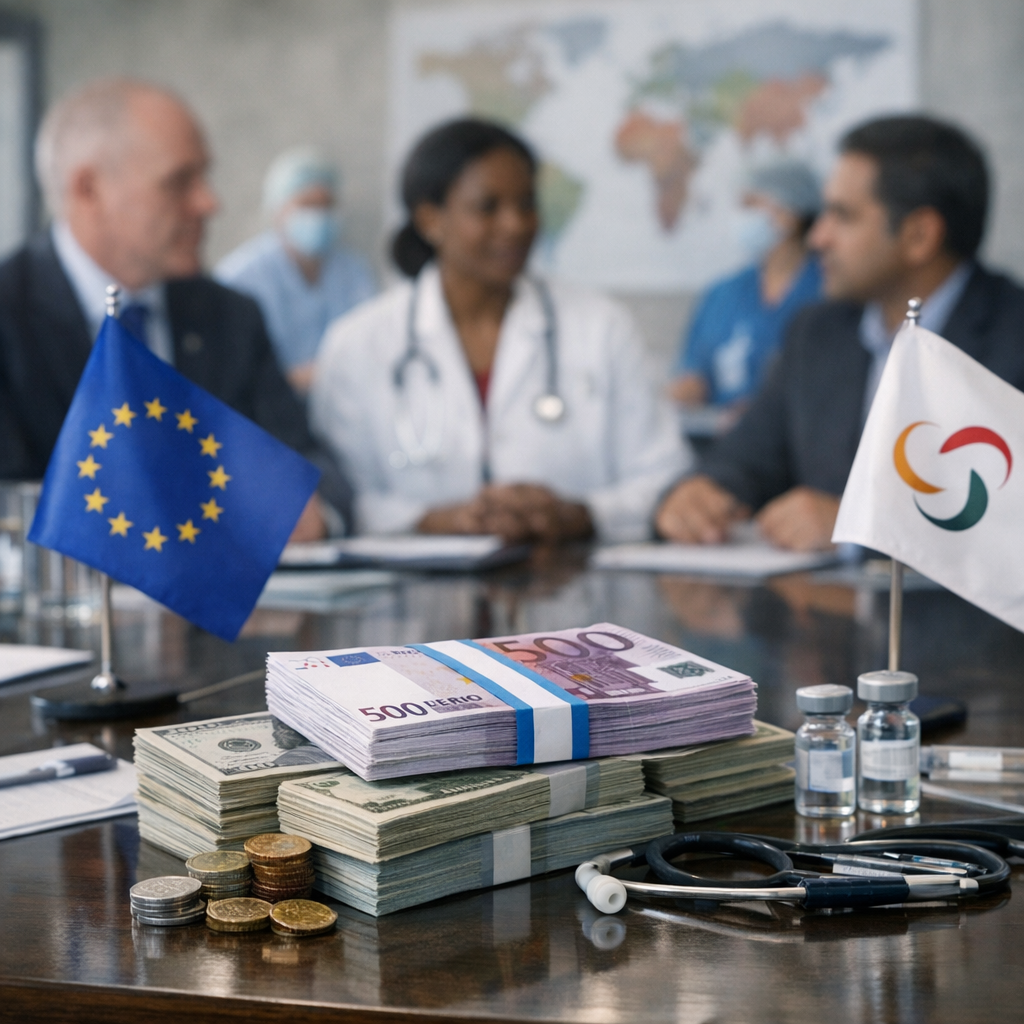
The European Union has pledged €700 million to the Global Fund to Fight AIDS, Tuberculosis and Malaria, reinforcing its position as a leading contributor to global health initiatives at a time of mounting financial and geopolitical pressure on aid systems.
The commitment, reported in the article “EU pledges €700m to Global Fund” by Innovation News Network, forms part of the bloc’s broader effort to sustain progress against some of the world’s most persistent infectious diseases. The funding will support prevention, treatment, and healthcare system strengthening in low- and middle-income countries, where the burden of these diseases remains disproportionately high.
EU officials framed the pledge as both a humanitarian responsibility and a strategic investment in global stability. Infectious diseases continue to pose transnational risks, with health crises capable of undermining economic development, triggering migration pressures, and destabilizing fragile regions. By supporting the Global Fund, the EU aims to reinforce multilateral cooperation at a moment when international aid commitments face increasing scrutiny.
The Global Fund has long been regarded as a cornerstone of international health financing, credited with saving millions of lives since its establishment in 2002. Its model relies on pooled contributions from governments, private sector donors, and philanthropic organizations, directing resources to country-led programs that address HIV, tuberculosis, and malaria. The EU’s latest pledge is expected to help sustain treatment programs for millions of people and expand preventive measures, including access to diagnostics and medications.
However, the broader funding environment remains uncertain. Rising inflation, competing budgetary demands, and shifting political priorities across donor countries have raised concerns about the long-term sustainability of global health financing. In this context, the EU’s contribution may serve as both a stabilizing force and a signal intended to encourage other donors to maintain or increase their commitments.
Public health experts have emphasized that while significant gains have been made over the past two decades, progress is uneven and, in some areas, reversing. The COVID-19 pandemic disrupted routine healthcare services, including testing and treatment programs for HIV, tuberculosis, and malaria. In addition, emerging drug resistance and the impacts of climate change on disease transmission patterns present new challenges.
The EU’s funding is therefore likely to be allocated not only to sustaining existing programs but also to adapting strategies to evolving threats. This includes investment in resilient health systems, improved surveillance, and integrated approaches that address multiple diseases simultaneously.
The pledge also reflects the EU’s broader diplomatic positioning. By maintaining a strong presence in global health funding, the bloc reinforces its role as a key advocate for multilateral solutions and rules-based international cooperation. This stance contrasts with more inward-looking approaches that have emerged in parts of the global political landscape.
As negotiations continue over future replenishments of the Global Fund, the EU’s €700 million commitment places early pressure on other major donors to follow suit. Whether this momentum translates into sufficient overall funding will determine the trajectory of global efforts to control and eventually eradicate some of the world’s deadliest infectious diseases.