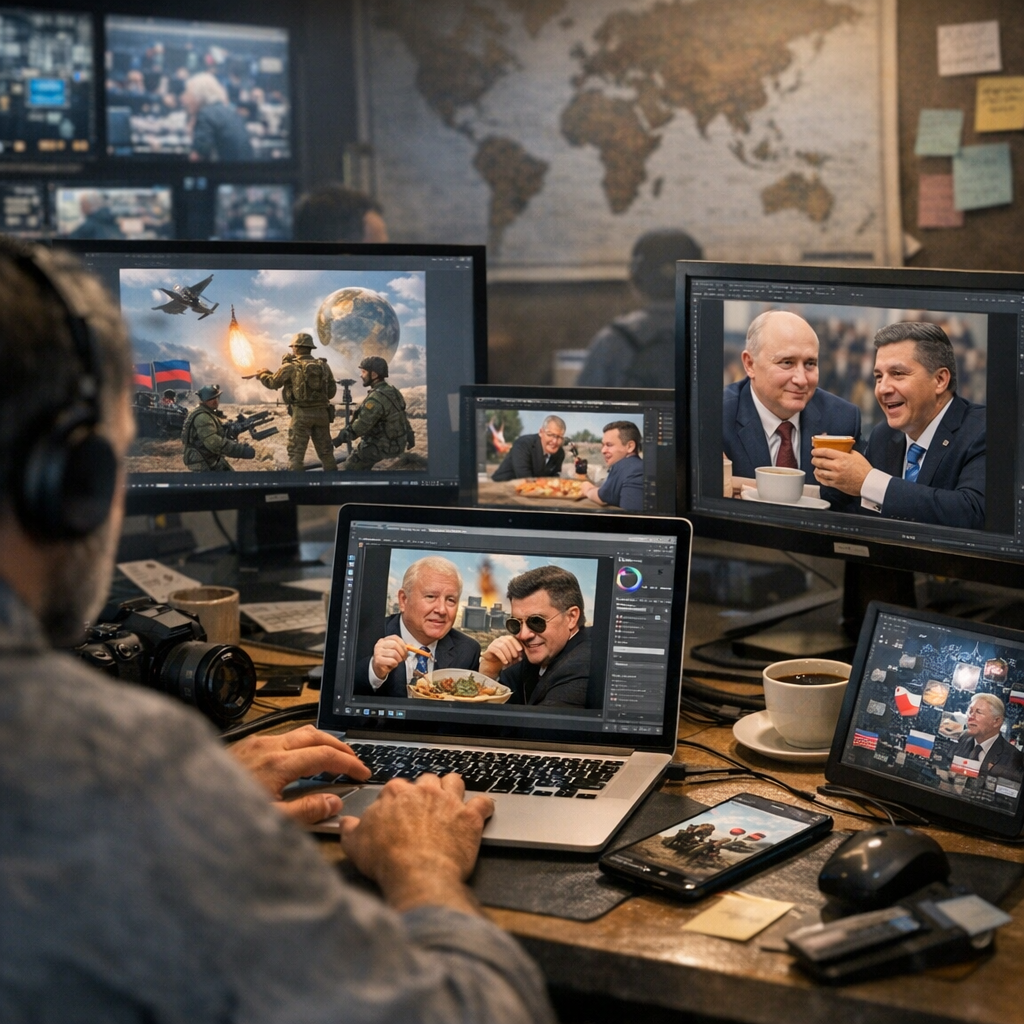
A covert network of pro-Iran influencers is leveraging artificial intelligence to produce and disseminate politically charged content, according to reporting by Wired in its article “Inside the Pro-Iran Meme Machine Trolling Trump With AI Lego Cartoons.” The campaign illustrates how state-aligned messaging operations are evolving, blending humor, synthetic media, and platform algorithms to shape online narratives in subtle but far-reaching ways.
The Wired investigation details how a loosely coordinated ecosystem of accounts has used AI tools to generate stylized images—often depicting political figures, including former US President Donald Trump, in exaggerated or satirical forms rendered as Lego-like characters. While the imagery is playful on the surface, the underlying messaging is pointed, frequently reinforcing Iranian government perspectives or undermining perceived adversaries.
What distinguishes this effort is not simply its political intent but its method. By deploying generative AI, operators can rapidly produce high volumes of visually engaging content at low cost, bypassing traditional production constraints. The aesthetic—bright, toy-like visuals paired with provocative themes—appears calibrated to maximize shareability across major social media platforms.
Researchers cited by Wired suggest that such campaigns occupy a gray zone between overt propaganda and informal meme culture. Unlike earlier state-backed influence efforts that relied on official messaging or clearly branded outlets, these accounts often mimic grassroots behavior, making attribution more difficult and increasing the likelihood of organic spread.
The use of humor and irony is central to the strategy. By framing political critique within absurd or comedic imagery, the content can resonate with audiences who might otherwise disengage from overtly ideological messaging. At the same time, the ambiguity of tone allows creators to maintain plausible deniability, particularly when confronted by platform moderators or critics.
Wired’s reporting indicates that the campaign is part of a broader trend in which geopolitical actors adopt the language and tools of internet subcultures to amplify their reach. The accessibility of AI image generators has lowered the barrier to entry, enabling smaller or less technically sophisticated groups to participate in information campaigns that were once the domain of well-resourced state apparatuses.
This shift raises questions for regulators and technology companies already struggling to address misinformation and coordinated inauthentic behavior. Traditional detection methods, often designed to identify bot networks or repeated messaging, may be less effective against decentralized campaigns that rely on varied, fast-evolving content formats.
At the same time, the blending of entertainment and political messaging complicates public perception. Content that appears trivial or humorous can still carry ideological weight, particularly when encountered repeatedly in algorithm-driven feeds. As Wired notes, the cumulative effect of such material may be to subtly influence audience attitudes rather than persuade through direct argument.
The emergence of AI-generated meme campaigns underscores the changing dynamics of digital influence. As tools become more advanced and widely available, the line between authentic user expression and strategically crafted messaging is likely to become increasingly difficult to discern.