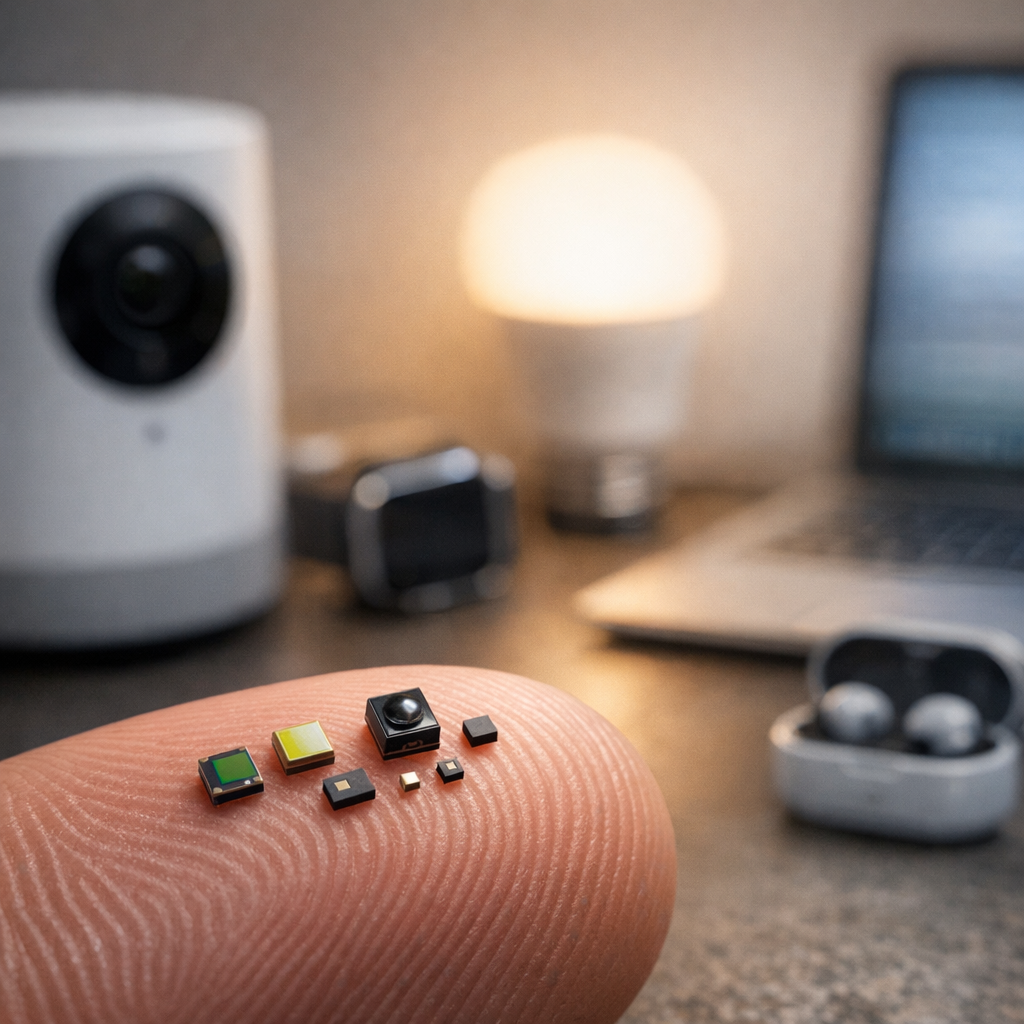
A recent report by Tech Xplore, titled “Tiny diode image sensors offer new ways of adding vision to devices,” highlights a promising advance in imaging technology that could reshape how everyday electronics perceive the world.
Researchers have developed ultra-compact image sensors based on diode technology that significantly reduce size and energy demands compared with conventional camera systems. Unlike traditional sensors that rely on more complex semiconductor architectures, these diode-based designs streamline the process of capturing light into electrical signals, enabling simpler, cheaper, and more adaptable imaging components.
The innovation lies in how these tiny sensors interpret visual information. Rather than producing high-resolution images intended for human viewing, they are optimized for machine perception tasks, such as detecting motion, recognizing patterns, or identifying changes in light. This shift reflects a broader trend in electronics, where the goal is not necessarily to create detailed pictures but to equip devices with situational awareness.
Because of their small footprint and low power requirements, the sensors could be embedded in a wide range of applications where traditional cameras are impractical. Potential uses include wearable devices, smart home systems, medical monitoring tools, and industrial equipment. In such contexts, continuous visual sensing becomes feasible without significantly draining battery life or increasing device size.
The researchers emphasize that these sensors are particularly suited for edge computing environments, where data processing occurs locally rather than being sent to centralized servers. By capturing only essential visual signals, the devices can reduce data loads and improve response times, an important consideration for applications that require real-time decision-making.
While the technology is still developing, its implications are wide-ranging. Integrating vision into small, low-cost devices could accelerate the adoption of intelligent systems across multiple industries, from healthcare to manufacturing. It may also contribute to more energy-efficient electronics by minimizing the need for constant high-resolution imaging.
As Tech Xplore notes in its coverage, the work represents a step toward a future where visual sensing is as ubiquitous and unobtrusive as other embedded technologies. By rethinking what it means for a device to “see,” the researchers are opening the door to new forms of interaction between machines and their environments.