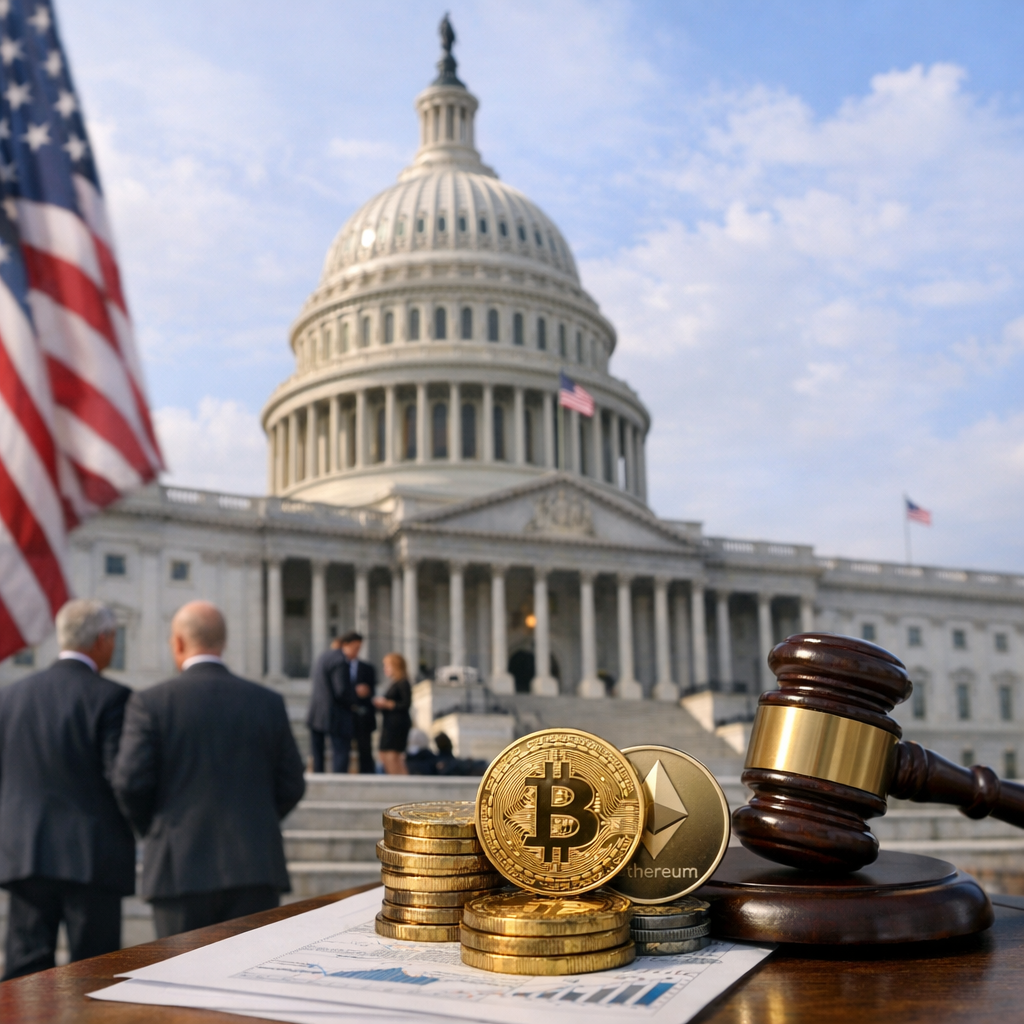
A long-anticipated effort to establish a comprehensive regulatory framework for cryptocurrencies in the United States is set to reach a critical stage, as lawmakers prepare to take up the issue in the Senate. The development signals renewed momentum in Washington’s attempts to address the fast-evolving digital asset sector, which has operated for years amid fragmented oversight and regulatory uncertainty.
According to a report titled “US Senate committee set to consider long-awaited crypto bill next week” published by The Economic Times, a key Senate committee is expected to review draft legislation aimed at clarifying how various crypto assets should be classified and regulated. The bill, still under discussion, is widely viewed as an attempt to resolve longstanding jurisdictional disputes between federal agencies, particularly the Securities and Exchange Commission and the Commodity Futures Trading Commission.
At the core of the proposed legislation is the question of classification—whether certain digital assets should be treated as securities, commodities, or a new category altogether. This distinction carries significant implications for oversight, compliance requirements, and the broader trajectory of the crypto industry in the United States. Market participants have long argued that the lack of clear rules has stifled innovation while exposing investors to undue risks.
Lawmakers involved in drafting the bill are reportedly seeking to balance consumer protection with the need to foster technological development. The collapse of several high-profile crypto firms over the past two years has intensified calls for stronger safeguards, particularly around transparency, custody of assets, and market integrity. At the same time, there is growing recognition that overly restrictive measures could push innovation offshore, ceding leadership in financial technology to other jurisdictions.
The Senate committee’s deliberations are expected to include input from regulators, industry representatives, and policy experts, reflecting the complexity and high stakes of the issue. While bipartisan interest in crypto regulation has grown, significant differences remain over how aggressively the sector should be policed and which agencies should take the lead.
The forthcoming discussion may also address stablecoins, a subset of digital assets pegged to traditional currencies, which have drawn particular scrutiny due to their potential systemic importance. Efforts to regulate stablecoin issuers have so far progressed in parallel to broader crypto legislation, though policymakers increasingly see the issues as interconnected.
If the committee advances the bill, it would mark one of the most significant steps yet toward a unified federal approach to digital assets. However, the legislative path remains uncertain, with competing priorities in Congress and lingering ideological divides likely to shape the outcome.
The anticipated review underscores a broader shift in Washington, where digital assets have moved from the periphery of financial policy debates to the center of regulatory attention. Whether the current effort results in durable legislation or becomes another incremental step in a longer process, it reflects a growing consensus that clearer rules are both necessary and overdue.