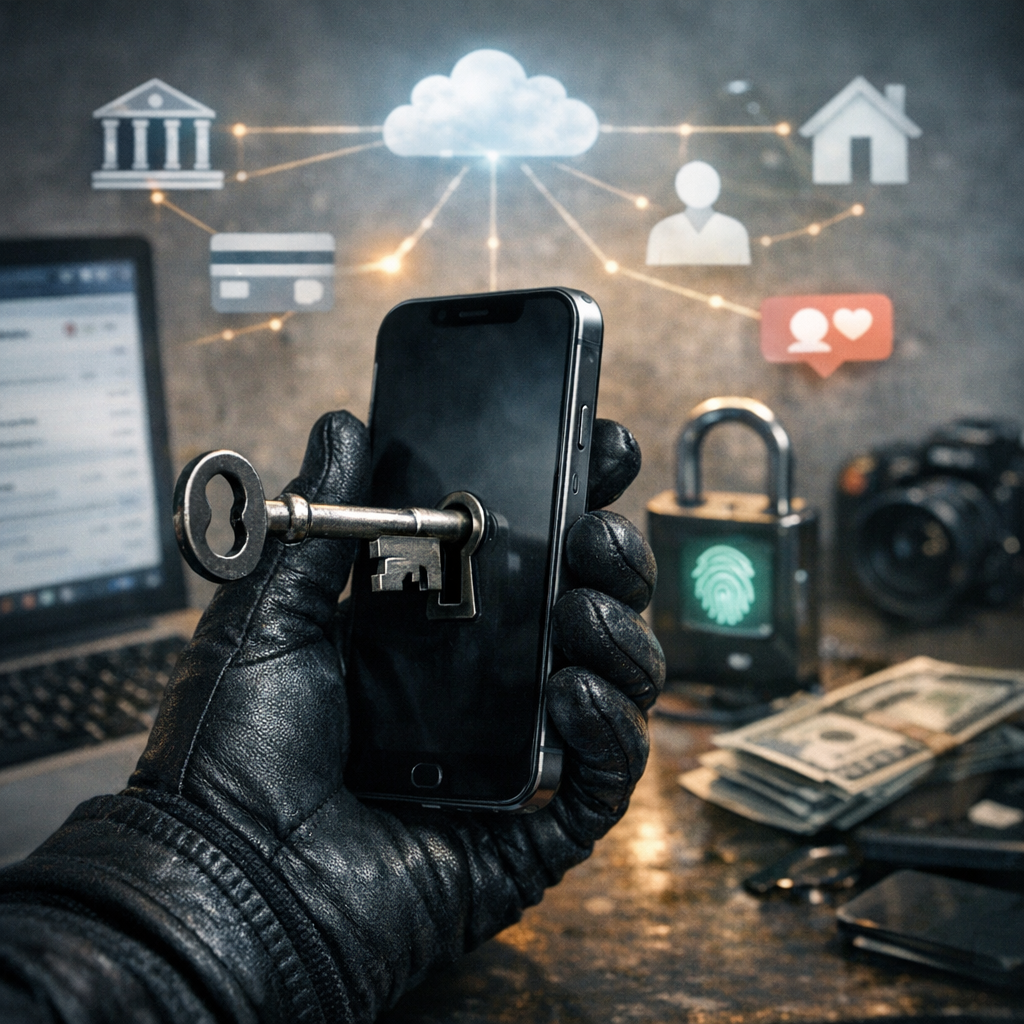
A recent report from Wired, titled “Your iPhone Gets Stolen—Then the Hacking Begins,” highlights a growing and sophisticated form of digital theft in which criminals exploit stolen Apple devices to gain deeper access to victims’ personal data, finances, and identities.
According to the Wired investigation, the theft of an iPhone is now often only the first step in a broader campaign. Criminals are increasingly leveraging shoulder surfing, phishing tactics, and social engineering to obtain a victim’s passcode. Once that key piece of information is in hand, the device effectively becomes a gateway to sensitive data stored both locally and in the cloud.
Security experts cited in the report explain that a passcode, unlike biometric safeguards such as Face ID, can unlock critical account controls. With access to the device and its passcode, attackers can disable security features, change Apple ID credentials, and activate recovery keys that lock the rightful owner out of their own account. In some cases, victims lose access permanently, along with photos, messages, financial apps, and other personal records.
The Wired article describes how this process can unfold rapidly. Thieves may observe a user entering their passcode in public spaces such as bars or transit systems, then steal the phone shortly afterward. Once in possession of both the device and the code, they move quickly to alter account settings and prevent recovery attempts. Victims often report that by the time they realize what has happened, their digital identities have already been compromised.
Financial theft is a frequent outcome. With control over banking apps, payment services, and stored credentials, attackers can transfer funds, make purchases, or access additional accounts tied to the victim’s email or phone number. Because many services rely on a trusted device for authentication, the stolen iPhone can serve as a master key.
The report underscores a broader shift in smartphone security risks. While device encryption and biometric protections have become more advanced, human factors remain a weak point. A simple numeric passcode, once observed, can undermine multiple layers of protection.
Apple has introduced features intended to mitigate such risks, including options that limit certain account changes when a device is in unfamiliar locations. However, the Wired investigation suggests these measures are not yet widely understood or consistently enabled by users.
Security professionals recommend several precautions: using longer alphanumeric passcodes instead of simple numeric ones, enabling additional account recovery safeguards, and being mindful of surroundings when entering sensitive information in public. They also emphasize the importance of quickly reporting and remotely locking a stolen device.
The Wired article reflects a broader concern within the cybersecurity community that as mobile devices become central repositories for personal and financial data, they are increasingly attractive targets. The convergence of physical theft and digital exploitation represents a hybrid threat that traditional security habits may not fully address.
As incidents of this kind gain attention, the challenge for both technology companies and users will be to close the gap between strong technical protections and the everyday behaviors that can render them ineffective.