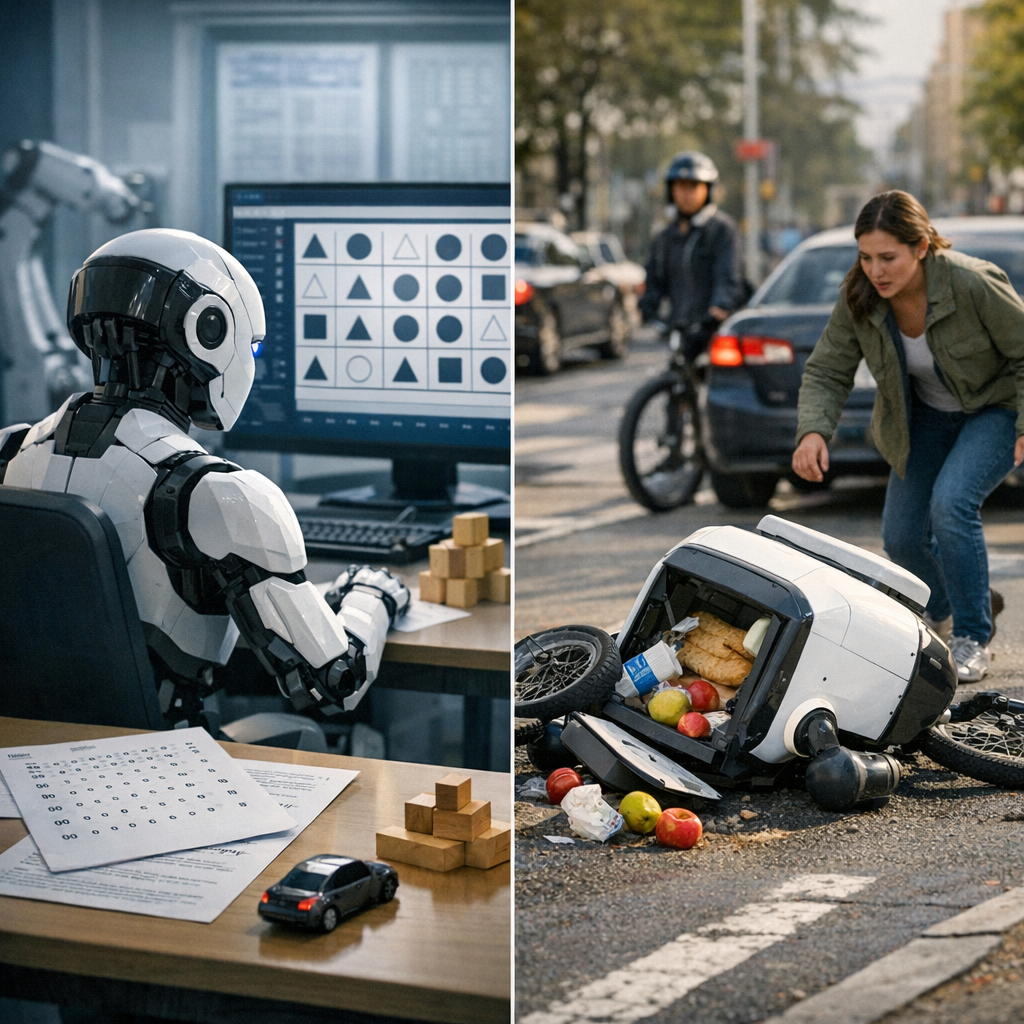
A growing body of evidence suggests that real-world artificial intelligence systems may falter in ways not fully captured by benchmark testing, raising concerns about their deployment in high-stakes environments. That conclusion is at the center of a recent report highlighted in “Real-world AI systems show signs of collapse outside controlled tests,” published by Tech Xplore.
The article examines how AI models that perform impressively in laboratory settings can degrade significantly when exposed to the complexity and variability of real-world conditions. Researchers cited in the report argue that current evaluation methods tend to rely on static datasets and simplified scenarios, which fail to reflect the unpredictability of live environments. As a result, systems that appear robust during development may behave inconsistently or even fail when deployed.
One key issue is the phenomenon sometimes described as “distribution shift,” where the data an AI system encounters in practice differs from the data it was trained on. While developers often anticipate some degree of variation, the Tech Xplore report notes that the scale and diversity of real-world inputs can exceed those expectations. This can lead to compounding errors, particularly in systems that operate continuously and adapt over time.
The article also highlights concerns about feedback loops. In certain applications, such as recommendation systems or automated decision-making tools, AI outputs can influence the very data they later consume. Over time, this can distort system behavior, reinforcing biases or narrowing performance. Researchers warn that such dynamics are difficult to detect through standard testing but can become pronounced in operational settings.
Another factor discussed is the challenge of long-term reliability. Many AI systems are evaluated based on short-term performance metrics, yet in real-world use they must function over extended periods. The Tech Xplore piece points to evidence that performance can degrade gradually, as small inaccuracies accumulate or as underlying conditions shift. Without continuous monitoring and recalibration, these systems may become unreliable.
The report also underscores the limitations of current validation practices. Benchmark datasets are often curated and cleaned, removing anomalies and edge cases that are common in real-world data. While this approach facilitates comparison across models, it can create a false sense of security. Researchers are calling for more dynamic and context-rich evaluation frameworks that better reflect operational realities.
In response to these challenges, experts are advocating for a shift in how AI systems are developed and deployed. Suggested measures include ongoing performance auditing, stress-testing under varied conditions, and incorporating mechanisms for human oversight. Some also emphasize the importance of designing systems that can recognize and flag their own uncertainty, rather than producing confident but potentially incorrect outputs.
The findings come at a time of rapid AI integration across sectors such as healthcare, transportation, and finance, where failures can carry significant consequences. The Tech Xplore article notes that while AI continues to offer substantial benefits, its limitations must be addressed with equal urgency.
As organizations move from experimentation to widespread deployment, the gap between controlled testing and real-world performance is emerging as a critical area of focus. The research highlighted in “Real-world AI systems show signs of collapse outside controlled tests” suggests that bridging this gap will require not only technical innovation but also a reassessment of how success is defined and measured in artificial intelligence.