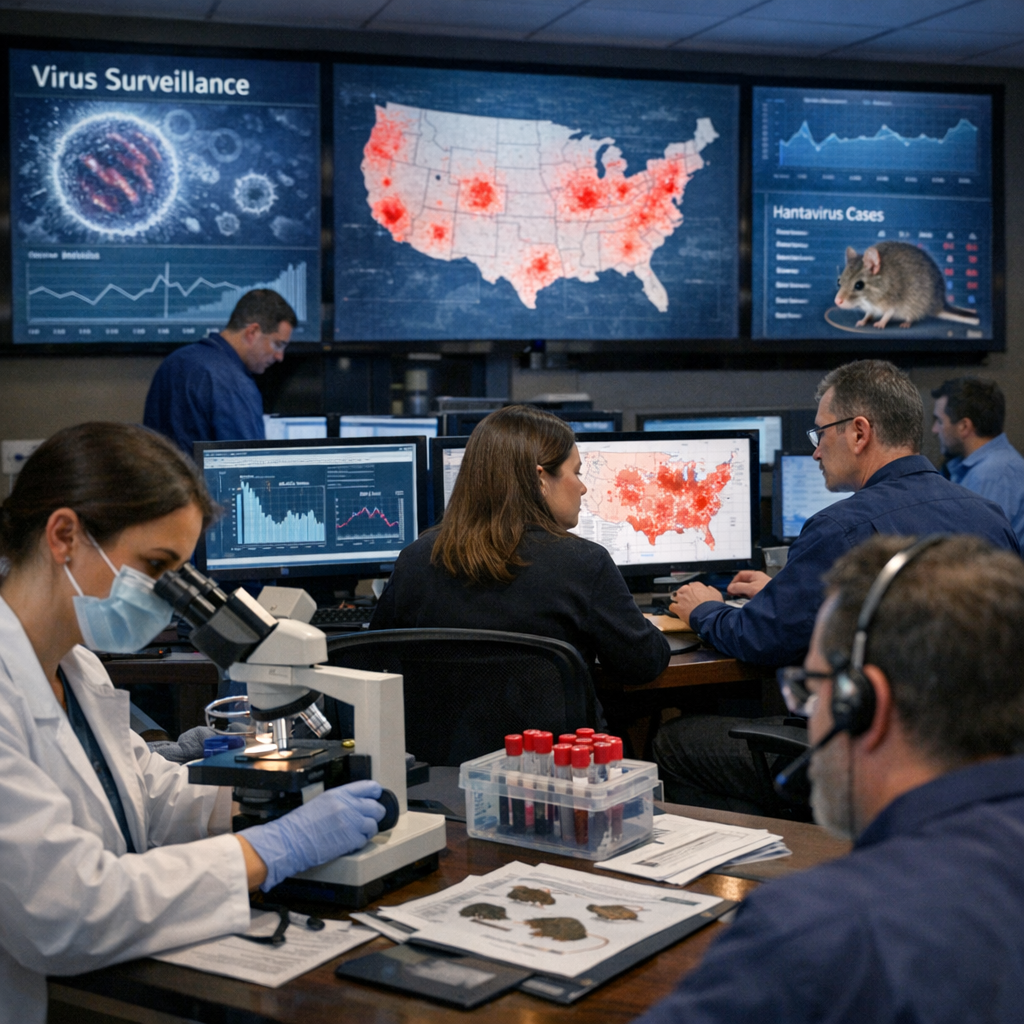
A recent report in Wired, titled “How Many People CDC Is Monitoring for Hantavirus?”, has drawn attention to the quiet but consequential work underway inside the United States’ public health system as officials track potential exposures to a rare yet often deadly pathogen.
Hantaviruses, primarily spread through contact with infected rodent droppings, urine, or saliva, are not new to American epidemiology. However, their low incidence and high fatality rate make each suspected cluster a matter of serious concern. According to the Wired report, the Centers for Disease Control and Prevention has been monitoring a group of individuals who may have been exposed, reflecting a standard but resource-intensive process designed to catch possible cases early and prevent broader transmission.
The number of people under observation is not itself unusual in scale, but the situation illustrates how the CDC operates in the background of public health—quietly identifying contacts, assessing risk levels, and issuing guidance to local health departments. Because hantavirus does not typically spread from person to person in the United States, the monitoring effort is more about vigilance than containment. Each individual is assessed for symptoms such as fever, fatigue, and respiratory distress, which can escalate rapidly in confirmed cases.
What stands out in the Wired article is the degree of uncertainty that accompanies even a small outbreak risk. Public health officials must often act on incomplete information, determining who might have been exposed based on environmental factors and limited interactions with infected rodents. This means casting a relatively wide net initially, then narrowing the focus as more data becomes available.
Experts note that hantavirus pulmonary syndrome, the most severe form of the disease seen in North America, carries a mortality rate of roughly 30 to 40 percent. Yet infections remain rare, with only a handful of cases reported annually in the United States. This rarity can complicate response efforts, as clinicians may not immediately recognize symptoms, and the public may be unaware of the risk.
The Wired report underscores the importance of surveillance systems that can respond proportionately to low-frequency, high-impact threats. Monitoring efforts involve coordination between federal agencies, state health departments, and sometimes local environmental authorities, particularly when investigations point to specific exposure sites such as cabins, sheds, or rural properties where rodent activity is higher.
While the current monitoring effort does not indicate a broader public health emergency, it highlights the constant vigilance required to manage infectious diseases that operate largely outside everyday awareness. In this case, the CDC’s actions reflect a precautionary approach aimed at early detection and rapid response—measures that, though often invisible to the public, form a critical layer of national health security.
As the Wired article makes clear, the story is less about the size of the group being monitored and more about the infrastructure that enables such monitoring to occur at all. Even isolated cases can serve as stress tests for the system, offering insight into how well prepared public health agencies are to handle emerging or re-emerging threats in a complex and changing epidemiological landscape.