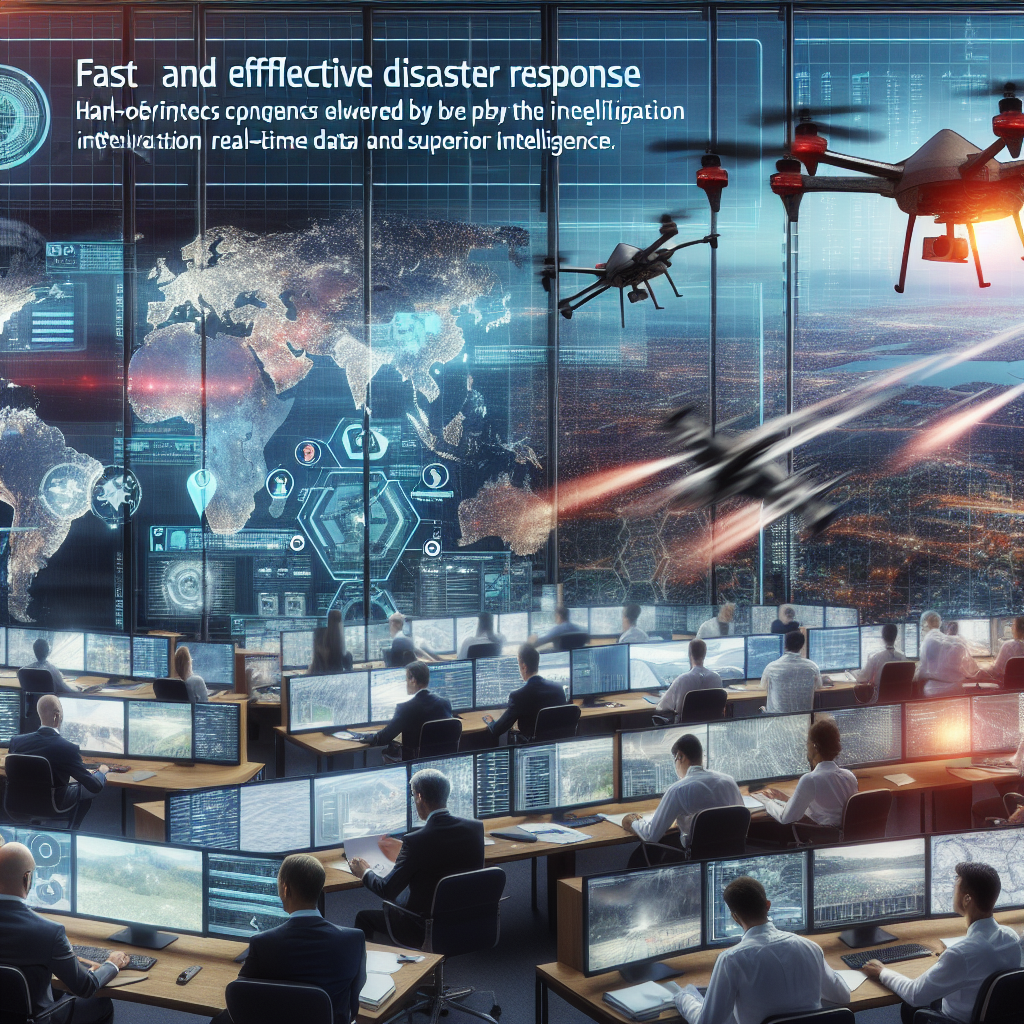
In the face of increasingly frequent and severe natural disasters, governments and emergency response organizations are under growing pressure to improve decision-making and response times. A new approach to streamlining data integration and analysis could be a game-changer, offering the potential to accelerate intelligence gathering from hours or days to mere minutes. In the article “Frictionless intelligence: Reducing time to insight in disaster management,” published by the Innovation News Network, experts highlight how the deployment of unified geospatial platforms and advanced data processing tools can fundamentally reshape emergency response strategies.
At the heart of this transformation is the concept of “frictionless intelligence”—a system where disparate data sources, including satellite imagery, social media inputs, weather forecasts, and ground reports, are rapidly synthesized and visualized in near-real-time. As outlined by the Innovation News Network, this approach leverages cutting-edge technologies, including artificial intelligence, cloud computing, and geospatial analysis, to significantly shorten the time between data acquisition and actionable insight.
Traditionally, disaster management agencies have struggled with data fragmentation and the sluggish pace of turning raw information into meaningful conclusions. In constantly evolving emergencies such as floods, wildfires, or earthquakes, delays in understanding the scope and scale of a crisis can cost lives. By integrating multi-source data on a shared platform accessible across agencies, responders can establish a common operational picture, allowing for coordinated and timely interventions.
One of the prominent examples cited involves the Global Disaster Alert and Coordination System (GDACS), which has already demonstrated the merit of rapid information synthesis. The article also references capabilities provided by Hexagon, a technology firm that offers integrated geospatial solutions allowing authorities to overlay infrastructure data with live hazard assessments. Such tools empower decision makers not just to react faster, but to anticipate developments before they escalate.
This advancement comes at a time when climate change continues to intensify natural hazards globally. The growing reliance on fast, data-driven decisions means that traditional workflows must evolve. Experts interviewed in the original article emphasize the importance of not only technological adoption but also cross-sector collaboration. Local governments, national agencies, and private sector partners must align their efforts to ensure that data pipelines are open, secure, and responsive to the real dynamics of crises.
While the technologies enabling frictionless intelligence are still evolving, their application in disaster management underpins a broader trend toward real-time operational awareness in public safety. As such tools become more sophisticated and accessible, the expectation is that emergency management will transition from reactive to anticipatory—a shift that could redefine resilience in the face of natural disasters.
The article by Innovation News Network underscores that the future of crisis response lies not only in better data, but in faster insights. By removing the friction from data intelligence, governments worldwide can move toward a more agile, informed, and life-saving approach to disaster management.