A groundbreaking development in the field of assistive technology is renewing hope for individuals living with limb loss. As reported in the Tech Xplore article titled “Machine Learning Enhances Control and Autonomy in Prosthetics,” researchers are harnessing machine learning techniques to significantly improve the functionality and responsiveness of modern prosthetic limbs.
This innovative research, conducted by an interdisciplinary team of engineers and neuroscientists, focuses on integrating advanced algorithms with user-borne sensors to enable more intuitive limb control. Rather than relying solely on predefined commands or conventional electromyographic (EMG) signals, the team’s approach involves training machine learning models to interpret weak or noisy neural signals and translate them into accurate, context-sensitive limb movements.
What distinguishes this system is its adaptive design. The machine-learning algorithms are not static; they continue to refine themselves based on a user’s unique muscular patterns, motion habits, and daily activities. Over time, this allows the prosthesis to become more responsive, effectively “learning” its user and offering increasing precision in movement and control. The result is a feedback loop that enhances the individual’s autonomy and overall quality of life.
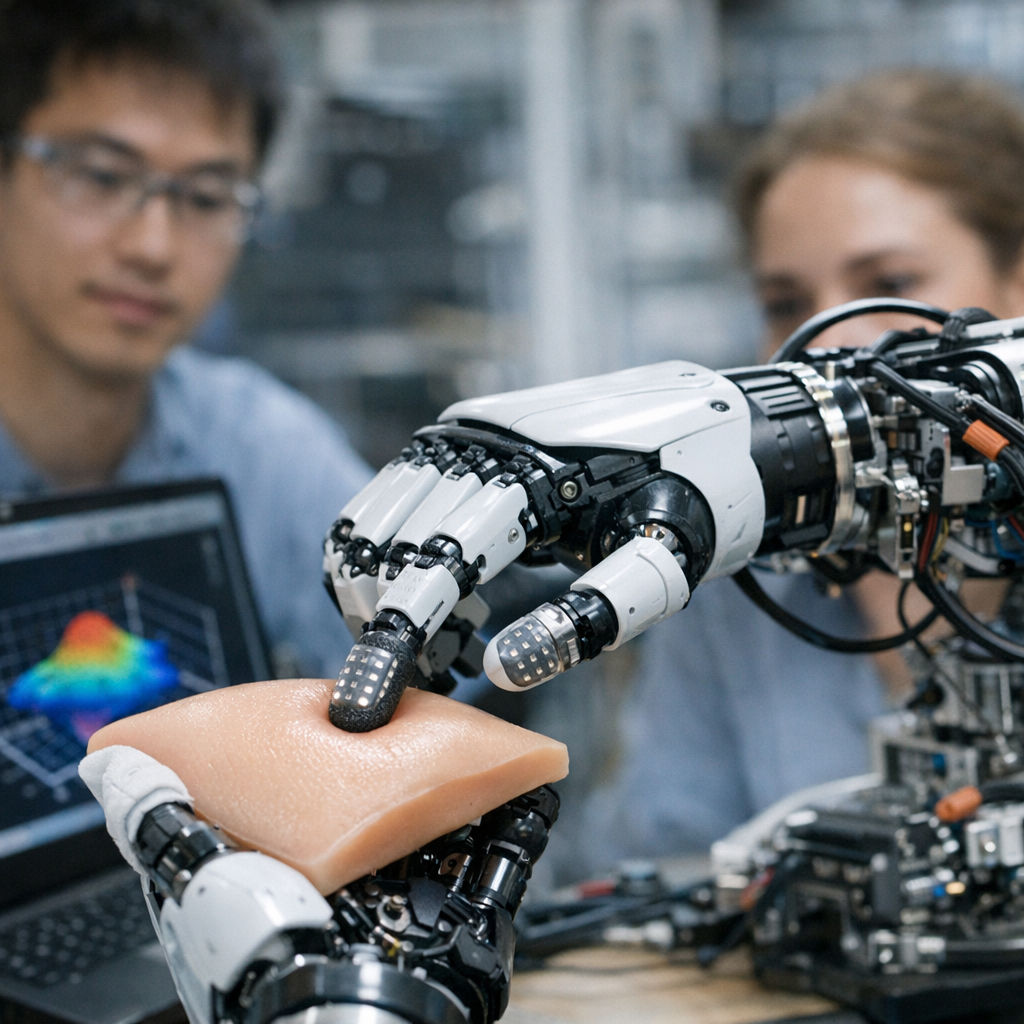
According to the report from Tech Xplore, the researchers utilized non-invasive sensors that monitor muscle activity and interface with a machine learning model capable of deciphering the intended motion. This stands in contrast to more invasive methods such as surgically implanted neural interfaces, offering a more accessible and scalable solution.
The work also reflects a broader shift in prosthetic research, where human-machine integration goes beyond mechanical function toward a more seamless cognitive and physical relationship. The system is geared not only toward providing movement but also enabling a level of natural interaction between user intent and device response that was previously difficult to achieve without direct neural interfacing.
Initial trials of the technology showed promising results, with test participants demonstrating improved control and reduced mental fatigue compared to traditional myoelectric prosthetics. The intuitiveness of the machine-learned controls also shortened the user training time, an important factor in long-term adoption and comfort.
While the research is still in its developmental phases, the direction laid out by this study points toward a future in which prosthetics will be personalized, intelligent companions rather than passive tools. With continued testing and refinement, the hope is that such systems could become widely available, ultimately transforming standards of care and independence for individuals with limb differences.
The pace of innovation in this space suggests that machine learning will play an increasingly central role in prosthetic design. As seen in the study detailed by Tech Xplore, the integration of adaptive algorithms with biomechanical function brings the promise of truly responsive prosthetics within reach—a milestone that could redefine what it means to live with a prosthetic limb.