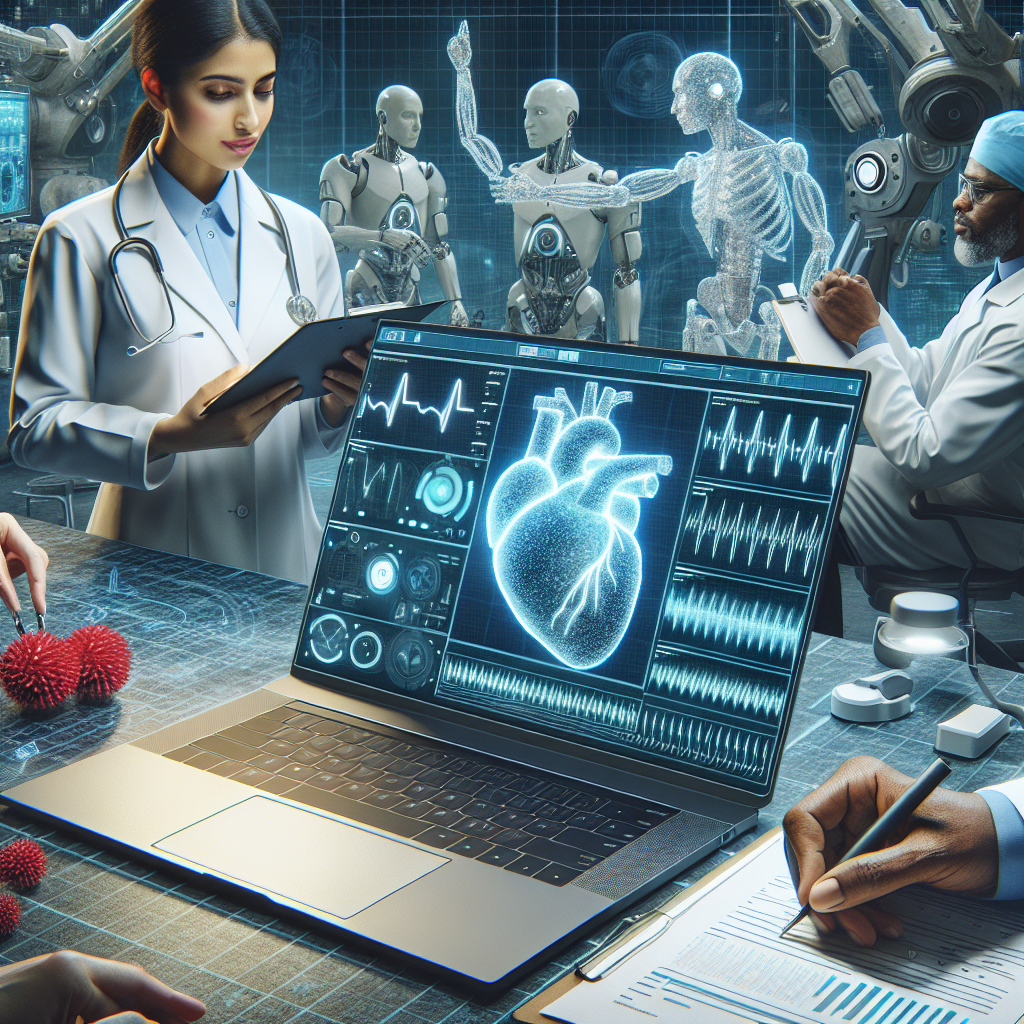
The advent of artificial intelligence (AI) in the healthcare sector continues to reshape the landscape of medical technology, and a recent development underscores the rapid pace of innovation. As reported in the article titled “AI machine acts like a heart in automated mechanism” by TechXplore, a remarkable breakthrough has been made by researchers striving to mimic one of the body’s most crucial organs—the heart—through an AI-based mechanism.
The novel AI system, designed to simulate the heart’s dynamic role within the human body, promises to contribute significantly to automated industrial settings. It marks a transformative step toward integrating biological-inspired functions that can autonomously regulate complex systems, akin to the human heart’s ability to govern the circulatory process. The researchers behind this innovation have successfully developed a machine learning model that emulates the heart’s intricate operational patterns, ensuring optimal performance of automated mechanisms.
Central to this advancement is the capability of AI to autonomously adjust operations in response to changing conditions, akin to how the heart responds to the body’s varying demands. This continuous adaptability is critical in manufacturing environments where the efficiency and reliability of automated systems are paramount. By applying principles derived from the heart’s functionality, this AI mechanism can potentially revolutionize the management of factory operations, leading to more efficient resource allocation and productivity gains.
The TechXplore article highlights the potential widespread applications of this AI-driven technology, which extend beyond mere automation. The implications for industries are vast, ranging from enhanced precision in production processes to significant reductions in operational downtime. Moreover, this technology could serve as a catalyst for future innovations in other sectors, such as transportation and logistics, where the ability to dynamically adjust to real-time data is increasingly vital.
This development also raises pertinent questions about the evolving role of AI in emulating human physiological processes. The intersection of bio-inspired technology and AI not only expands the possibilities within the field of robotics but also invites discussions on ethical and practical considerations. As AI technologies continue to advance, it will be critical for stakeholders to address concerns about the balance between automation and human oversight, ensuring these systems are deployed responsibly and effectively.
In conclusion, the AI mechanism reported in TechXplore’s article represents a significant achievement in the ongoing integration of artificial intelligence into real-world applications. By drawing inspiration from the heart’s abilities, researchers have made strides towards smarter, more autonomous systems capable of transforming industrial landscapes. As AI continues to evolve, it will undoubtedly offer new opportunities and challenges, requiring thoughtful consideration as these technologies are incorporated into our daily lives.