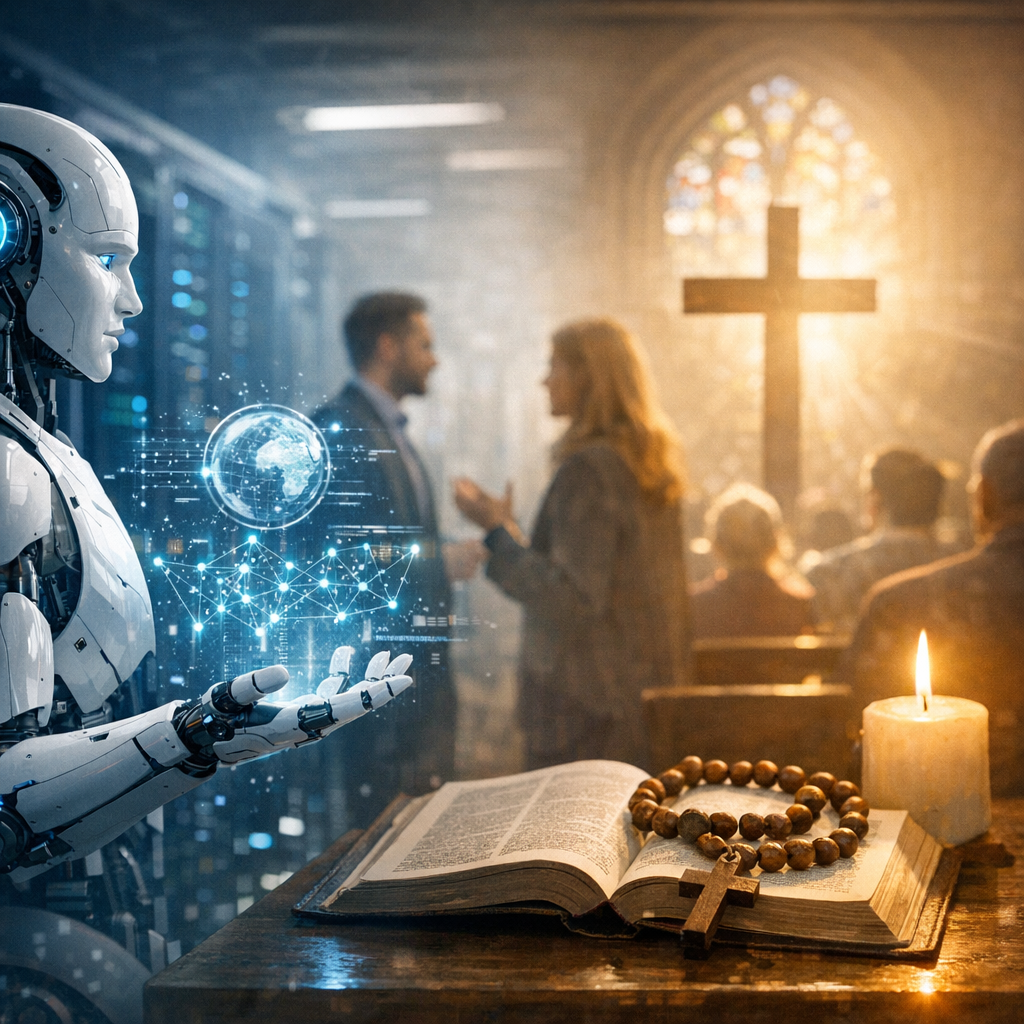
A new wave of artificial intelligence applications is reshaping how people engage with religion, blending spiritual practice with conversational technology in ways that are both expansive and contentious.
An article published by The Economic Times, titled “From BuddhaBot to $1.99 chats with AI Jesus: The faith-based tech boom is here,” highlights the rapid emergence of startups and platforms offering AI-powered religious experiences. These tools range from chatbots modeled on revered figures such as Buddha and Jesus to apps designed to deliver personalized prayers, scriptural interpretations, and spiritual counseling on demand.
Developers behind these systems argue that AI can make religious guidance more accessible, particularly for younger, digitally native audiences who may be less inclined to engage with traditional institutions. Some platforms offer free interactions, while others monetize spirituality by charging subscription fees or per-conversation rates, signaling a shift toward a commodified form of religious engagement.
The appeal lies partly in convenience and personalization. Users can ask sensitive or complex questions without fear of judgment, receiving instantaneous responses tailored to their needs. In regions where access to clergy is limited, such tools may also serve a practical function, filling gaps in spiritual support.
However, the rise of faith-based AI has raised significant ethical and theological concerns. Critics question whether algorithmic systems, trained on datasets rather than lived spiritual experience, can meaningfully replicate or interpret sacred teachings. There are also worries about doctrinal accuracy, potential bias embedded in training data, and the broader implications of monetizing religious interaction.
Religious leaders have expressed mixed reactions. Some see opportunity in leveraging technology to reach wider audiences, while others warn that reducing faith to a transactional chatbot exchange risks diluting its depth and communal aspects. The absence of accountability in AI-generated guidance further complicates matters, particularly when users rely on these systems for moral or life decisions.
Underlying this trend is a broader movement within the technology sector to explore niche, emotionally resonant applications of AI. By targeting spirituality, developers tap into deeply personal domains where trust and authenticity are paramount — qualities that remain difficult for machines to convincingly emulate.
As the faith-based tech market grows, its trajectory will likely depend on whether it can balance innovation with sensitivity to long-standing religious traditions. The tension between accessibility and authenticity may ultimately define how far these systems are embraced or resisted within spiritual communities.