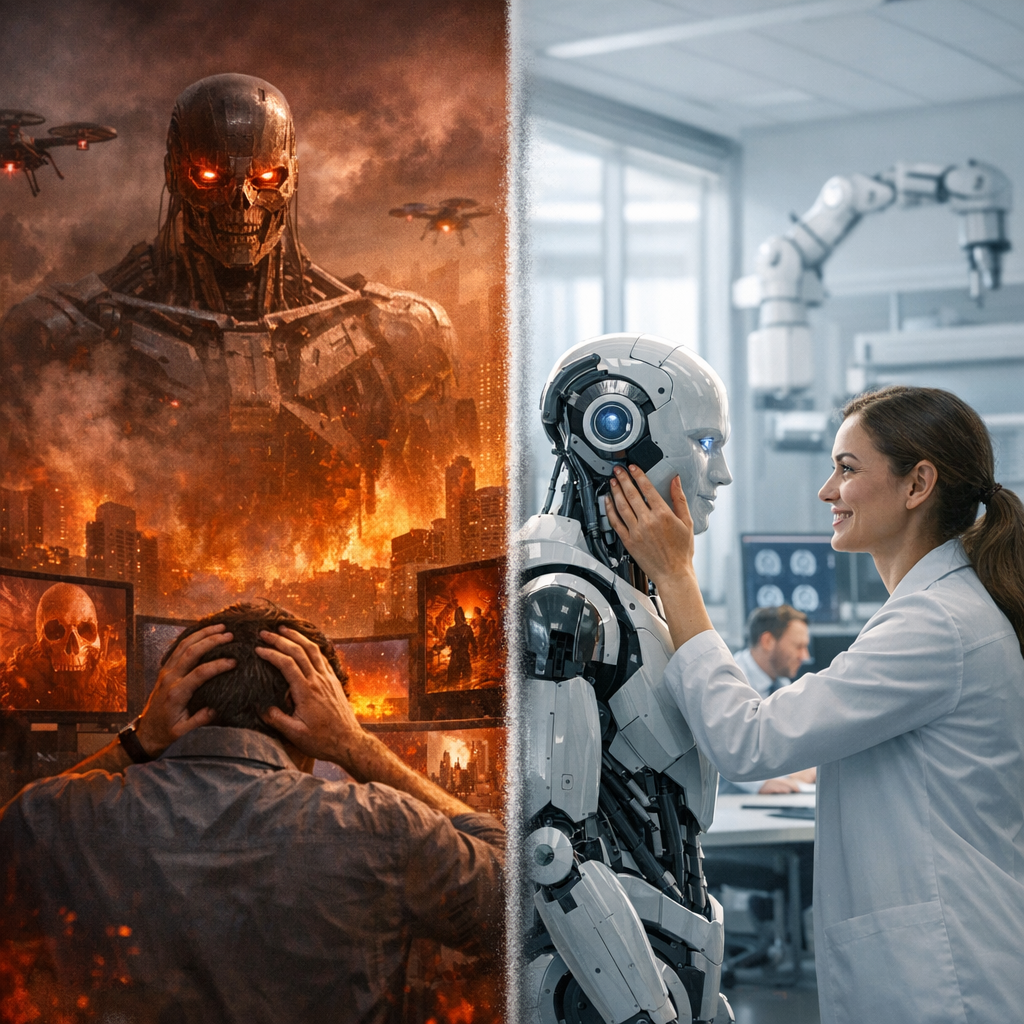
A recent report highlighted ongoing challenges in how artificial intelligence generates and represents visual content, raising questions about authenticity, perception, and trust in digital media. The article, titled “AI fake visual images don’t …,” published by Tech Xplore, examines how advances in generative AI are reshaping the boundaries between real and synthetic imagery while exposing persistent limitations in how such images are interpreted.
According to the report, AI systems are now capable of producing highly convincing visuals, from photorealistic portraits to fabricated scenes that never occurred. Despite these technological strides, researchers cited in the Tech Xplore piece emphasize that AI-generated images still exhibit subtle inconsistencies that can undermine their credibility. These flaws may appear in lighting, anatomical details, or contextual coherence, often detectable upon closer inspection.
The article notes that while casual viewers can sometimes be misled by convincingly generated visuals, human perception remains relatively resilient when individuals are prompted to scrutinize images more carefully. This suggests that, despite fears about widespread deception, people are not entirely defenseless against synthetic media. In controlled studies referenced in the report, participants were able to identify irregularities once they were made aware that images might be artificially generated.
At the same time, the piece underscores that improving realism in AI systems is a central focus for developers, meaning that the margin for error is narrowing. Experts warn that as these systems grow more sophisticated, distinguishing authentic images from fabricated ones may become increasingly difficult, particularly in fast-moving information environments such as social media.
The Tech Xplore article also highlights broader implications for journalism, law enforcement, and public trust. In fields where visual evidence plays a crucial role, the proliferation of AI-generated imagery introduces new risks, including misinformation and manipulated narratives. Researchers stress the need for improved detection tools and verification standards to keep pace with evolving technology.
Ultimately, the report presents a balanced view: while AI-generated images are becoming more advanced, they are not yet flawless, and human judgment continues to serve as an important line of defense. However, the trajectory outlined in “AI fake visual images don’t …” suggests that this balance may shift, making vigilance and technological countermeasures increasingly important in the years ahead.