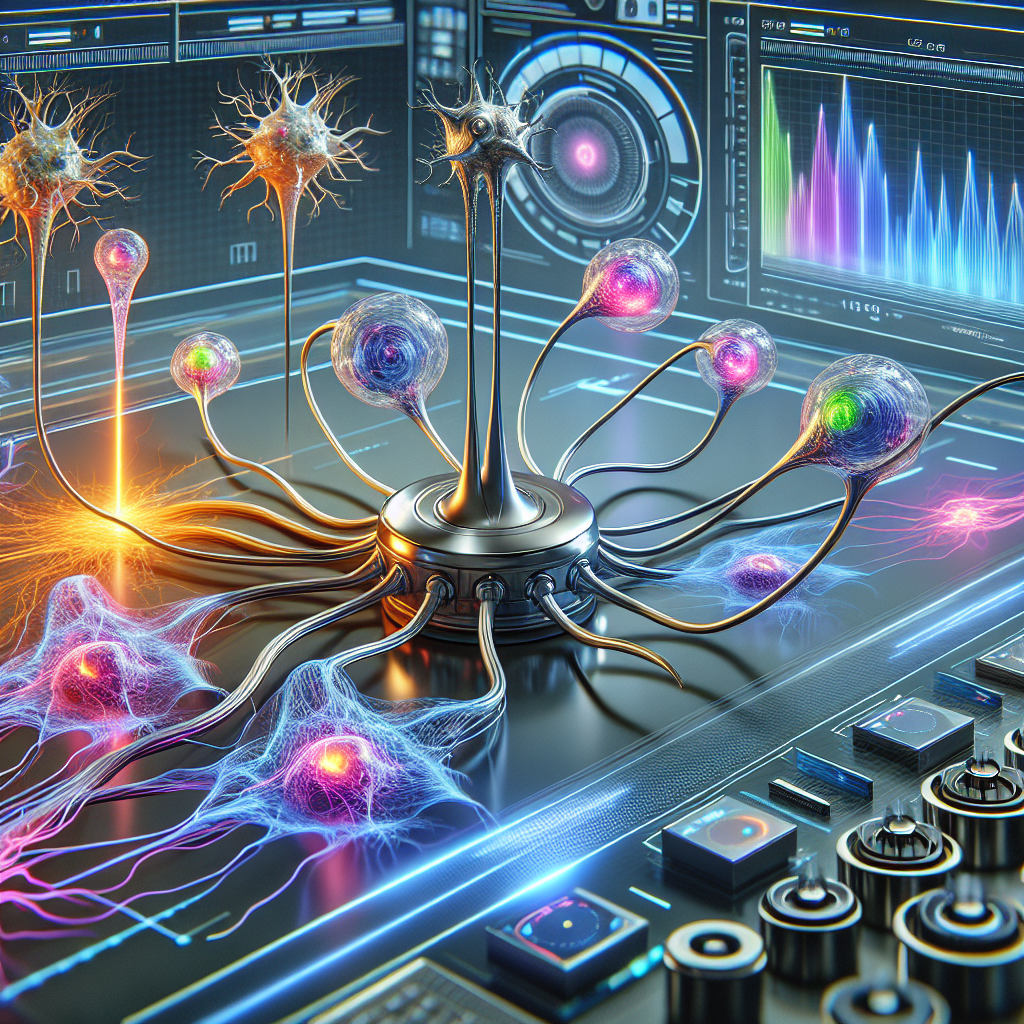
In a groundbreaking study that could redefine the boundaries between biological and synthetic forms of communication, scientists have developed artificial neurons that can interact directly with biological cells. This innovative research, detailed in an article titled “Artificial neurons communicate with cells” on Techxplore.com, marks a significant step forward in the interdisciplinary fields of bioengineering and neurotechnology.
The researchers have engineered artificial neurons that not only mimic the electrical signaling capabilities of human neurons but also successfully communicate these signals to living cells. Such a development opens new avenues for creating advanced prosthetics, enhancing neural repair, and even perhaps developing computer systems that can interact seamlessly with the human body.
At the core of this advancement is the ability of these synthetic neurons to generate electrical impulses that are indistinguishable from those produced by biological neurons. These impulses are crucial for the transmission of information across neural networks, including the human nervous system. The successful integration of these artificial neurons with biological cells shows that these synthetic creations can communicate effectively, sending, receiving, and processing information just as natural neurons do.
This research not only bridges a gap between man-made materials and biological systems but also has vast implications for the treatment of neurological disorders. Conditions such as Parkinson’s disease, Alzheimer’s, or spinal cord injuries could potentially be treated more effectively with the help of neuron-like devices that replace or support damaged neural tissue. This could lead to enhanced or restored communication within affected neural networks, potentially reversing or mitigating symptoms of these debilitating conditions.
Moreover, this breakthrough could help in the creation of biohybrid systems, where electronic devices and living tissues are merged to create new functionalities. This could transform not only medicine but also how humans interact with technology, leading to devices that are far more responsive to physiological inputs.
However, there remain challenges and ethical considerations to be addressed as this technology continues to evolve. The long-term effects of integrating synthetic neurons within biological systems in humans are yet to be comprehensively understood. Moreover, the ethical implications of biohybrid systems blur the lines between biological vitality and artificial enhancement, raising questions about identity, privacy, and agency in using such technologies.
Despite these challenges, the research represents a significant stride in the quest to harness the potential of bioengineering to improve human health and biological understanding. As we stand on the frontier of this exciting interdisciplinary field, the future is poised to be as promising as it is complex. Further research and thoughtful discourse on the implications of such technologies will be crucial as we advance toward a new era of medical science and biotechnology.