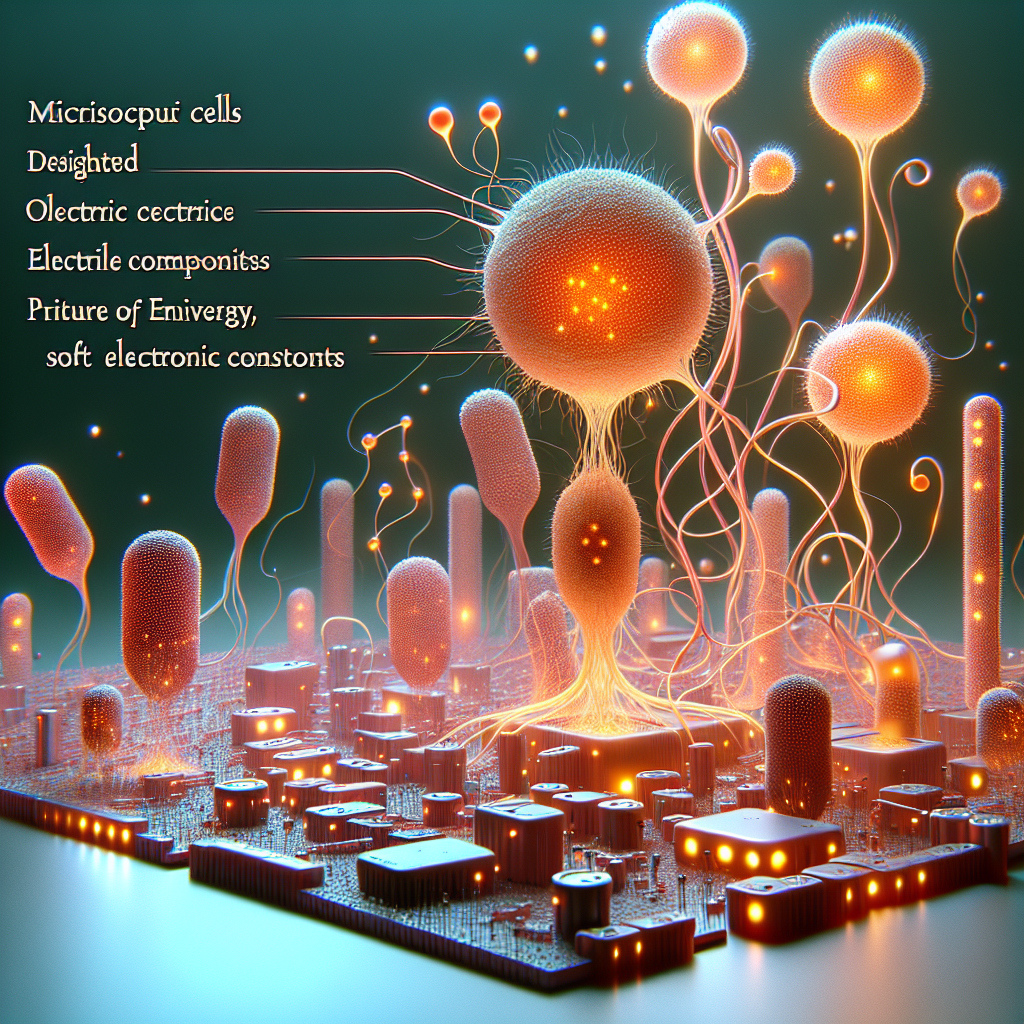
In a significant development that could transform future bio-inspired electronics, researchers have designed a new method for replicating the energy storage systems found in electric rays, as detailed in the article “Stacked ionic cells could provide power inspired by electric rays” published by Tech Xplore.
The study, carried out by engineers and biophysicists, centers on mimicking the electrical organs that allow certain aquatic species, like electric rays and eels, to produce powerful electric discharges. These natural systems have evolved to generate electricity through layers of specialized cells known as electrocytes, which collectively accumulate and release large voltage pulses. Drawing inspiration from this biological blueprint, the researchers have developed a stacked structure of ionic cells that can produce electricity in a similar fashion, relying on ion gradients and selective ionic membranes rather than conventional electronic circuitry.
Unlike traditional batteries that use electron-based charge carriers and often depend on environmentally harmful materials, the new approach replicates ion transport mechanisms akin to those found in living organisms. Each “cell” in the artificial stack consists of hydrogel compartments separated by ion-selective membranes, closely resembling the natural configuration of electrocytes. When activated, ions flow through the system, generating a direct current. Multiple cells can be stacked to multiply the total voltage, echoing the layered organ structure in electric rays.
One of the most intriguing aspects of this technology is its soft, flexible form factor. Made primarily from biocompatible materials, the stacked ionic cells may be especially useful in developing wearable devices or medical implants that need power sources compact enough to fit within the human body while also avoiding toxic chemicals. The potential applications range from low-power biosensors to novel actuators, possibly paving the way for entirely new categories of soft robotics and bioelectronics.
Despite its promise, the technology remains in its early stages. Researchers acknowledge challenges related to scaling the system for larger energy outputs and improving device longevity. However, the conceptual leap is significant. The work underscores a broader trend in scientific innovation that looks to the evolved efficiencies of nature for technological inspiration.
As global attention increasingly turns to sustainable and organic alternatives in technology, advances like these may reshape how we think about energy generation and storage. By blurring the boundary between biology and engineering, the study marks a bold step toward a future where machines might one day draw power in the same way some marine animals have for millions of years.