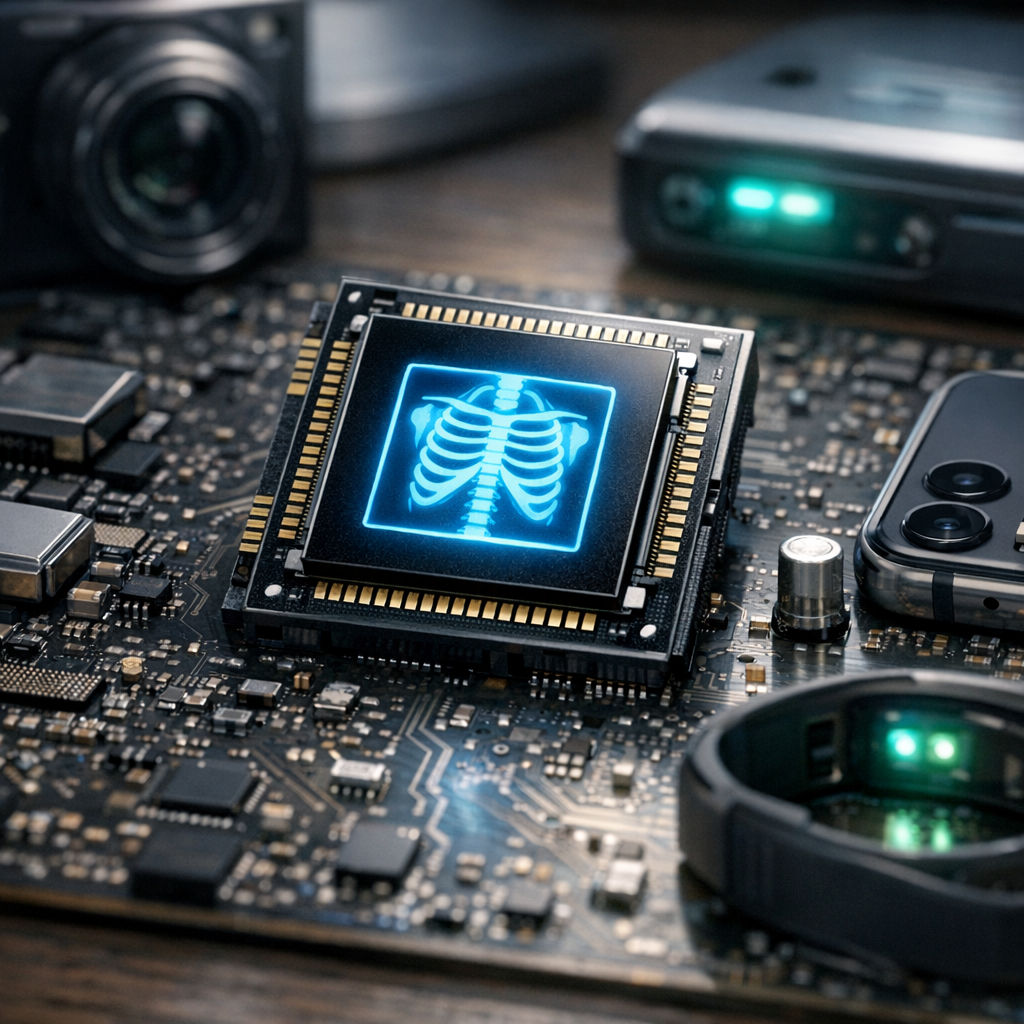
In a breakthrough that could significantly reshape the future of immersive technology, researchers have unveiled a new micro-display innovation that promises to elevate the visual fidelity of augmented reality (AR) and virtual reality (VR) systems. As reported by Tech Xplore in its article “Key micro-display tech enabling next-level mixed reality visuals,” the development centers on advanced micro-LED display panels that deliver unprecedented brightness, resolution, and power efficiency—critical attributes for next-generation wearable devices.
The research, led by a consortium of engineers and optical scientists, focuses on miniaturized displays using micro-light emitting diodes (micro-LEDs), a promising but technically challenging technology. These displays are designed to fit within the compact confines of AR and VR headsets while providing visuals sharp enough to approach or even exceed the acuity of the human eye. According to the original report, the prototype achieves remarkable pixel densities—over 10,000 pixels per inch—which drastically reduces the so-called “screen door” effect that has long plagued display systems intended for close-range viewing in headsets.
One of the primary challenges in AR and VR development has been the trade-off between image quality and device form factor. High-performance displays typically demand more space and energy, which are luxuries that do not exist in lightweight, wearable gear. The new micro-display technology, however, appears to overcome these limitations by combining improved light efficiency with smaller pixel elements, enabling sharper images while maintaining low power consumption and minimal thermal impact.
The implications of this advancement are wide-reaching. Beyond gaming, the enhanced visual precision opens doors for enterprise and industrial applications such as remote collaboration, training simulations, complex design visualization, and even remote medical procedures using mixed reality. The immersive potential of AR and VR remains tightly coupled with the quality and realism of the visual experience, making high-performing micro-displays a linchpin technology for broader adoption.
Technical obstacles remain, including mass production scalability, cost reduction, and long-term durability of micro-LEDs, especially in the face of rigorous demands expected from daily-use devices. Yet the developers are optimistic, suggesting that commercial integration could arrive within the next few years as fabrication methods continue to mature.
In an era increasingly defined by real-time digital immersion and seamless information overlays, this advancement in micro-display technology marks a key inflection point. If successfully brought to market, it could propel AR and VR devices from niche applications into mainstream utility, aligning with broader trends in wearable computing and spatial user interfaces. As Tech Xplore’s report underscores, such a transition would not only redefine user interaction but also chart new territory for how humans experience both digital and physical environments.