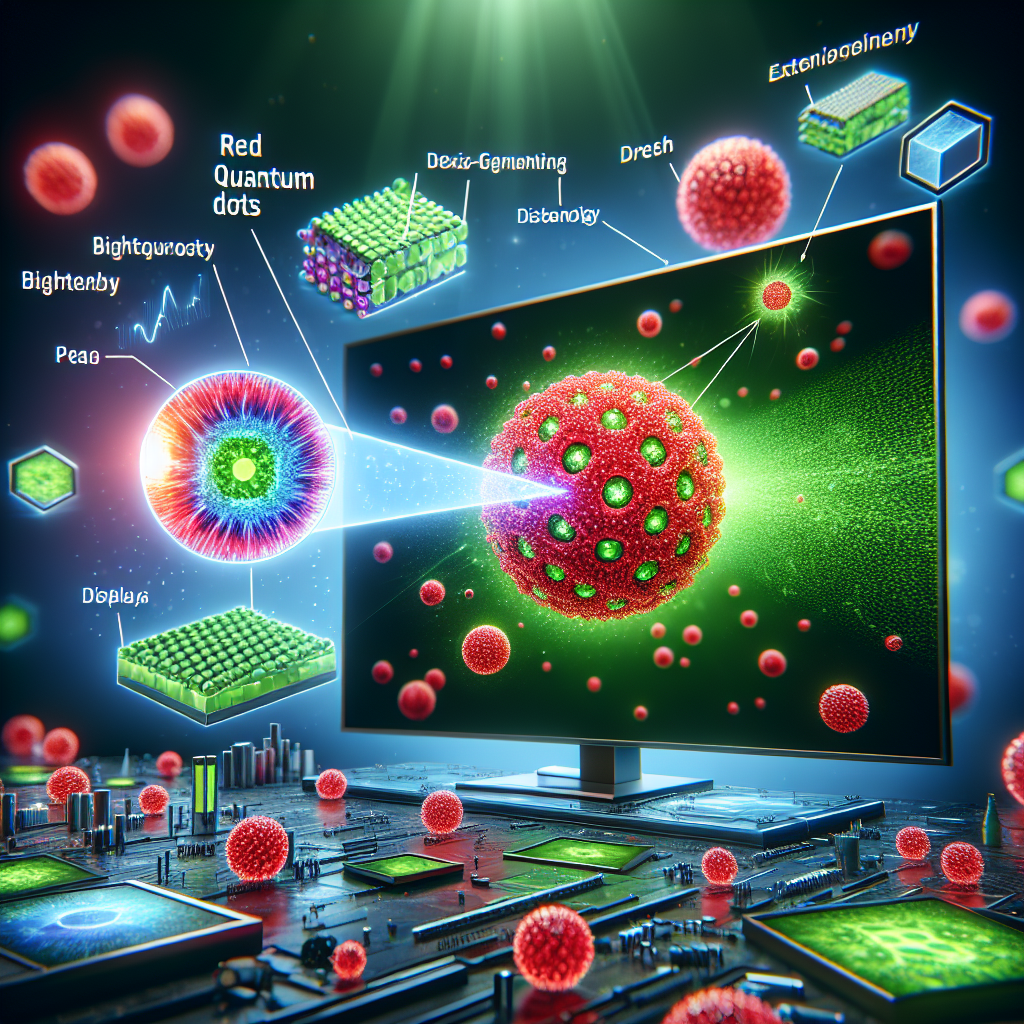
A leap forward in display technology may soon reshape the performance of screens in televisions, smartphones, and augmented reality devices, thanks to a new breakthrough in red quantum dot efficiency. According to the article, “A breakthrough in efficiency of red quantum dots could improve display brightness,” published by Tech Xplore, researchers have developed a novel approach that significantly enhances the light-emitting efficiency of red quantum dots, a key component used in many modern displays.
Quantum dots (QDs), semiconductor particles only a few nanometers in size, are known for their ability to emit highly pure colors when exposed to light or electricity. While blue and green QDs have shown considerable brightness and energy efficiency in commercial displays, red quantum dots have historically lagged behind due to problematic internal energy losses that result in diminished luminescence. Elevating the efficiency of these red QDs without compromising stability has remained a formidable challenge in materials science.
The researchers behind the new study report that they have developed a red-emitting quantum dot that achieves a near-record photoluminescence quantum yield—a measure of how efficiently the dots convert absorbed energy into light. By carefully engineering the nanocrystal surface and the surrounding shell material, they achieved minimal surface defects, which are commonly responsible for energy loss. Crucially, their strategy also avoided the use of cadmium, a toxic heavy metal, thereby ensuring compliance with environmental safety regulations and opening the door for potential commercial application.
These improvements could dramatically impact the performance of next-generation displays. High-efficiency red quantum dots would allow for lower power consumption while delivering brighter and more vibrant reds, enhancing overall image quality and prolonging device battery life. Furthermore, improved color purity could benefit applications beyond consumer electronics, including scientific instrumentation and advanced imaging techniques.
While the technology is not yet available in commercial products, its implications are promising. With ongoing efforts to scale production and ensure long-term stability, these findings could soon lead to real-world advancements in QLED (quantum-dot light-emitting diode) displays. Industry observers note that combining such technological milestones with environmentally responsible materials marks a crucial step forward in refining energy-efficient, high-performance displays to meet the growing demands of digital consumer markets.
As the research community continues to push the boundaries of nanomaterials, the work described by Tech Xplore represents a significant achievement that may well redefine what consumers can expect from the screens they use every day.