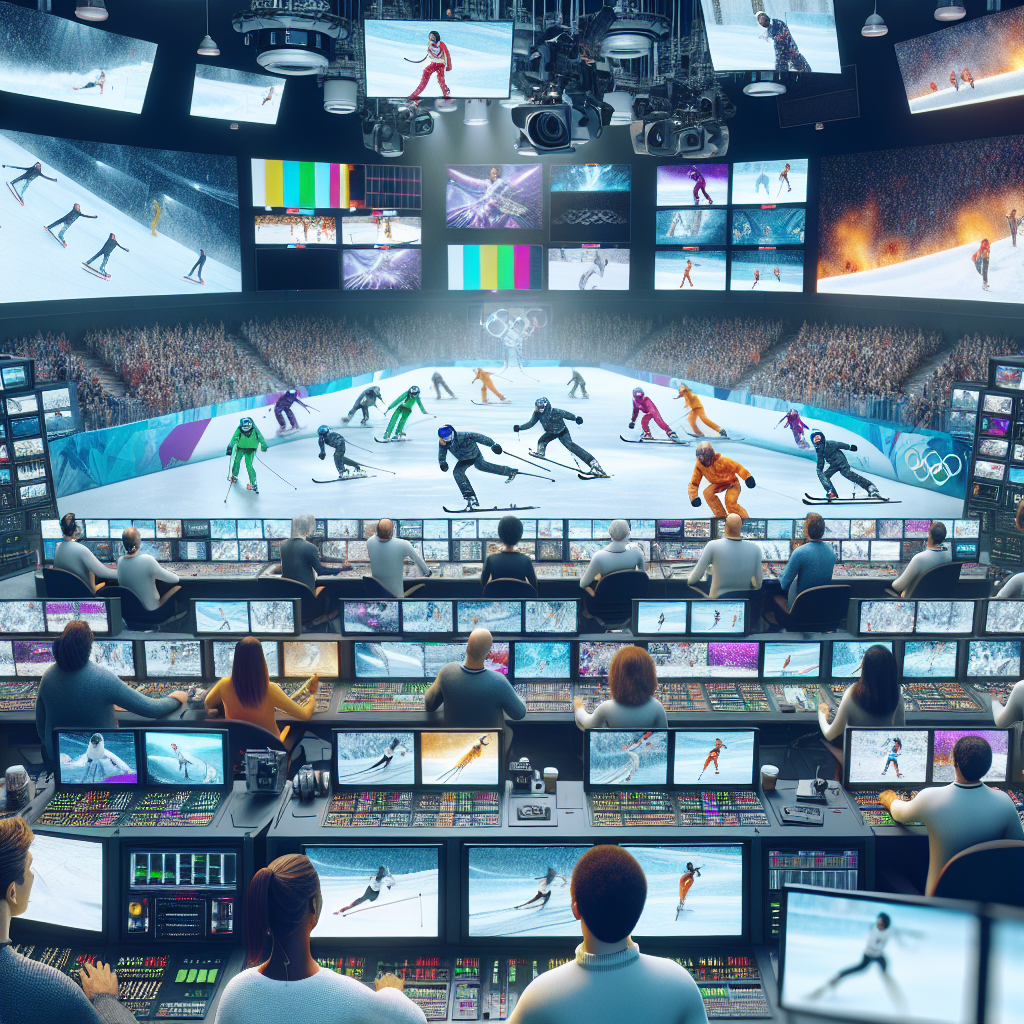
As the global spotlight turns to the 2026 Winter Olympics in Milan and Cortina d’Ampezzo, a quiet but significant technological milestone is unfolding behind the scenes — and its origins are distinctly British. According to the article “2026 Winter Olympics to be powered by British video technology” published by Tech Xplore, cutting-edge imaging and motion-tracking systems developed in the United Kingdom are poised to play a crucial role in the operational and broadcast infrastructure of the Games.
At the heart of the initiative is London-based technology firm Ncam, known for its real-time camera tracking innovations used widely in the film, television, and sports industries. Ncam’s advanced software enables cameras to generate precise 3D spatial data from real-world environments, allowing real-time integration of augmented reality (AR) graphics over live footage. This technology will assist Olympic broadcasters in delivering enhanced visuals, including live graphics overlaid on ski slopes and skating arenas, significantly enriching the viewing experience for global audiences.
The selection of British-developed video technology underscores the increasing demand for sophisticated digital tools in international sports broadcasting. As expectations rise for immersive, data-rich coverage, broadcasters are turning to companies that can provide both technical reliability and creative flexibility at scale. Ncam’s systems are already used by major networks such as Sky Sports and ESPN, but their integration into the Winter Olympics represents a new level of global exposure.
Tech Xplore reports that Ncam’s contribution is part of a wider UK presence in the Games’ technological makeup. Other firms such as Vizrt, which recently acquired Ncam and operates its UK headquarters in Manchester, are also playing a role. Their collaborative efforts are supporting augmented reality rendering and real-time graphics production that will be used across venues during the three-week event.
In a statement quoted by Tech Xplore, Ncam CEO Nic Hatch emphasized the importance of precision and real-time responsiveness in such high-stakes environments. “The level of accuracy required for live sports — particularly the Winter Olympics, where athletes are moving at speeds exceeding 100 kilometers per hour — is extreme,” Hatch said. He added that advances in computer vision and machine learning have made it possible to deliver these services without interrupting natural camera movement or requiring additional infrastructure on the field of play.
This technological leap also reflects broader trends in the integration of artificial intelligence and augmented reality in broadcast media. As global audiences seek more interactive, real-time insights during sports coverage — from biometric data to track positioning and weather overlays — these tools become increasingly central not just to storytelling but to the sport’s engagement with its fans.
The British government, through its Department for Business and Trade, has described such projects as emblematic of the UK’s emerging global leadership in creative technology. With the eyes of the world fixed on Olympic competition, Britain’s behind-the-scenes role in powering this visual transformation reaffirms its place on the cutting edge of sports broadcasting innovation.
As organizers prepare for this pivotal sporting event, the integration of British-developed technologies may not be visible to the casual viewer. Yet, it is evident that from stunning AR overlays to seamless camera operations in difficult terrains, the tools developed in London and Manchester will shape how millions experience the drama of the Winter Games.