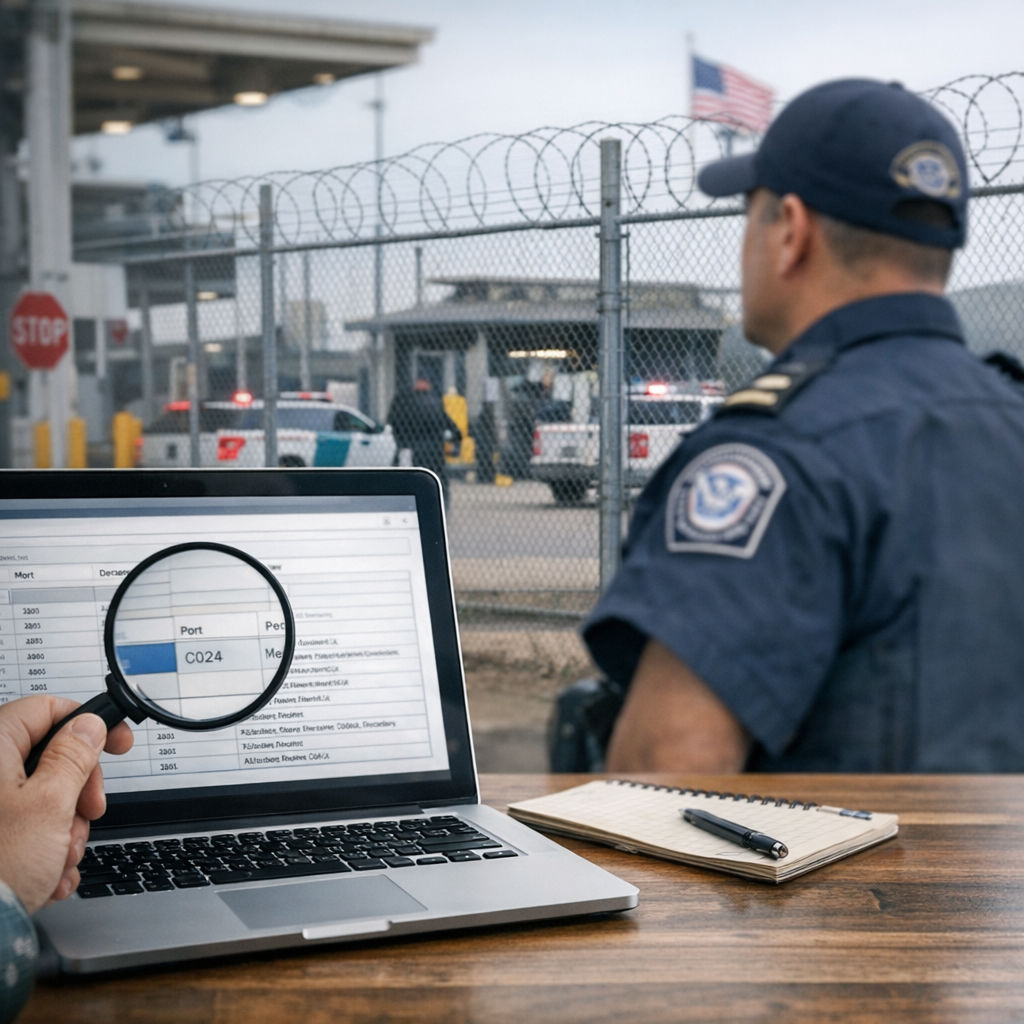
A set of internal identifiers used by U.S. Customs and Border Protection (CBP) appears to have been exposed through publicly accessible online study materials, raising fresh concerns about how sensitive government information can inadvertently surface in widely used digital platforms.
The issue centers on alphanumeric facility codes associated with CBP locations, which were reportedly discovered embedded in flashcards hosted on popular study-sharing websites. According to the Wired article titled “CBP Facility Codes Sure Seem to Have Leaked via Online Flashcards,” these materials were likely created for training or exam preparation purposes but were not adequately restricted from public view. As a result, details that may have operational significance were accessible to anyone browsing the site.
Facility codes are typically used internally to identify ports of entry, processing centers, and other CBP-managed locations. While not necessarily classified, such identifiers can still provide insight into government infrastructure and logistics when aggregated or cross-referenced with other publicly available data. Security experts often warn that seemingly minor disclosures can contribute to larger vulnerabilities, particularly when they reveal patterns or naming conventions.
The flashcards in question reportedly included lists of codes paired with descriptive information, suggesting they may have originated from official or semi-official training resources. The presence of this data on a public platform highlights the risks associated with informal knowledge-sharing practices, especially when users replicate institutional materials without safeguards.
CBP has not publicly detailed the extent of the exposure or whether any operational risk resulted from it. However, the situation underscores an ongoing challenge for government agencies: controlling the spread of internal information in an era where educational tools, collaboration platforms, and user-generated content blur the line between private and public domains.
Cybersecurity analysts note that such leaks are often less the result of deliberate wrongdoing and more a byproduct of convenience. Employees or trainees may turn to widely used tools to study or share information, unintentionally making restricted or sensitive content accessible beyond its intended audience. Once posted, such data can be indexed by search engines, archived, or redistributed, complicating efforts to contain it.
The Wired report situates the incident within a broader pattern of accidental disclosures involving government and corporate data. From misconfigured cloud storage to publicly shared documents, the underlying issue is frequently a mismatch between the sensitivity of the information and the controls placed on it.
Experts say addressing this problem requires both technical and cultural changes. Agencies can implement stricter controls and monitoring for sensitive data, but they must also educate personnel about appropriate channels for storing and sharing information. Without that awareness, even well-intentioned actions can create exposure.
While it remains unclear whether the leaked CBP facility codes could be directly exploited, the episode serves as a reminder that information security is often only as strong as its weakest link. In an interconnected digital environment, even niche study materials can become an unintended window into systems meant to remain internal.