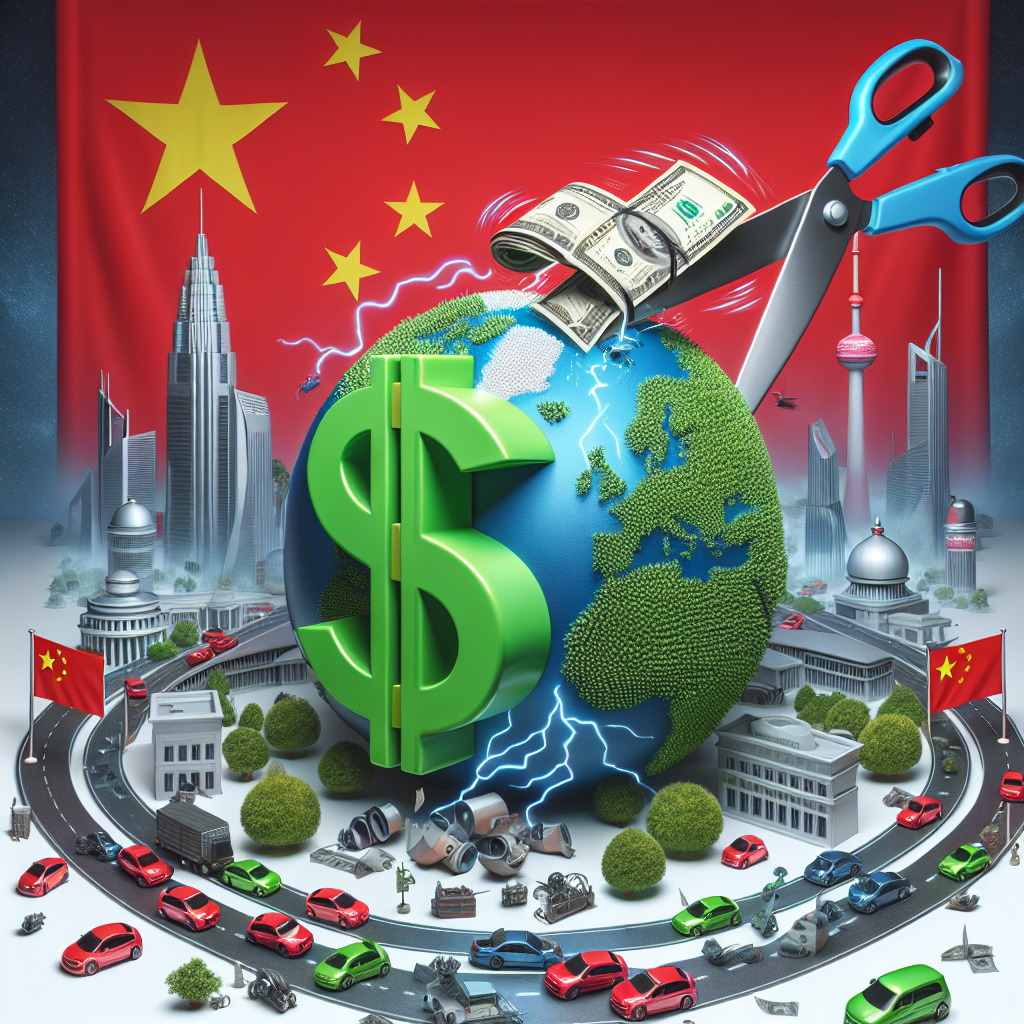
In a bold response to current economic pressures, China’s government is reportedly considering significant reductions in subsidies for electric vehicles (EVs), a policy pivot that could have profound impacts not only domestically but across the globe. The automotive sector in China, which has been a leader in EV technology and manufacturing, might see a drastic shift in production and sales trajectories due to this policy change.
Previously fuelled by substantial state subsidies, China’s EV market has become the largest in the world, outpacing competitors in both production and innovation. The incentives provided by the Chinese government have propelled domestic companies to the forefront of the electric vehicle industry, enabling them to gain a significant edge over their global counterparts.
However, as suggested by the original report from Startup News FYI, “China is Sending its World-beating Auto Industry into a Tailspin,” the decision to reduce these subsidies is motivated by the government’s desire to encourage the automotive industry to survive without state support, fostering an environment of self-sufficiency and innovation-driven competition.
The ramifications of this shift are potentially vast. Analysts suggest that while well-established Chinese EV manufacturers might absorb the impact due to their advanced technologies and larger capital reserves, smaller players could struggle to adapt. The policy change might lead to a market consolidation where only the strongest survive.
Beyond the immediate economic implications, this move could also slow the pace at which new and innovative EV technologies emerge from China. The global auto industry, which has been keenly watching China’s rise as a juggernaut in the EV arena, may find a changed competitive landscape if China’s EV output and innovation are curtailed.
Moreover, this development might alter global supply chains. A slowdown in Chinese EV production could lead to increased prices and reduced availability of electric vehicles worldwide, affecting not only consumers but also the pace at which global emissions standards can improve through the adoption of cleaner technologies.
Environmental concerns also play a critical role in this complex equation. The aggressive push towards EVs has been part and parcel of China’s strategy to reduce urban pollution and transition to less carbon-intensive sources of energy. With subsidy cuts, the transition to electric vehicles might not maintain its current pace, potentially derailing some of the environmental benefits anticipated from a full-scale move towards electric mobility.
The decision, therefore, stands as a clear testament to the Chinese government’s current strategic economic priorities, weighing immediate industry sustainability and international competitiveness against long-term environmental and technological benefits.
As China calibrates its approach to one of its key industries, the world watches on. The outcomes of this policy change will likely provide critical insights into the interplay between governmental support and industry growth, particularly in sectors that are pivotal to sustainable development.