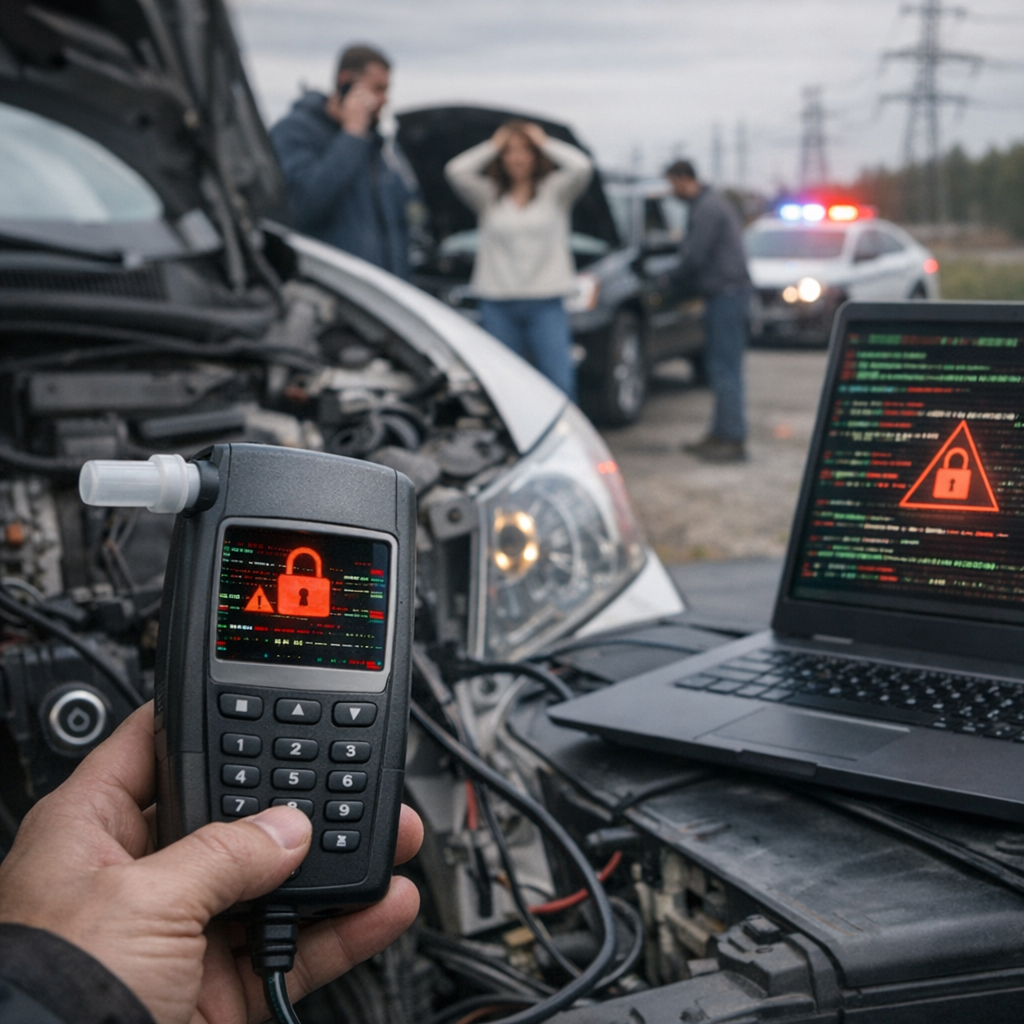
A cyberattack targeting a company that provides court-mandated vehicle breathalyzers has disrupted drivers across the United States, highlighting the risks of embedding networked technology into critical compliance systems. The incident, detailed in Wired’s article “Security News This Week: Cyberattack on a Car Breathalyzer Firm Leaves Drivers Stuck,” underscores how even relatively niche technologies can become high-impact targets.
The affected company supplies ignition interlock devices—breathalyzer systems installed in vehicles that require drivers to pass an alcohol test before the engine will start. These devices are commonly mandated for individuals convicted of driving under the influence. In this case, the attack crippled systems used to manage or authenticate the devices, leaving some users unable to start their vehicles and, in certain instances, unable to access customer support or compliance records.
The disruption had immediate real-world consequences. Drivers reliant on their vehicles for work, medical appointments, and daily responsibilities found themselves stranded, despite being in compliance with legal requirements. For individuals already navigating the legal obligations associated with DUI convictions, the outage introduced additional stress and potential legal ambiguity regarding missed check-ins or reporting requirements.
Cybersecurity experts have long warned that the expansion of connected devices into regulated and safety-critical domains introduces new vulnerabilities. While ignition interlock devices are designed primarily as enforcement tools, they increasingly rely on cloud-based services and remote data reporting, creating points of failure that can be exploited or disrupted. The incident demonstrates how outages—whether caused by malicious attacks or technical failures—can cascade into significant societal impacts when they affect systems tied to legal compliance.
The company involved reportedly worked to restore services and investigate the breach, though questions remain about the scope of the attack, the safeguards in place beforehand, and the resilience of its infrastructure. Lawmakers and regulators may face renewed pressure to establish stricter cybersecurity standards for companies operating in this space, particularly those whose products directly affect public safety and legal enforcement.
More broadly, the episode reflects a persistent tension in modern infrastructure: the convenience and efficiency gained through connectivity versus the systemic risks introduced by that same connectivity. As more aspects of everyday life—from transportation to healthcare—depend on networked systems, even localized cyber incidents can reverberate widely.
The Wired report situates the breathalyzer disruption within a broader landscape of escalating cyber threats, where attackers increasingly target not just large corporations or government agencies, but also specialized service providers whose failures can produce tangible, immediate consequences. The incident serves as a reminder that cybersecurity is no longer a background technical concern but a central factor in the reliability of systems that govern daily life.