Capturing the stark beauty and subtle peril of ice is an artistic and technical challenge few filmmakers dare attempt. But as climate change accelerates polar melt and reshapes coastlines, the need to document these transformations increases. In the recent Wired article, “How to Film Ice,” journalist Gregory Barber explores this delicate dance between technology, art, and environmental urgency.
Barber profiles filmmaker Jeff Orlowski-Yang, whose acclaimed documentaries like *Chasing Ice* and *Chasing Coral* have made glacier calving and coral bleaching visible to worldwide audiences. These films owe much of their power not just to their sobering content but also to the innovative filming techniques used to reveal slow-moving environmental crises in ways that feel immediate and human.
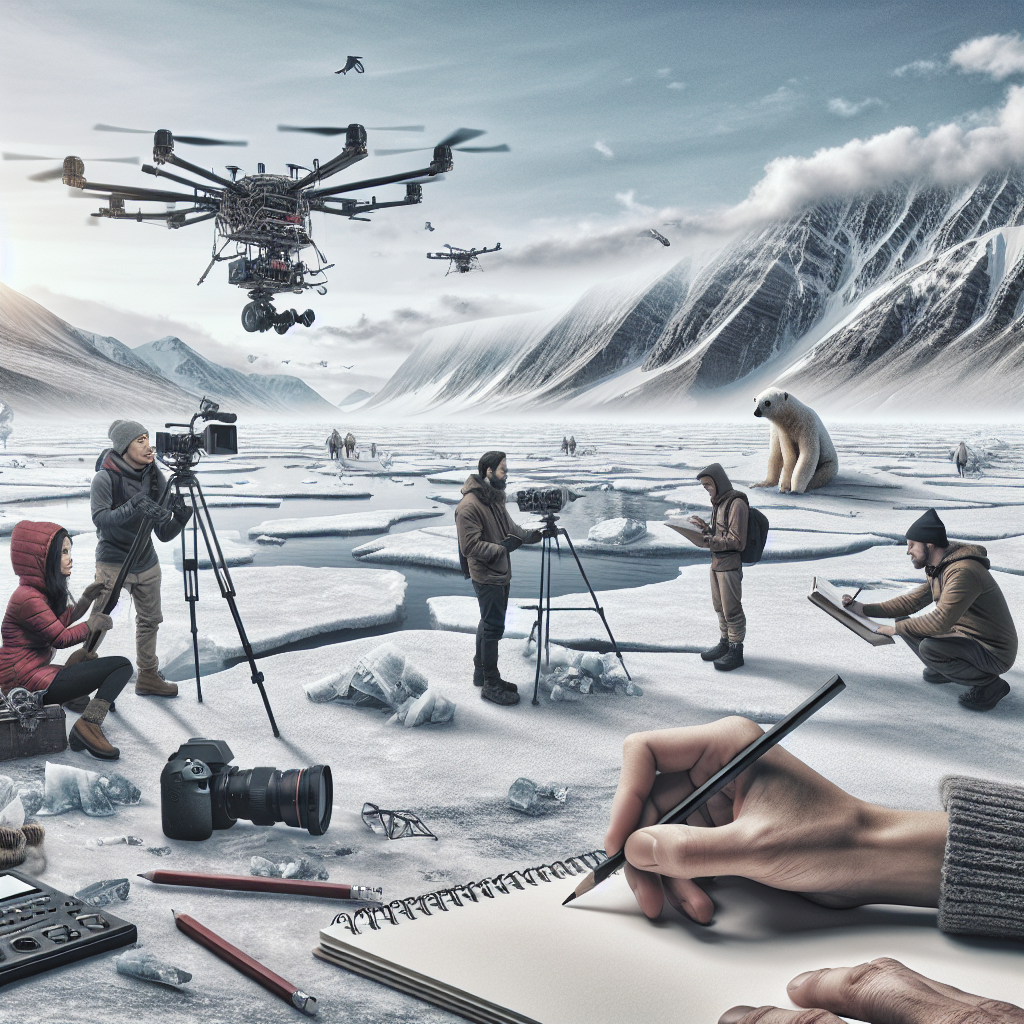
Filming ice, Barber explains, involves extreme logistical hurdles. The equipment has to perform flawlessly in frigid, remote locations where temperatures can plummet below -40 degrees Fahrenheit, winds lash without warning, and crews sometimes wait weeks for crucial moments that last mere seconds. Cameras freeze, batteries die quickly, and specialized rigs are needed to capture time-lapse sequences spanning months or even years. Yet the payoff—crystal-clear footage of glaciers splitting into the sea or subtle textures of frozen landscapes—is essential for activating public awareness and political will.
One of the article’s most compelling themes is the intersection of documentary storytelling and data collection. Orlowski-Yang and his collaborators have come to rely on not just cinematic instincts but also scientific models and collaborations with researchers. Drone technology, satellite data, and high-resolution cameras have become indispensable tools not only for producing stunning footage but also for helping scientists visualize and understand changes too immense to grasp from ground level alone.
Barber also touches on the ethical landscape of environmental filmmaking. He notes the growing importance of truthfully portraying what is at stake while avoiding manipulation or sensationalism. Effective storytelling in this genre balances emotional gravity with empirical fidelity—a feat even more essential when dealing with audiences fatigued by climate narratives or skeptical of scientific urgency.
In often harsh conditions, these filmmakers are both witnesses and messengers, using every technological and creative tool at their disposal to capture a planet in flux. As the Wired piece illustrates, the act of filming ice is more than a technical feat—it is a form of testimony whose importance grows as Earth’s cryosphere continues to recede. Crucially, the images they produce are not just art; they are evidence—and in an era of accelerating climate breakdown, they may prove to be among the most potent arguments for change.