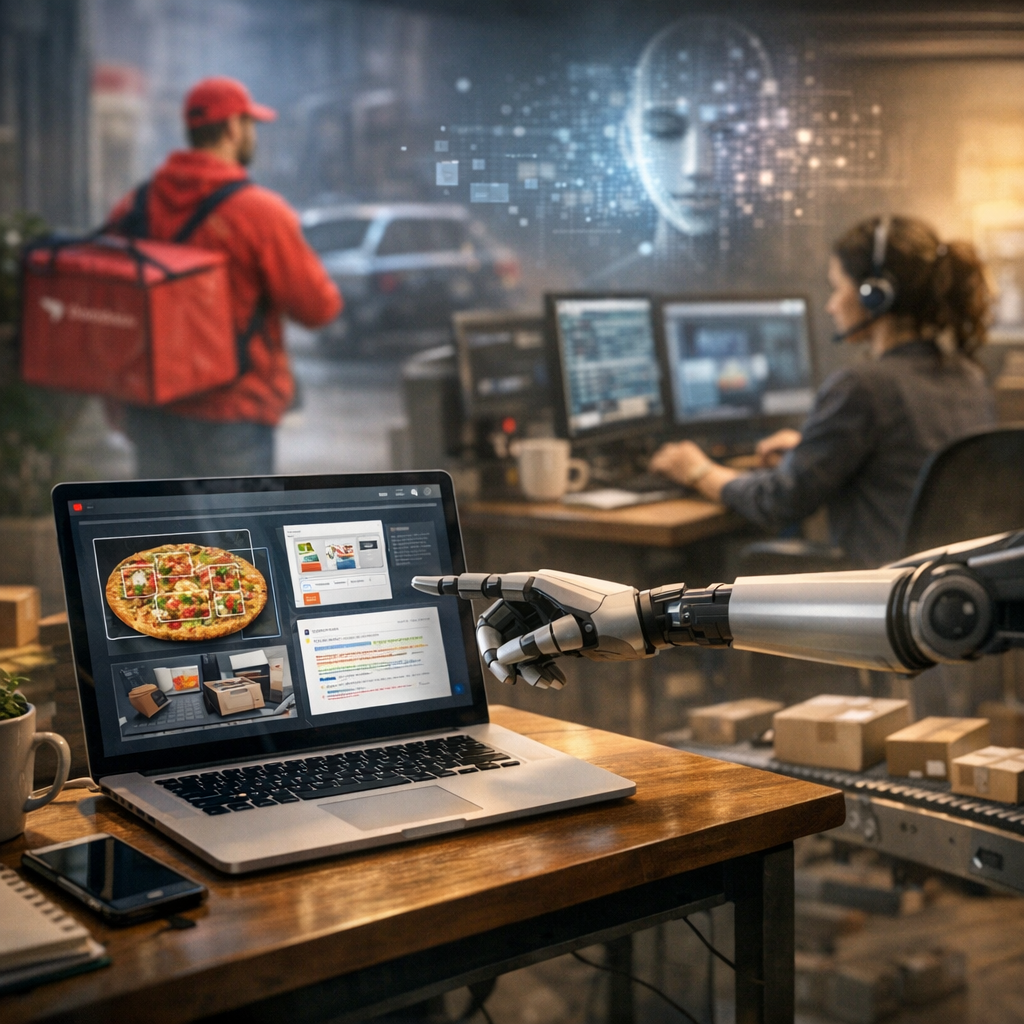
A recent firsthand account published by Wired, titled “I Tried DoorDash’s Tasks App and Saw the Bleak Future of AI Gig Work,” offers a revealing glimpse into how major technology platforms are expanding gig labor into the rapidly growing field of artificial intelligence training—and what that shift may mean for workers.
The article details DoorDash’s experimental “Tasks” feature, a program that pays gig workers small sums to complete micro-assignments designed to train and refine AI systems. These assignments range from evaluating chatbot responses to categorizing images and providing short written inputs meant to improve machine learning models. While such work has long existed through specialized data-labeling firms, its integration into a mainstream gig platform marks a notable evolution in how AI labor is sourced.
According to Wired’s reporting, the experience of using the Tasks app is characterized by low pay, inconsistent availability of work, and minimal transparency regarding how contributions are used. Workers are presented with brief instructions and are expected to complete tasks quickly, often for fractions of a dollar per item. The system rewards speed and volume, reinforcing a model that closely resembles other gig economy dynamics, but with an added layer of opacity tied to AI development.
The expansion into AI-related labor reflects a broader industry trend in which companies seek scalable, on-demand human input to support machine learning systems. As AI products proliferate, so too does the need for vast quantities of labeled and evaluated data. By leveraging an existing base of gig workers, platforms like DoorDash can rapidly mobilize labor without building separate infrastructure or long-term employment relationships.
However, the Wired article underscores significant concerns about this model. Workers are not always informed about the end use of their contributions, raising questions about consent and ownership in the creation of AI tools. Compensation remains low despite the growing commercial value of AI systems, and there is little pathway for skill development or advancement. The work itself can be repetitive and cognitively draining, yet lacks the protections or stability associated with traditional employment.
The piece also highlights how the Tasks program blurs the line between physical gig work, such as food delivery, and digital piecework tied to intangible outputs. This shift suggests that gig platforms are positioning themselves not only as logistics intermediaries but also as labor brokers for the AI economy. For workers, it represents an expansion of opportunity in a narrow sense, but one constrained by the same precarious conditions that have long defined gig work.
Wired’s account ultimately frames the Tasks app as a microcosm of a larger transformation. As artificial intelligence becomes more embedded in everyday products and services, the hidden workforce behind it is growing. Yet the structure of that work—fragmented, undercompensated, and largely invisible—raises questions about sustainability and fairness.
The emergence of AI-focused gig labor may signal a future in which human workers remain essential to technological progress, even as automation advances. But as the Wired article suggests, the terms under which that labor is organized will be central to determining whether the benefits of AI are broadly shared or concentrated among a small set of companies.