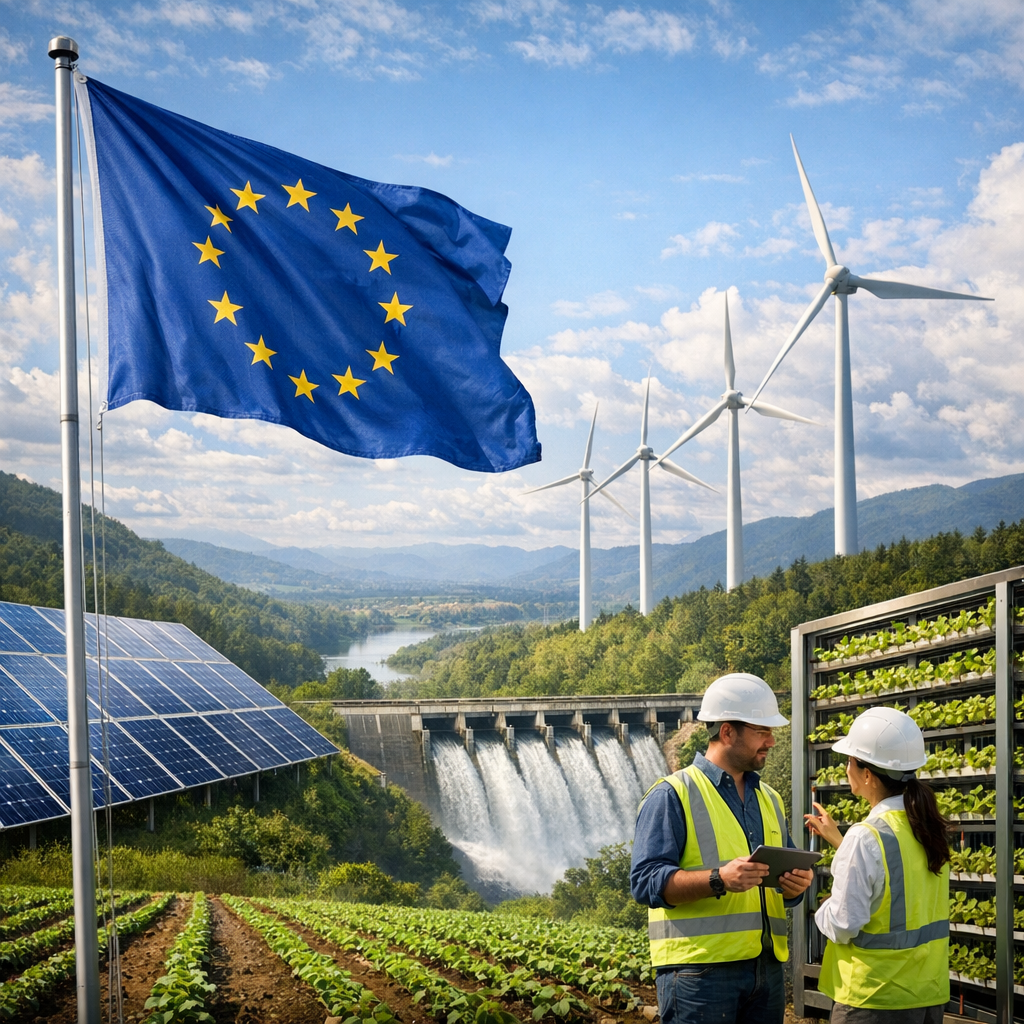
The European Union has reaffirmed its commitment to addressing environmental and climate challenges by approving investments totaling over €103 million for strategic projects across its member states. This initiative, reported by Innovation News Network in an article titled “EU invests over €103m in strategic environment and climate projects,” reflects the EU’s ongoing dedication to fostering sustainable development and bolstering the resilience of ecosystems and communities against climate change.
These recent investments are channeled through the EU’s LIFE Programme, which is instrumental in funding environmental protection and climate action initiatives. The program has been pivotal in aligning member states with the EU Green Deal’s objectives, which aim to make Europe the first climate-neutral continent by 2050. By allocating substantial financial resources to targeted projects, the EU seeks to catalyze innovative solutions that can effectively address pressing environmental issues while also stimulating economic growth.
Among the key areas of focus, biodiversity conservation features prominently, as the EU endeavors to halt the alarming rate of species loss seen in recent decades. Projects aimed at restoring natural habitats, protecting endangered species, and enhancing ecosystem services are slated to receive significant support. These initiatives are essential for maintaining the region’s rich biodiversity, which in turn supports critical sectors such as agriculture and tourism.
Furthermore, the investments underscore the EU’s commitment to combatting climate change through various mitigation and adaptation measures. Projects that concentrate on reducing greenhouse gas emissions, increasing energy efficiency, and promoting the transition to renewable energy sources are prioritized. By doing so, the EU not only aims to meet its own climate targets but also to set a precedent for global efforts in tackling climate change.
The economic implications of these investments are considerable. Beyond immediate environmental benefits, the funded projects are expected to create jobs, foster innovation, and enhance the competitiveness of EU industries in the global market. This integrative approach underscores the EU’s recognition of the interconnectedness between environmental sustainability and economic prosperity.
Moreover, these initiatives provide an opportunity for collaboration and knowledge exchange among member states, thereby strengthening the EU’s collective capacity to address complex environmental and climatic challenges. Through shared experiences and strategies, member states can inspire one another to adopt best practices and innovative solutions that can be replicated or adapted to suit different contexts.
The European Union’s decision to significantly invest in strategic environment and climate projects highlights not only the urgency of addressing these issues but also the potential for transformative change through coordinated action. By mobilizing substantial resources and fostering regional cooperation, the EU is taking decisive steps towards a sustainable future, setting an example for other regions and countries worldwide. In doing so, it reaffirms its position as a global leader in environmental protection and climate diplomacy, determined to make tangible progress in the fight against climate change and nature degradation.