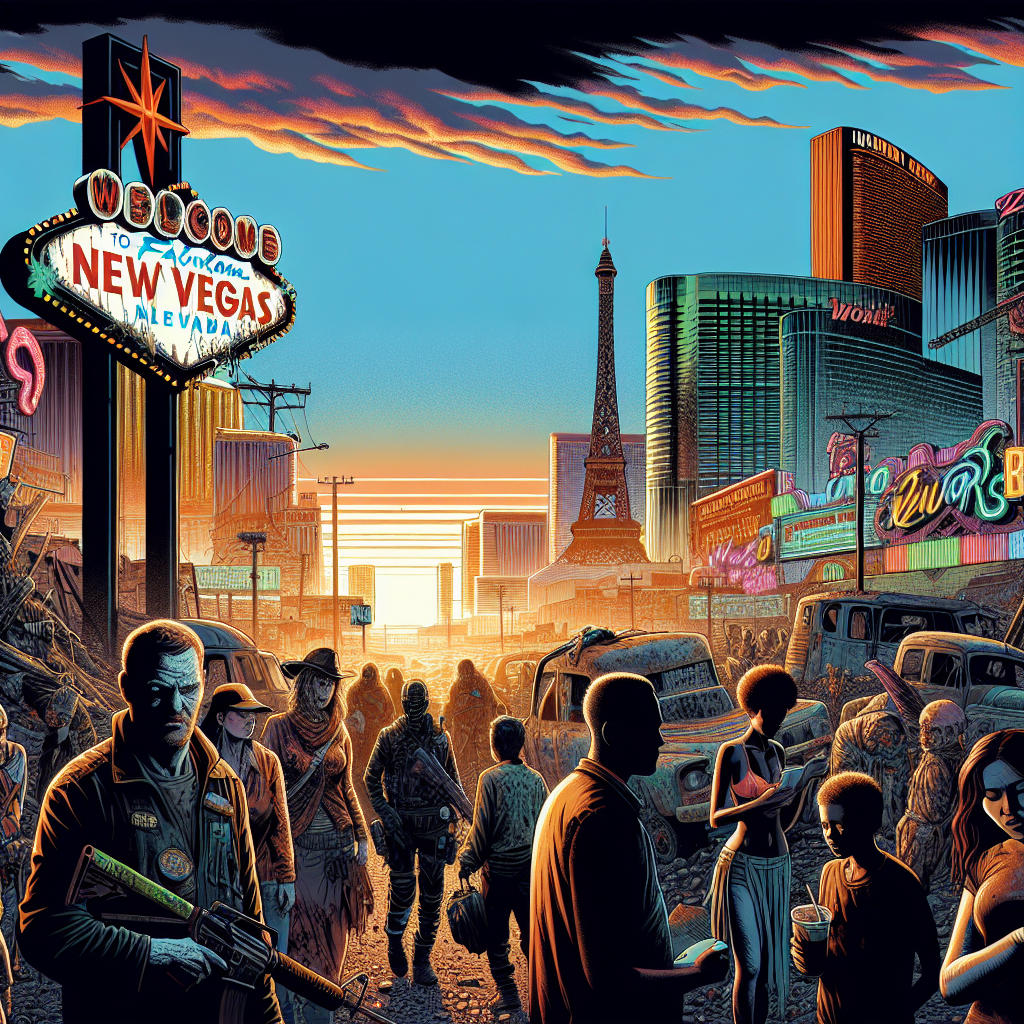
The highly anticipated second season of Prime Video’s “Fallout” series is poised to navigate one of the franchise’s most complex and debated narrative junctures — the multifaction struggle for control over New Vegas. According to a recent report titled “Fallout Season 2 Takes ‘Fog of War’ Approach To New Vegas Ending,” published by Startup News FYI on December 6, the show’s creative team will embrace the ambiguity surrounding the conclusion of “Fallout: New Vegas,” the seminal 2010 video game developed by Obsidian Entertainment.
Rather than endorsing one canonical outcome to the game’s infamous Battle of Hoover Dam, the showrunners have opted for a more nuanced approach, leveraging what they describe as a “fog of war” lens. This strategy aims to preserve the multiplicity of the game’s potential endings—ranging from the New California Republic’s expansionist victory to a power shift in favor of Caesar’s Legion or an independent New Vegas led by the enigmatic Mr. House. In doing so, the series sidesteps the risk of alienating segments of the fanbase attached to their chosen in-game paths.
Sources familiar with the production suggest that season two will unfold several years after the events of “New Vegas,” with the consequences of its indeterminate ending shaping regional power dynamics. Writers are reportedly drawing from in-universe propaganda, fragmented oral histories, and competing ideological narratives to construct a world where truth is elusive and history is contested.
This interpretive, history-through-haze method is gaining attention as a bold narrative device that allows the series to both honor game canon and chart new creative territory. The “Fallout” television adaptation, which premiered to critical acclaim for its faithful yet accessible rendering of the franchise’s post-apocalyptic ethos, appears to be doubling down on its commitment to thematic depth and fan engagement.
While details about casting and plot remain tightly guarded, early indications suggest that familiar factions will play key roles, albeit in altered or diminished capacities following the uncertain outcome of the battle. Analysts note that this opens the door for original characters and new factional struggles, reinforcing the series’ broader themes of survival, power, and moral ambiguity in the wasteland.
As the line between player agency and official canon continues to blur within transmedia storytelling, “Fallout” season two’s narrative choice may serve as a blueprint for future adaptations of interactive fiction. By treating the ambiguity of game outcomes not as a hurdle but as a storytelling asset, the creators position the show to both expand the universe and deepen its philosophical resonance. The “fog of war,” it seems, may prove fertile ground.